UMSM 3-Phase Inverter and Motor Controller
Founded in 2010, we are the University of Michigan Supermileage (UMSM) project team. We are a student-led organization that has grown to include more than 55 undergraduate and graduate members from a wide range of academic disciplines. We are dedicated to addressing the environmental challenges of transportation by designing and building the world’s most energy-efficient vehicles. Our mission is to innovate sustainable personal transportation, pushing the boundaries of energy efficiency while fostering a culture of collaboration, sustainability, and hands-on technical experience. We hope to drive forward cleaner, more efficient technologies and inspire the next generation of engineers to create a sustainable future for mobility.
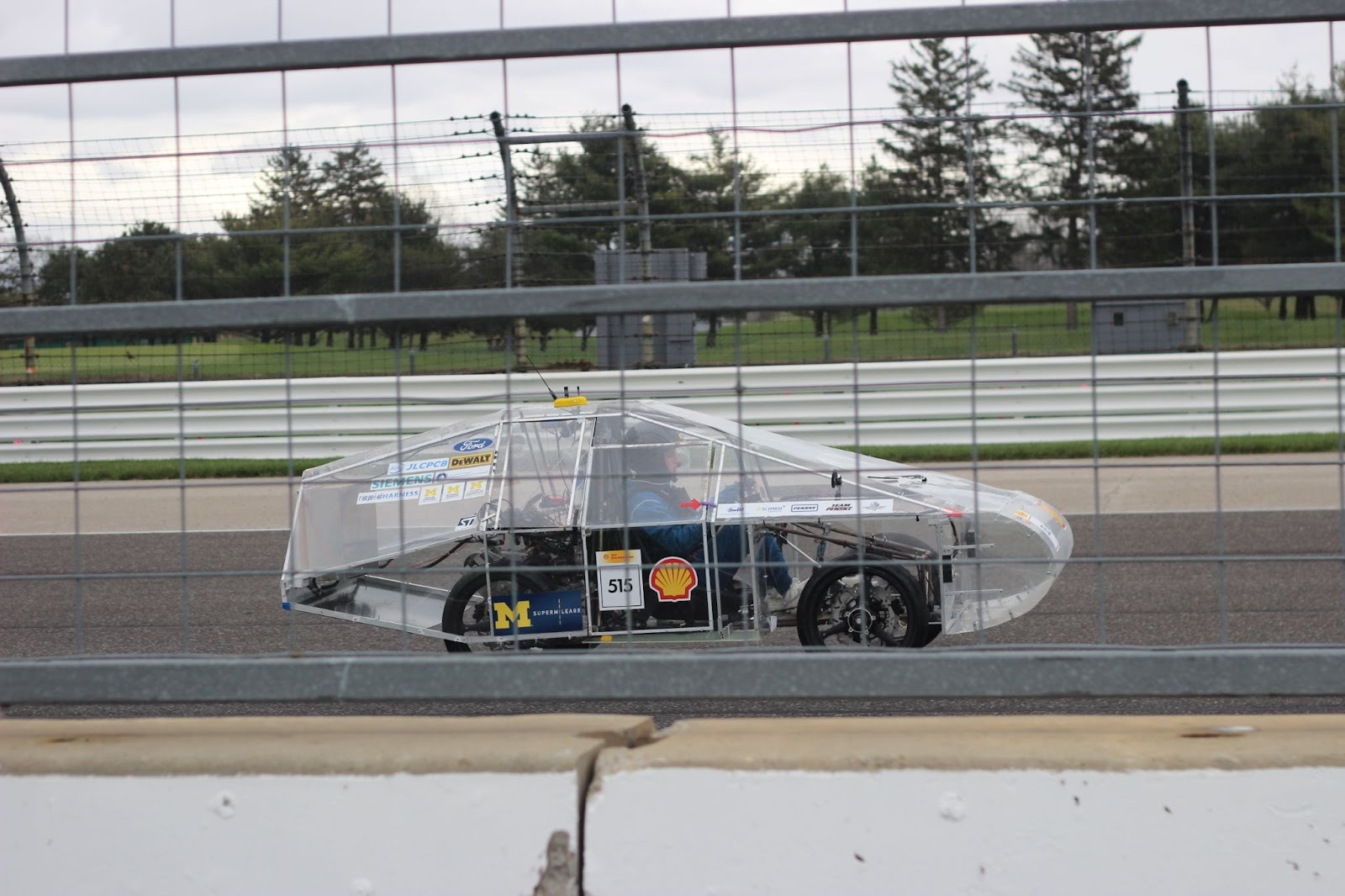
Our ICE vehicle “Maple” on track at the Indianapolis Motor Speedway in April 2024
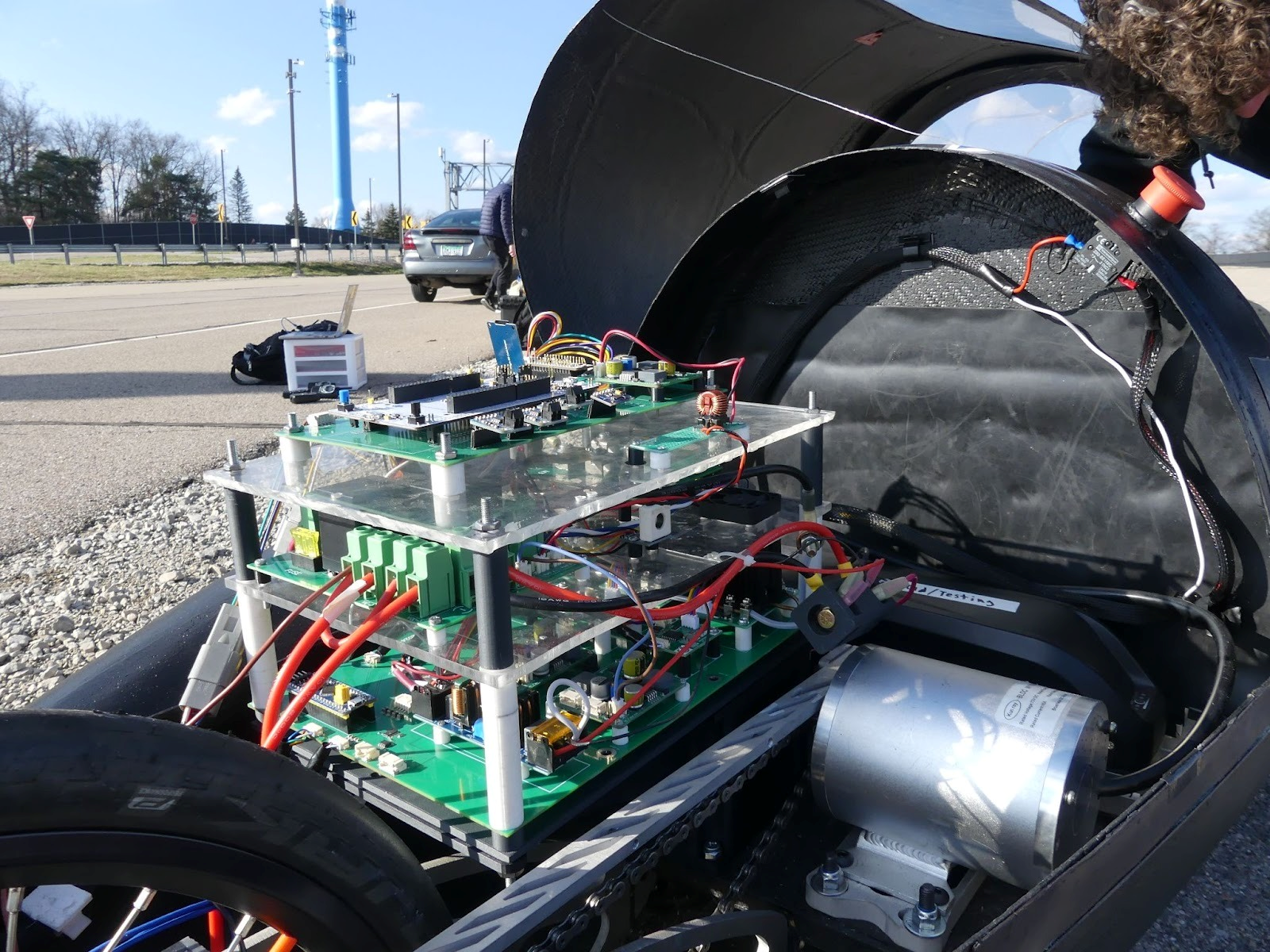
Our electrical tower from 2021 in our previous EV vehicle, Magnolia. This system worked, but was very hard to service, and was poorly optimized for our operating range. The motor especially was oversized for the vehicle.
Cedar, our newest project, is more than just a vehicle—it is a testament to our team’s commitment to sustainability, innovation, and education. While our previous electric vehicles have been built to maximize efficiency at the cost of practicality, with the driver laying flat, and zero cargo area, we are looking to combine incredibly efficiency with utility in Cedar, which will be fully equipped with an upright driver, lights, rear-view system, a trunk, and most everything else you would expect in a passenger car. Cedar is currently in development, with an anticipated efficiency of over 140 miles per kilowatt hour (mi/kWh), while market standard EVs like Teslas and Rivians achieve only 4 to 6 miles per mi/kWh. However, we’re not stopping there. Our next goal is to break the world record for “Greatest distance by electric vehicle, single charge (non-solar),” currently held at 1,599 miles. Through this ambitious project, we aim to push the boundaries of sustainable transportation and inspire innovation across the automotive industry.
To achieve the highest level of energy efficiency, every aspect of our vehicle must be meticulously optimized to minimize losses. Our team designs and builds many of the vehicle’s critical systems entirely in-house — from implementing the entire vehicle electrical system from scratch, to developing lightweight composite structures and machining custom components with our CNC equipment. This hands-on approach allows us to fine-tune every detail to create the most efficient vehicle possible.
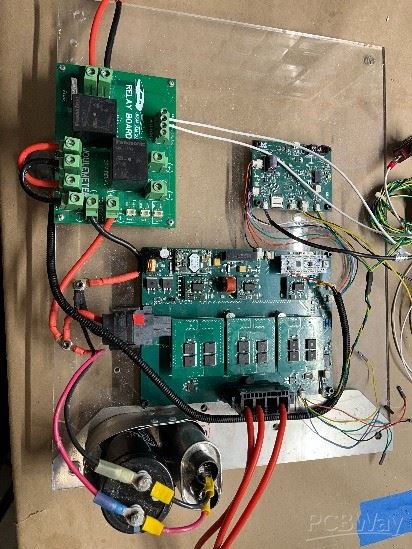
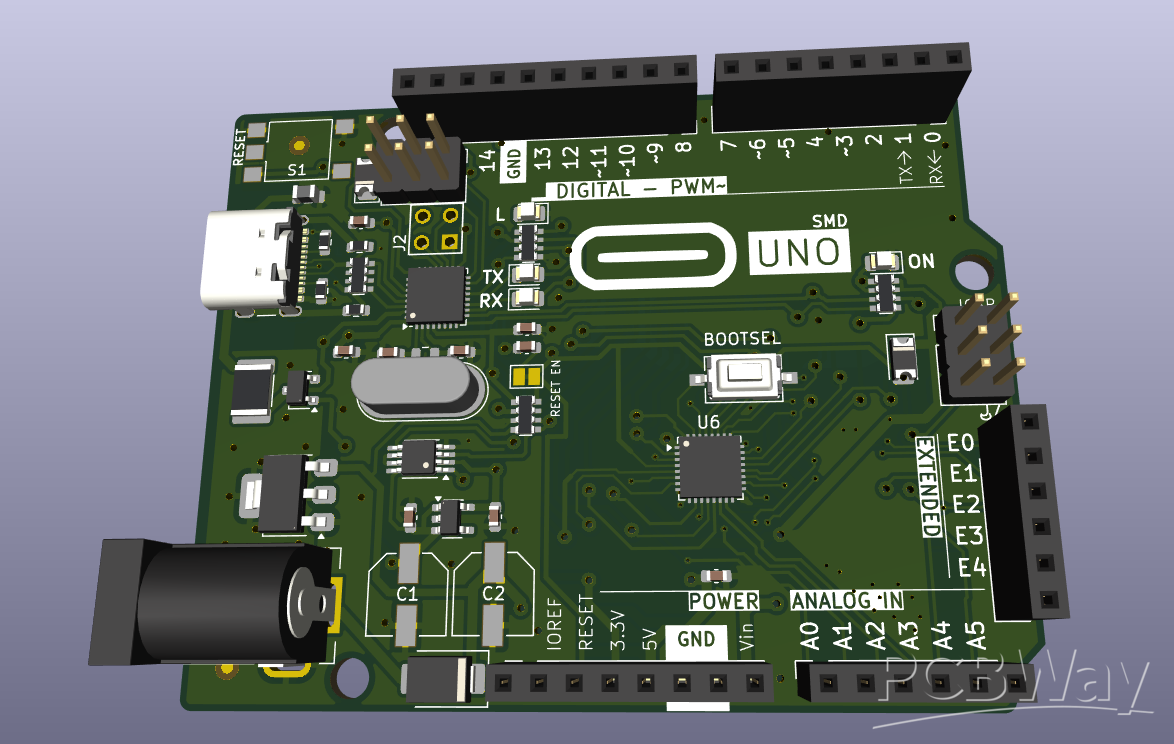
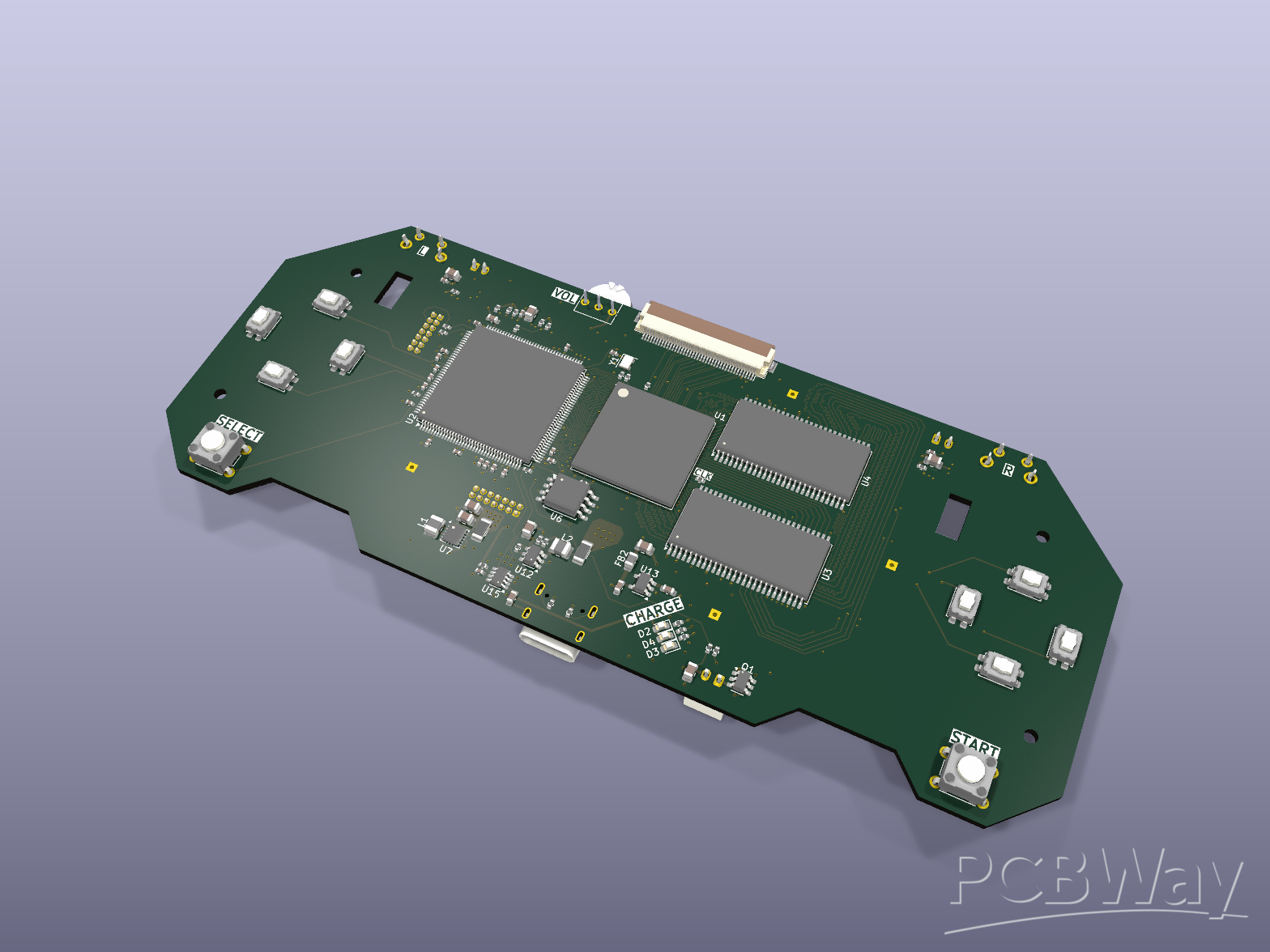
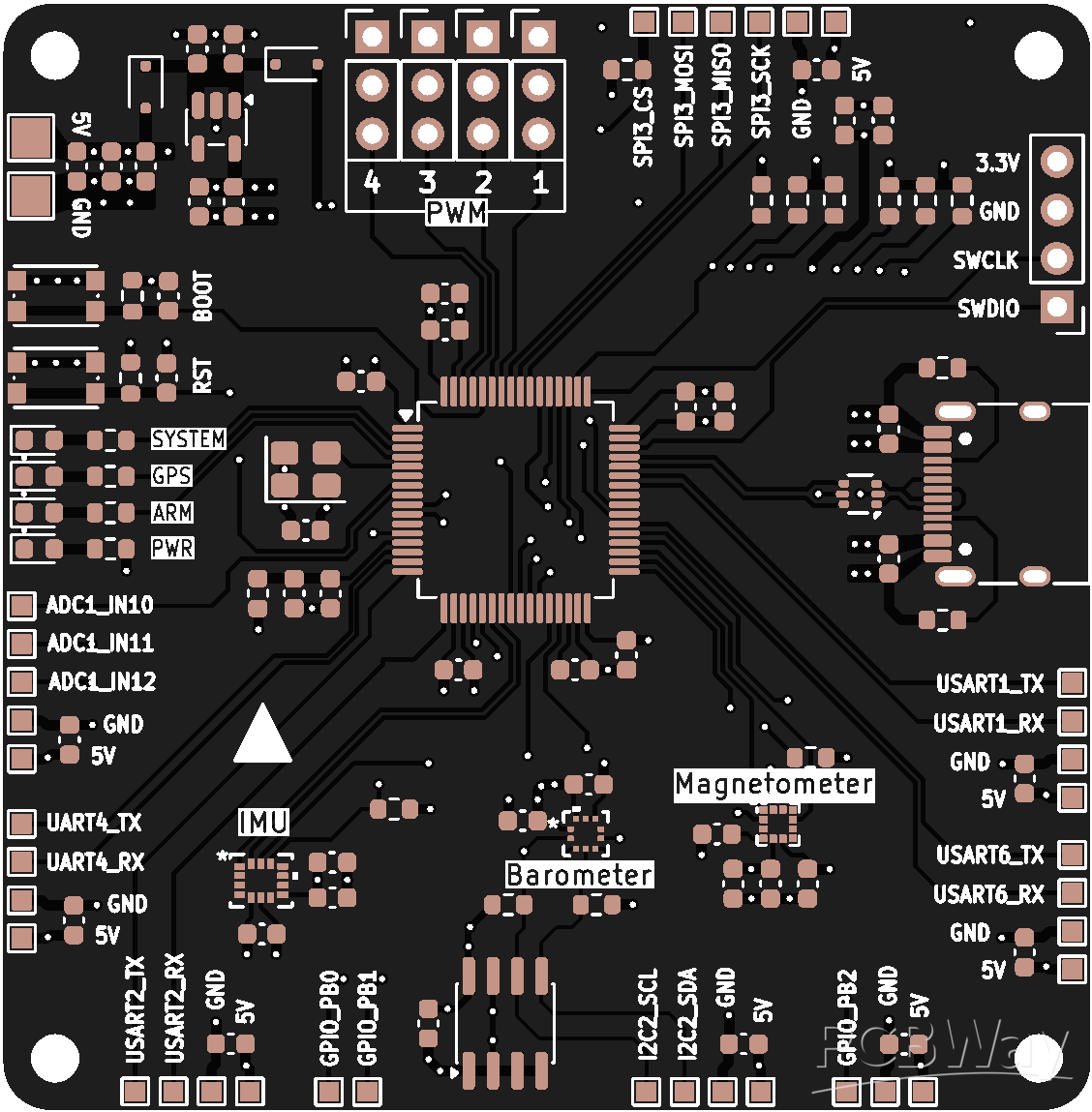
Our current system includes a power distribution board, three phase inverter, motor controller, embedded data acquisition module, and a communications module all designed by us, and building off our years of EV powertrain experience. We utilize a hot-swappable system for the inverter, with the half bridges, gate drivers, and motor control MCU all sitting on separate PCBs that can quickly be replaced or removed for inspection. Our data acquisition system includes phase current, phase temp, voltage, rotor position, GPS, and IMU sensing capabilities, and can both log this data and send it to the communications module, where it is displayed on an e-ink display for the driver, and also sent via LoRa to the pit crew for mid-race monitoring.
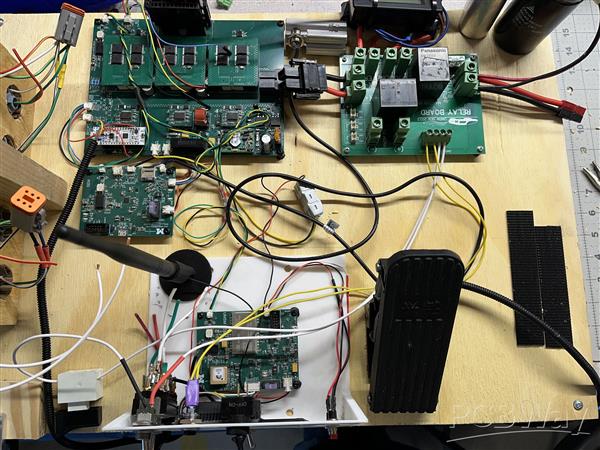
Our current iteration of inverter in the top left. The DAQ board sits directly below it, and the comms board is in the white HUD housing.
Currently, we have assembled a prototype of this system, but further work is needed. While the DAQ and comms systems work great, we have not integrated all of our auxiliary devices yet (windshield wiper, turn signal, etc), and most critically, our motor controller itself is not performing adequately. We cannot achieve the required maximum angular velocity, due to back EMF overloading our power regulation system, and we cannot command adequate torques to accelerate the vehicle at our desired rate from standstill. We have done extensive testing and analysis both on the bench, and on our homemade dynamometer, and have identified solutions that we believe will get us past our current hurdles, and aim to have the second version be able to get us through our competition. After that point, we will focus on both tuning our FOC control scheme, and identifying granular improvements to the system to save every hundredth of a percent loss that we can. While our competition limits vehicles to 60V max across all systems, we may also develop a higher voltage inverter for our distance record attempt, as that would be performed independently.
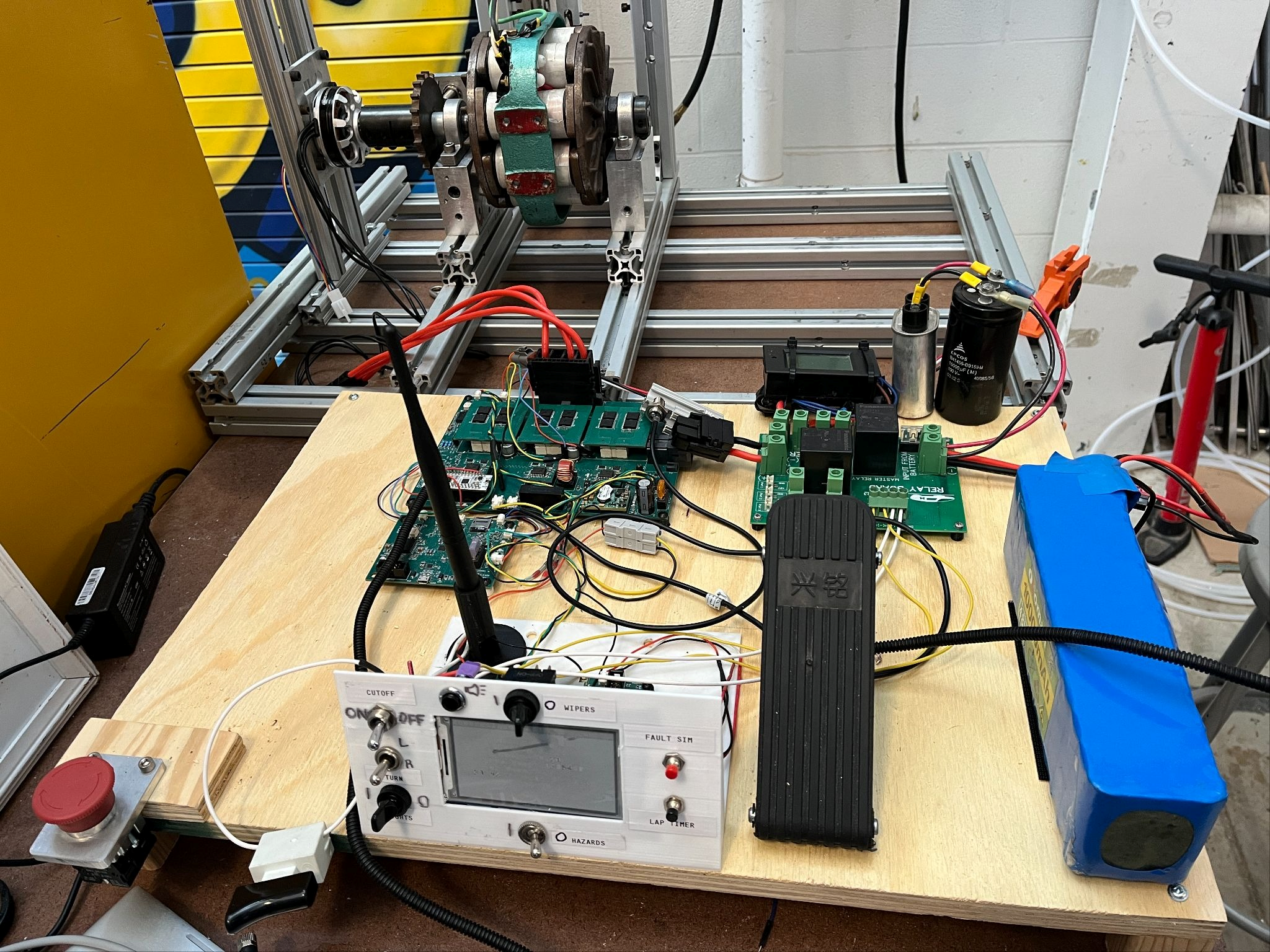
The inverter testing rig sitting next to the motor while it is attached to the dynamometer.
The team would greatly benefit from the support of PCBWay. As a student engineering organization dedicated to designing and building ultra–fuel-efficient vehicles for international competitions, we constantly face challenges in sourcing and manufacturing high-quality electronic components within our budget and timeline. PCBWay’s rapid prototyping and precision fabrication capabilities would allow us to iterate faster and more effectively, giving our members hands-on design experience and deeper technical insight. This support would not only accelerate the development of Cedar, but also enhance our broader engineering initiatives — empowering students to expand their skills, contribute to multiple ongoing vehicle projects, and push the limits of what’s possible in sustainable automotive design.
With your support, we aim to have this next version running reliably and installed in Cedar well ahead of our competition in April — giving us ample time for testing, refinement, and validation.
Apply for sponsorship >>- Comments(0)
- Likes(0)