

Red Comet Racing — STEM Racing Hong Kong (FIA-Endorsed)
About the Team:
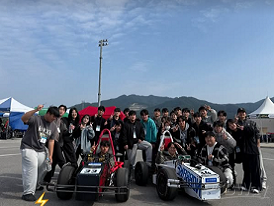
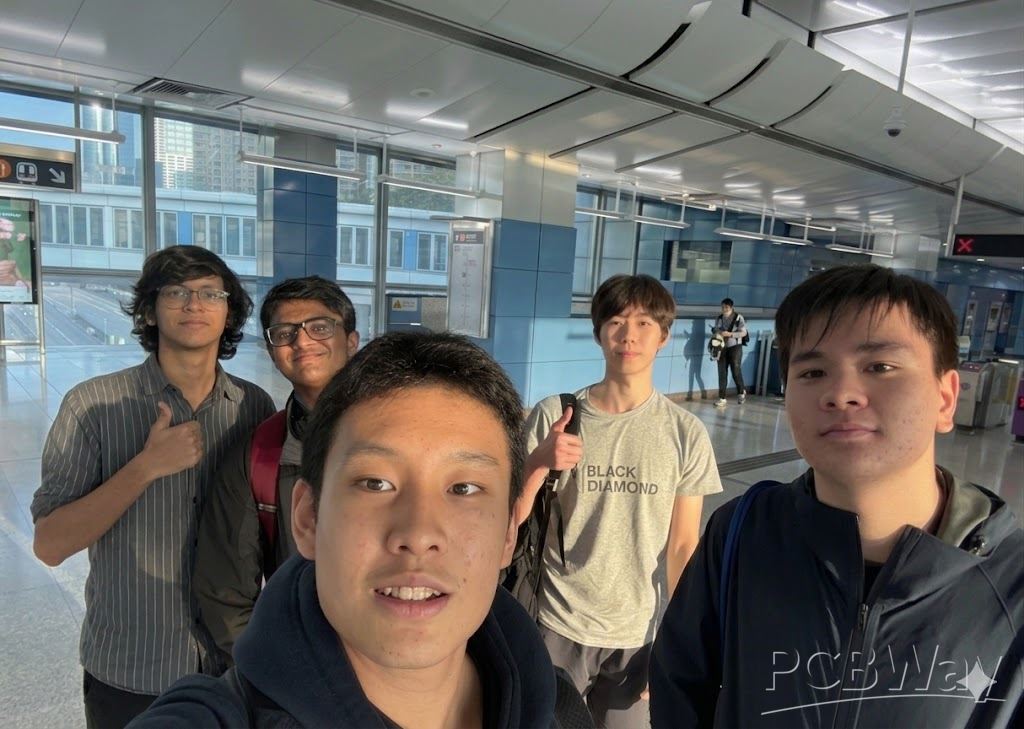
Red Comet Racing is a six-member student engineering team from Hong Kong competing in STEM Racing (formerly F1 in Schools) Hong Kong, one of the biggest STEM competitions in the world which is endorsed by the FIA. STEM Racing challenges teams to design, manufacture, and race a scale model car from scratch using CAD, CFD, and other software.
Red Comet Racing is built on a foundation of clearly defined roles, ensuring every aspect of our development is owned and driven by a dedicated team member.
Ian serves as Team Principal, overseeing the overall direction of the project, managing sponsor relationships, and ensuring the team meets competition deadlines. He coordinates between all departments and holds final accountability for both the car's performance and the team's presentation materials.
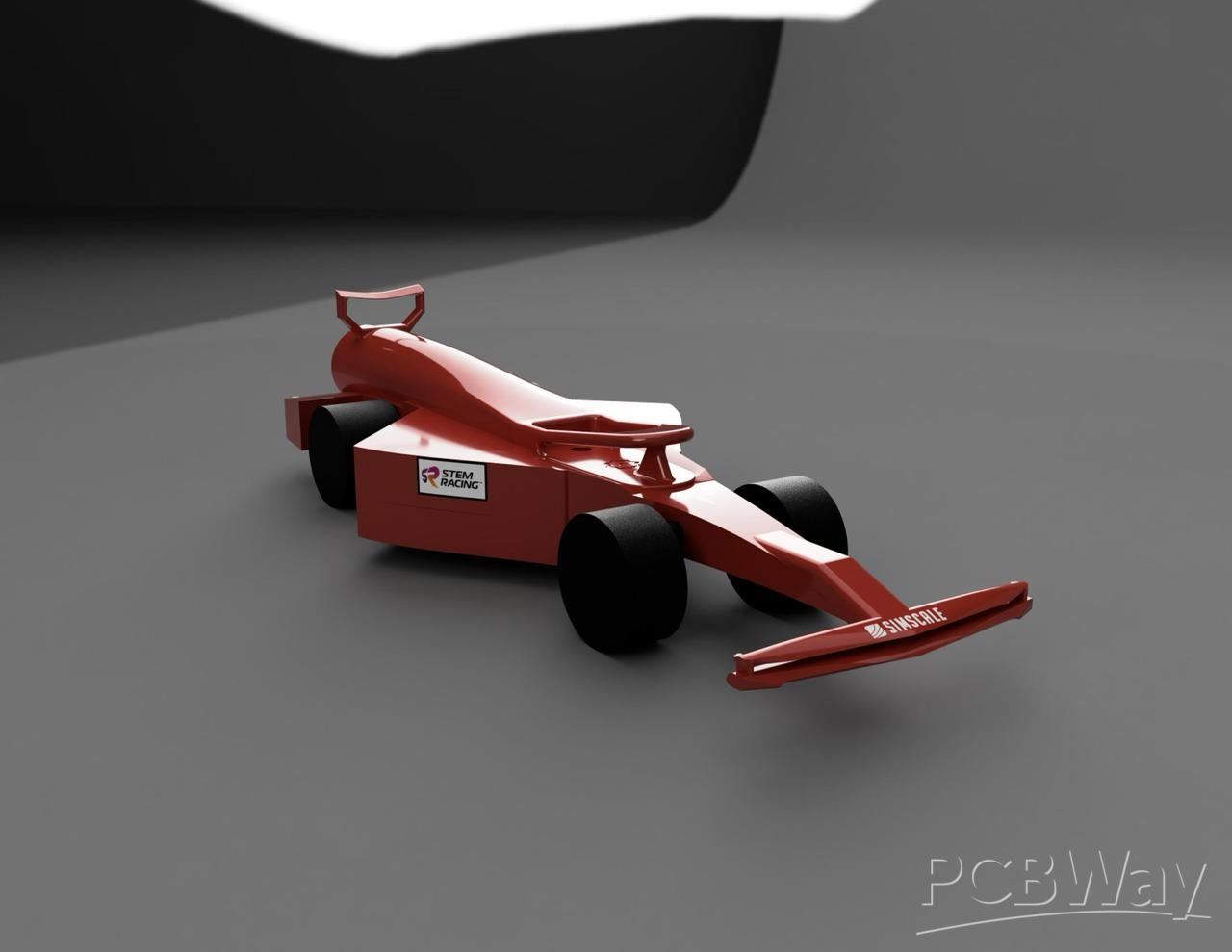
Ben, our Design Engineer, is responsible for the development of the RCR-10. He leads the iterative CAD process in Fusion 360 and owns the CFD simulation workflow in SimScale, translating data-driven insights into tangible design improvements across each car revision.
Yuvan, our Manufacturing Engineer, bridges the gap between digital design and physical reality. He manages the 3D printing workflow, overseeing print settings, material selection, and quality control to ensure each component meets the dimensional and structural requirements of the competition regulations.
Daniel serves as Graphic Designer, responsible for the team's visual identity across the car livery, sponsorship materials, and competition portfolios. He ensures Red Comet Racing presents a cohesive and professional brand at every touchpoint.
Aryaman, our Head of Management, oversees internal team operations, maintains the project Gantt chart, and ensures milestones are tracked and met. He is the backbone of our organisational structure, keeping the team aligned and on schedule as race day approaches.
Mahirr, our Head of Finance, manages the team budget, tracks expenditure, and leads our fundraising and cost-control strategy. He ensures that every resource is accounted for and allocated effectively across the project.
What is STEM Racing?
STEM Racing is a prestigious and internationally-recognized STEM competition that has been endorsed by the FIA Formula One World Championship. Involving the design and development of a miniature F1 car model by a group of young engineers, STEM racing allows for young, ambitious students to unleash their creativity, and put their skills to the test in order to produce a race-winning prototype. Alongside design and creative thinking skills, participants also develop their marketing and teamwork skills, building up brand exposure and working around a tight schedule to ensure a team’s success.
The competition is far more than engineering and designing the fastest car. Teams are judged across a large variety of categories which includes an engineering portfolio, an enterprise portfolio, verbal presentations, and the race itself. This means that success demands excellence across a wide range of fields simultaneously. This means that participants must also develop skills like marketing and teamwork, building up brand exposure and working around a tight schedule to ensure the team's success.
The scale of STEM Racing makes it one of the most competitive student engineering challenges on Earth. Over 20,000 students participate in more than 40 countries each year, with national champions progressing to the world finals. In Hong Kong, our competition is being ran the the "Development Class" level because of our age but it does not mean the process/workflow is any easier.
For our team, STEM Racing is not just a competition. It's a chance to show how much we enjoy engineering and motorsport, a chance to apply our skills to something bigger than ourselves in a project that demands the very best from every member of the team.
Our Competition Car:
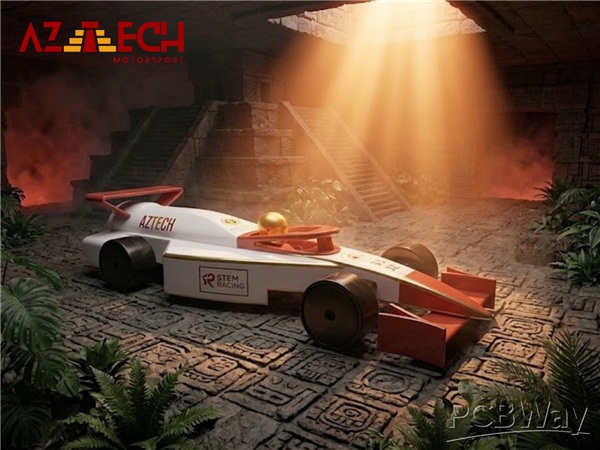
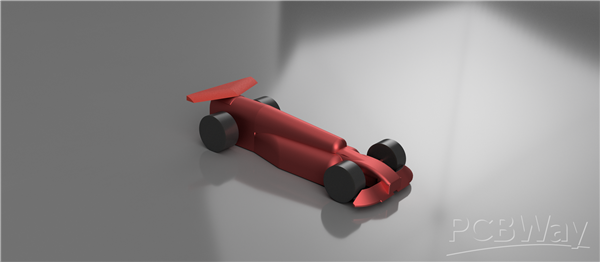
Our current prototype, the RCR-10, has been developed through a full engineering cycle, starting with hand-drawn concept sketches, iterative CAD modelling in Fusion 360, CFD simulation in SimScale. Through ten design iterations, we reduced aerodynamic drag by 17.4%, applying real-world principles like vortex generation and laminar flow optimisation.
Every prototype in that journey was 3D printed. The rapid prototyping is what made five generations of development possible within a student competition timeline, and it is precisely why access to professional-grade 3D printing, like that offered by PCBWay, is so valuable to a team like ours. With PCBWay's support, we could explore a wider range of materials and higher-precision printing technologies, pushing our prototype further than our in-house setup alone allows.
Computer-Aided Design (CAD):
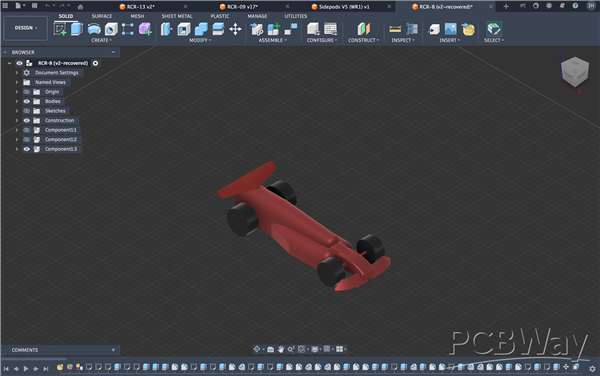
Before any component of our car came into reality, it was meticulously designed using CAD software, specifically Fusion 360. Our CAD workflow is based off of iterative design. Our current prototype is the product of a design lineage that stretches back to when we first joined STEM Racing. Early iterations focused on complying to regulations and laying a foundation for future versions, allowing us to keep redesigning and refining our concepts as the competition progressed.
Fusion 360 allows us to do more than draw. We use to calculate the physical properties of every component that makes up our car. Important values like mass and density were all calculated virtually using Fusion 360. This give us precise control over the car's weight distribution.
The CAD model of our car is also the bridge to every other part of our engineering workflow. Our designs are fed directly into aerodynamic simulations and into our manufacturing workflow for 3D Printing. It is the key foundation of which every aspect of the car's development is built on top of.
CFD Simulation:
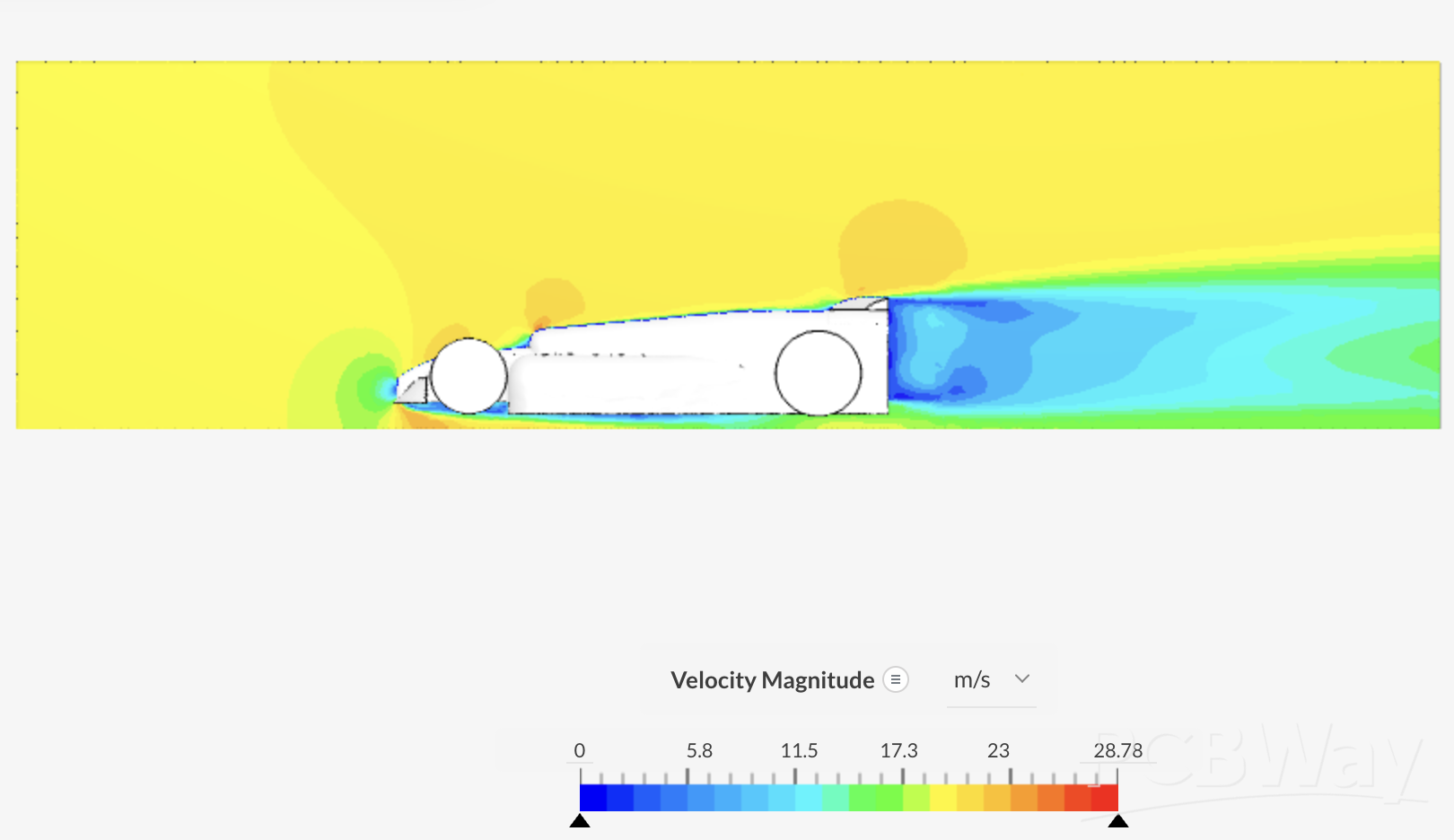
One of the most powerful tools in the development of our car has been Computational Fluid Dynamics (CFD) software, technology used by real life F1 teams and professionals in the industry that allows for the modeling and analysis of airflow around different objects, like our car. For Red Comet Racing, CFD has been the deciding factor behind every important decision we've made regarding the design of our car.
We conduct all of our CFD simulation using Simscale, a cloud-based platform that allows our team to access professional grade-analysis like in Formula 1. Our simulation environment replicates real racing conditions as closely as possible, with an inlet wind velocity of 20 m/s, an incompressible steady-state solver, and the k-ω SST turbulence model, which is widely regarded as one of the most accurate models for predicting airflow behaviour around complex external geometries like a race car. We apply the same fundamental principles, like Bernoulli's Principle, that professional F1 teams use in aerodynamic development.
Each iteration of our car was put through the same simulation workflow. The results gave us a precise drag force value for every design, allowing us to make data-driven decisions for following iterations. From our first prototype, the RCR-05, we've reduced aerodynamic drag by 17.4%, only possible through improvements because of our simulation data. Areas of turbulent flow were eliminated, by shaping the body and wings of our car in revolutionary ways.
CFD transformed our entire design workflow, allowing us to base our iterations off of evidence instead of intuition. Without it, we would be guessing, instead of engineering.
Manufacturing:
With our car's prototype slowly being finished, our focus is starting to shift ti manufacturing. For our team, 3D printing is the cornerstone of our entire manufacturing workflow, and it is the area where PCBWay's support would have the most direct impact on our results.
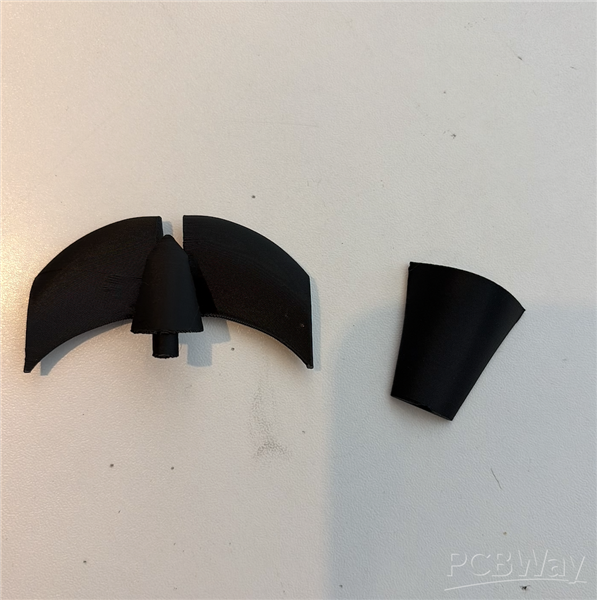
Our primary manufacturing tool is the Bambu A1, a high precision FDM printer capable of producing parts with the dimensional accuracy and surface consistency our aerodynamic components demand. For aerodynamic parts such as the front wing, we are experimenting with a wide range of materials, including carbon fiber infused PLA plastic. This is especially critical because all parts must remain rigid under competition regulations, any flexibility would comprise both aerodynamic performance and regulatory compliance.
Weight management is one of the most technically demanding aspects of manufacturing at this scale. The competition regulations states a strict 60g minimum weight on the finished car. Our strategy involves carefully controlling infill density, using different infill densities, reducing wall counts, and at making use of Fusion 360's tools, in order to try to keep weight to a minimum. Target print weight for aerodynamic components sits at approximately 3g, leaving sufficient budget for the paint stack and chassis.
The finishing processes also adds a layer of complexity to the finished car. We are planning to paint our car in red and silver by layering different colors on top of one another. Each layer adds measurable weight, totalling to a roughly 2 to 3 gram increase in weight. To account for this, we will remove approximately 4g of foam from our car's body allowing the full paint stack to bring the finished car back to it's target weight of 60-61g.
Access to PCBWay's professional 3D printing services would allow our team to go further. High-precision printing, broader material palette, and profesional-grade surface finishes would directly improve the performance of our car while keeping our team's signature colors.
How PCBWay Fits In:
As a student team operating on a limited budget, we rely on partnerships with industry leaders to bring professional-grade tools and components into our workflow. PCBWay's support would directly enable us to produce and test more our designs with a wider range of materials. Your logo would be prominently recognised across our livery, portfolio, and team website at redcometracing.com.
Beyond the competition, our goal is to inspire the next generation of engineers in Hong Kong. A partnership with PCBWay connects your brand to that mission.
Thank you for considering us!
- Comments(0)
- Likes(1)