Mesh_Handheld
1. Introduction
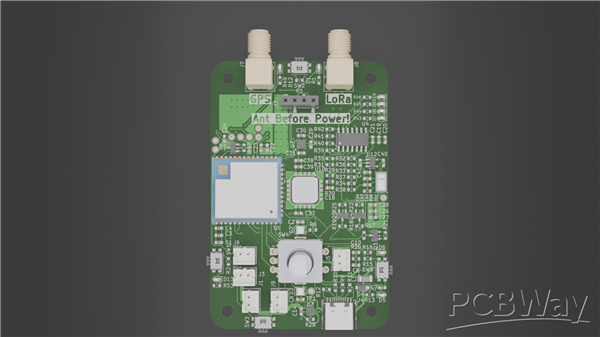
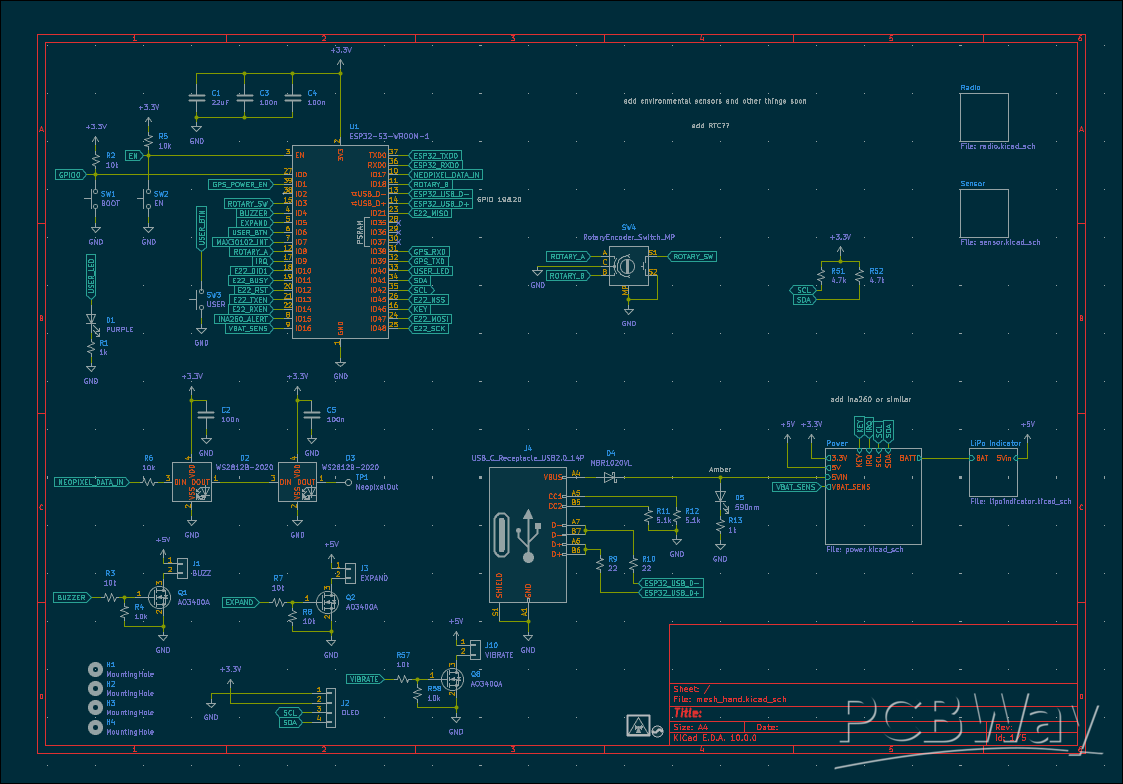
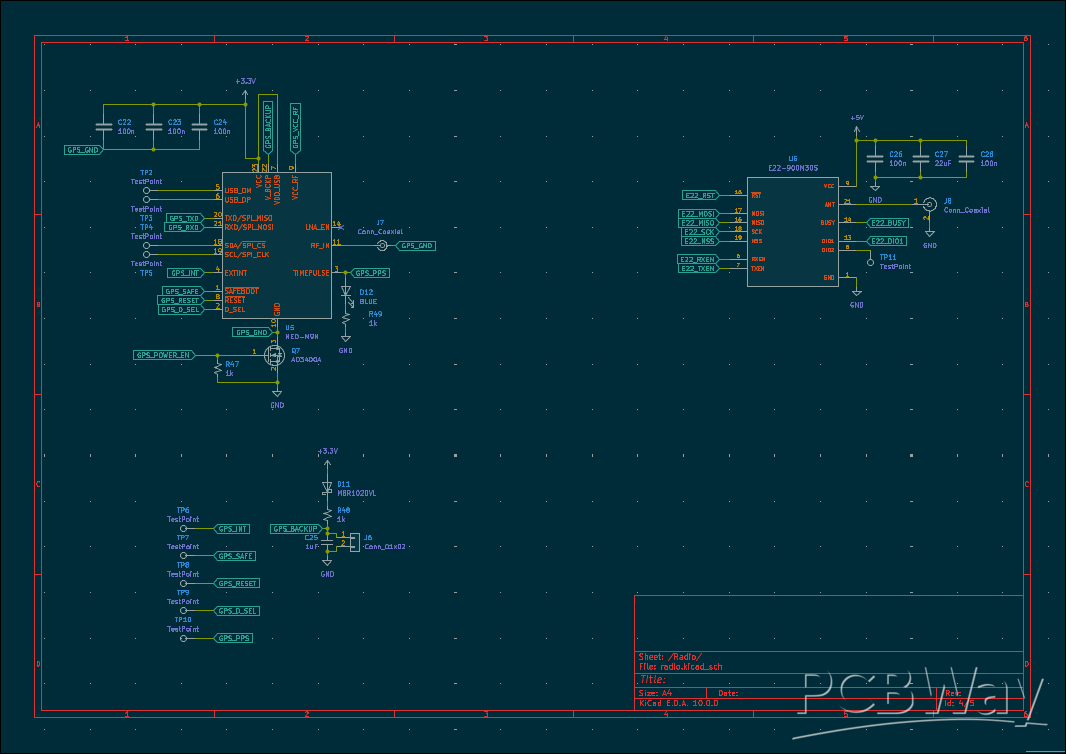
Mesh Handheld is a portable ESP32-based embedded system designed for decentralized communication and environmental sensing. The device integrates wireless networking, multiple onboard sensors, and a battery-powered system into a compact handheld form factor.
The goal of this project is to create a self-contained, modular platform for experimenting with mesh networking, embedded systems, and sensor integration.
2. Design Overview
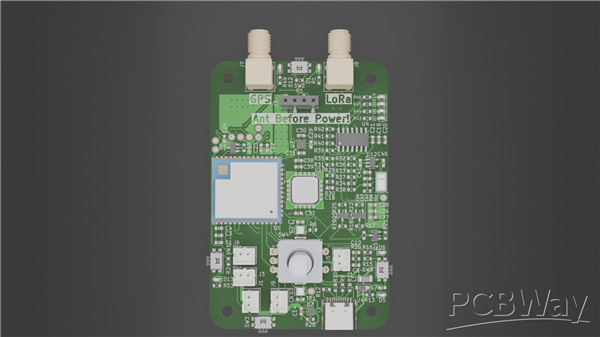
The system is centered around an ESP32 microcontroller, selected for its integrated WiFi capabilities and support for mesh networking protocols. The design combines multiple subsystems into a single compact PCB:
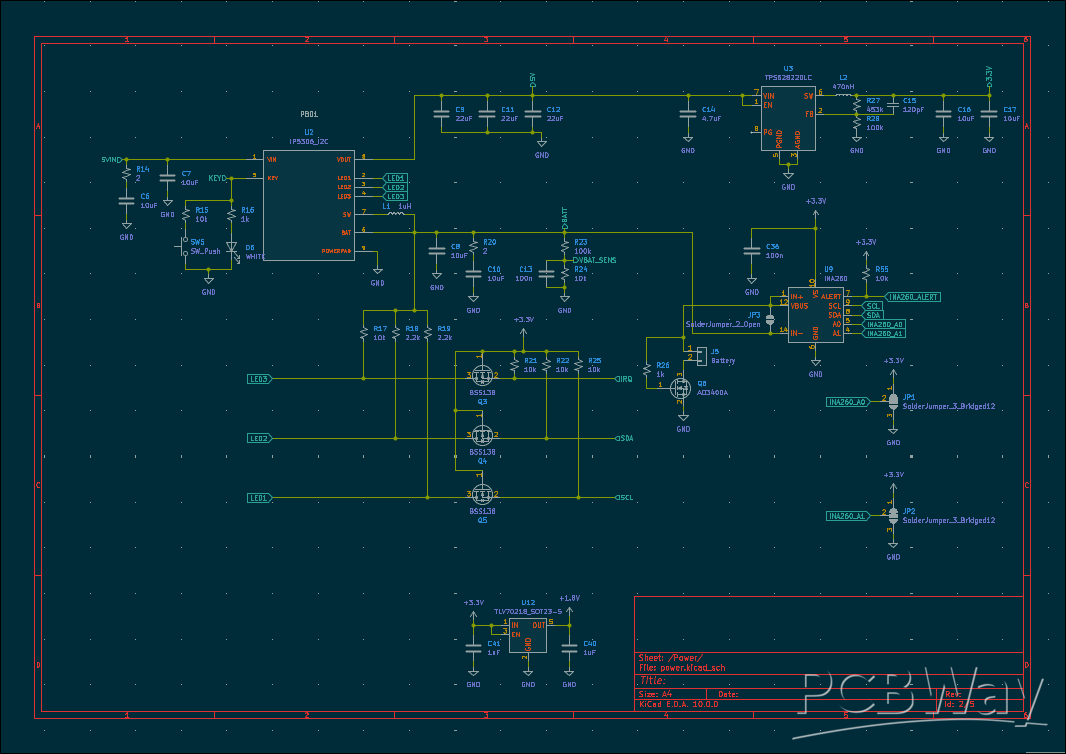
Power management using the IP5306 charging and boost IC
Battery-powered operation with USB charging
Multiple onboard sensors (environmental and biometric)
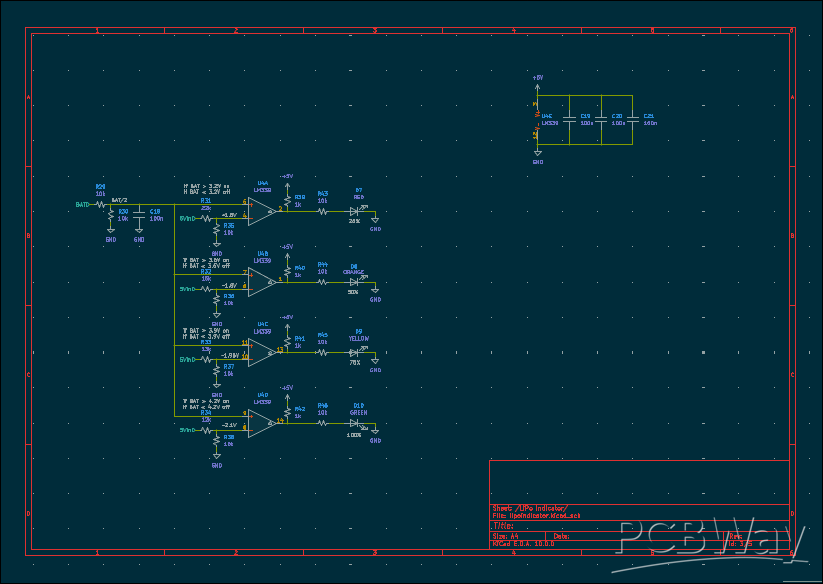
Status LEDs for system feedback and debugging
Expandability through available GPIO
The device is intended to operate as a standalone node in a mesh network, while also serving as a general-purpose embedded development platform.
3. System Architecture
The system is divided into several functional blocks:
Power System: Battery input, charging IC, voltage regulation
Microcontroller: ESP32 handling communication and control
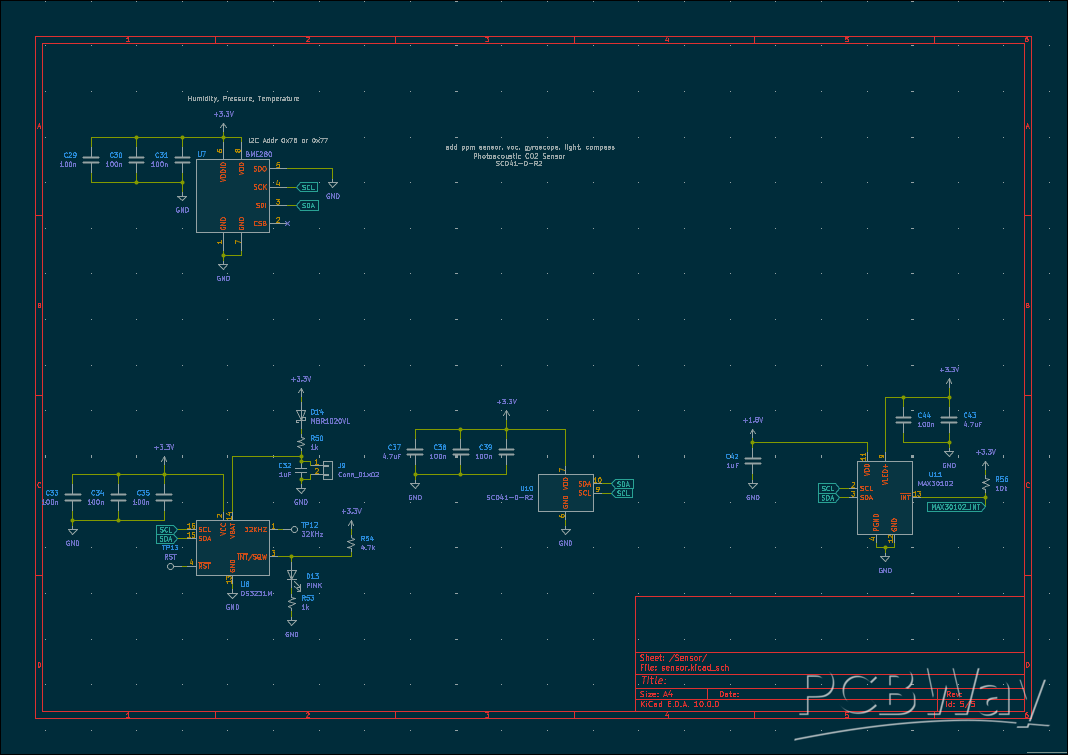
Sensors: Connected via I2C and other interfaces
User Interface: LEDs and potential input controls
These subsystems are carefully integrated to minimize interference and ensure reliable operation in a compact layout.
4. PCB Design Considerations
The PCB is being designed with focus on signal integrity, power stability, and compact layout:
Use of a 4-layer stackup (SIG-GND-PWR-SIG)
Continuous ground plane for low impedance return paths
Dedicated power distribution layer for stable voltage delivery
Careful placement of decoupling capacitors near ICs
Separation of noisy and sensitive signals where possible
Special attention is given to the ESP32 RF section to ensure proper antenna performance and minimal interference.
5. Current Progress
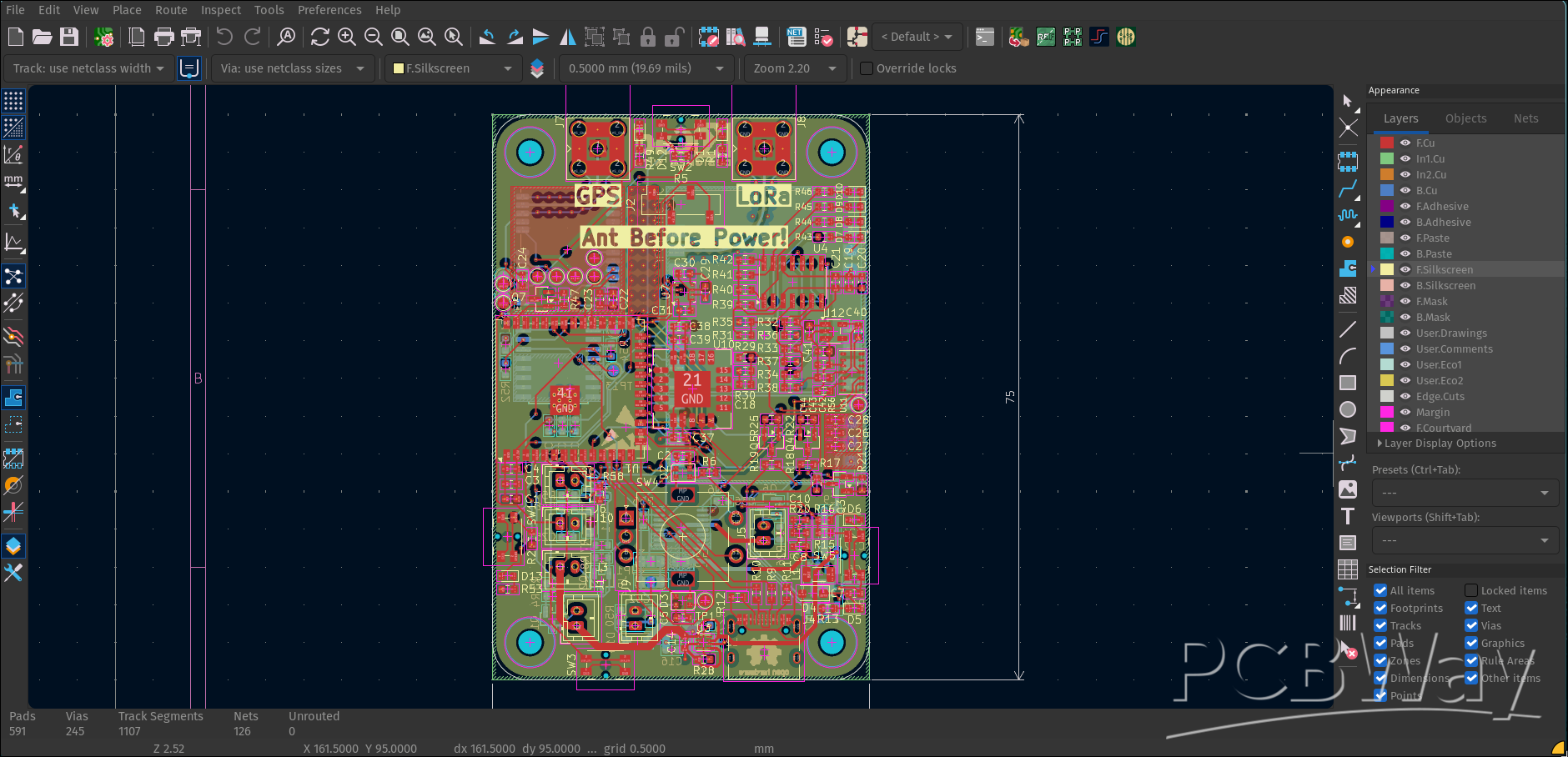
The schematic design has been completed, and PCB layout is currently in progress. Initial component placement and routing have been started, with focus on power integrity and compact design.
6. Challenges
The main challenges in this project include:
Routing density due to compact handheld form factor
Power system stability in a battery-powered design
Managing noise and interference between subsystems
Ensuring reliable RF performance for wireless communication
7. Why PCBWay Sponsorship Helps
This project requires multiple PCB iterations to validate and improve:
Power delivery and battery charging performance
Sensor integration and signal reliability
RF performance and antenna behavior
Access to high-quality PCB fabrication and fast turnaround times would allow rapid iteration and significantly improve the development process.
8. Additional Notes
This project is supported by a Hack Club grant and will be documented throughout development, including design decisions, challenges, and testing results.
Apply for sponsorship >>
- Comments(0)
- Likes(0)