First-of-it's-kind Baja SAE clutch
Who is Baja ENA?
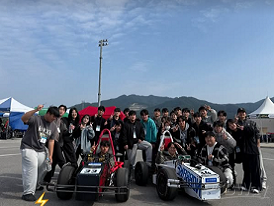
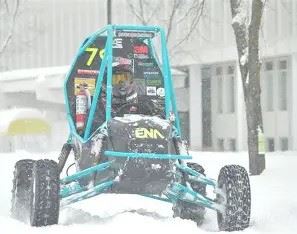
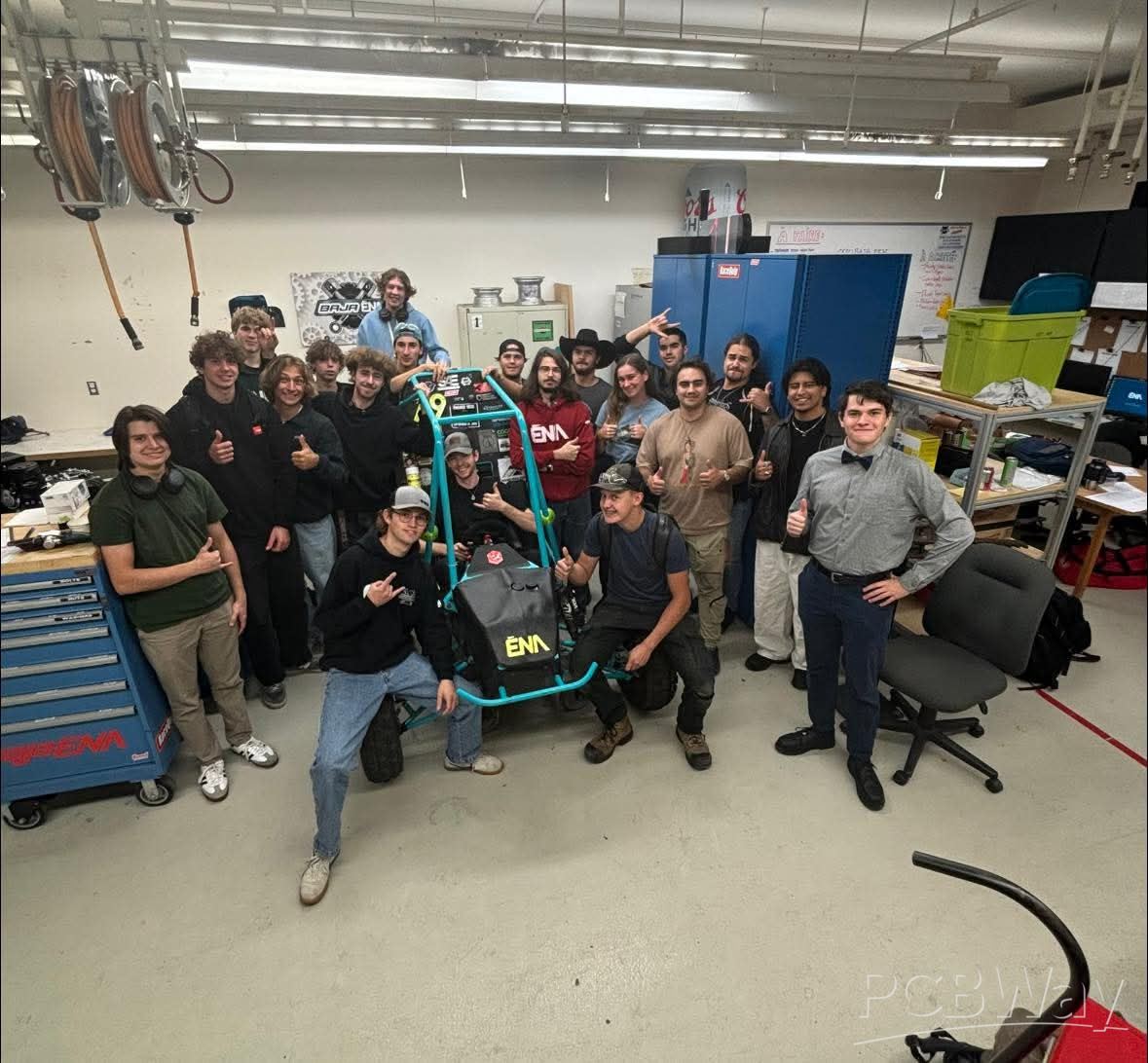
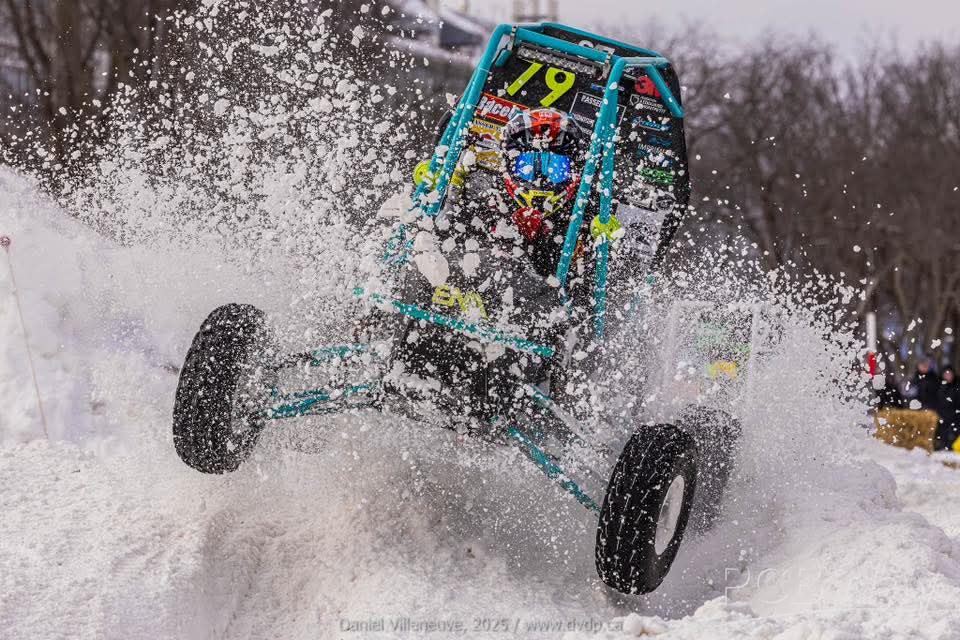
Baja ENA is the off-road racing team of Collège Édouard-Montpetit, one of the very few CÉGEP-level teams competing in Baja SAE, a circuit otherwise dominated by university programs. Our team of roughly twenty members brings together students in aeronautical engineering, aircraft maintenance, and avionics, which gives us a technical culture that values precision, reliability, and thoughtful design over quick fixes.
Here is an old video showing our long term implication in Baja SAE races.
The team has been competing in Baja SAE for close to 20 years, with multiple SAE competition appearances and notable results including a win at the Okto Baja Fest in 2023. Despite operating with a smaller budget than most university programs, we have consistently placed ourselves among competitive teams by building smart, well-engineered vehicles.
The Problem We're Solving
This year, our vehicle runs an all-wheel drive system. Managing the front axle engagement introduces a real challenge: we need a clutch that can transmit power reliably, protect fragile drivetrain components from torque spikes, and disengage fully when needed. Off-the-shelf solutions didn't meet our requirements, they were either too large for our packaging constraints, too expensive for our budget, or simply not tunable enough for our application.
Standard dog clutches lock rigidly and offer no slip protection. Friction clutches add heat and wear, and are harder to tune precisely. We needed something in between: a mechanically positive engagement that still yields at a defined torque limit.
Our Design
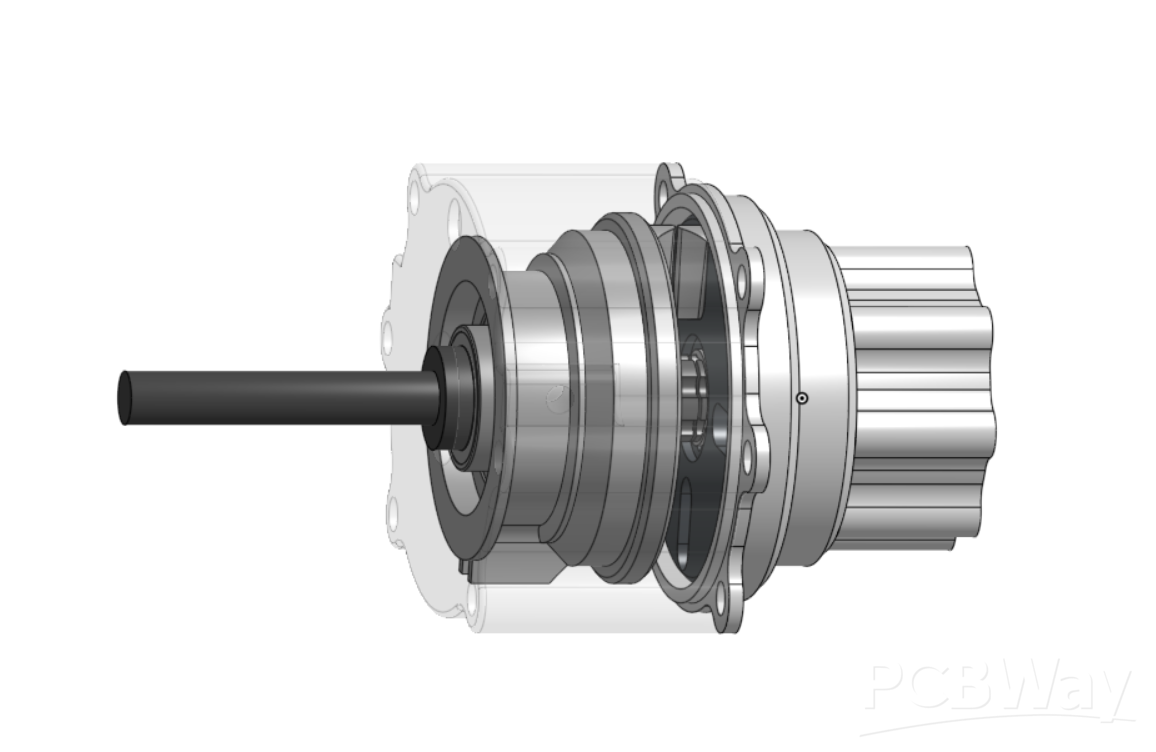
Our clutch uses angled engagement teeth that mesh under spring preload. When torque stays within range, the teeth lock and transmit power mechanically. No slip, no friction loss. As torque increases beyond the threshold, the inclined tooth profiles generate an axial force that pushes the two halves apart. This acts as active torque dampening during spikes. If the torque continues to rise and the teeth separate fully, they skip to the next tooth and the cycle repeats protecting everything downstream without any damage to the clutch itself.
The slip threshold is set entirely by spring preload. Reduce it, and the clutch slips earlier. Remove it completely, and the clutch disengages, giving us a simple, mechanical way to decouple the front axle on demand. The whole assembly fits within a 3.5" × 3" envelope, which was a hard constraint from the start given our packaging situation.
The design also avoids traditional splines, which require more complex machining. We developed our own spline interface that can be machined in-house at our school, which reduces cost and keeps production within our control. The torque target of 100–150 lb·ft came from an analysis of our full drivetrain, accounting for motor output, CVT ratio, gearbox reduction, and the load limits of our more fragile components.
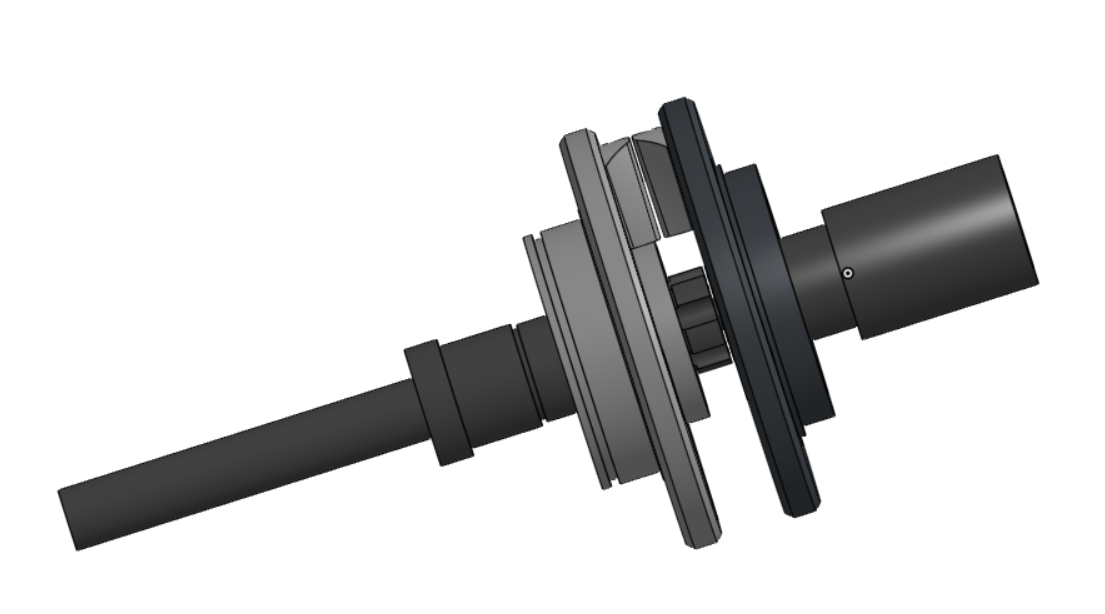
Compact assembly : 3.5 × 3"
lb·ft torque rating : 100–150
Adjustable slip threshold via spring
Fully disengage when needed
Engineering Challenges
The two main constraints on this project were time and money and both pushed us to make better design decisions. Packaging was a real challenge; the clutch had to fit in a tight space within the drivetrain layout, so every millimeter mattered. We went through multiple design iterations to get both the tooth geometry and the spring system right within that envelope.
On the manufacturing side, we deliberately avoided features that would require outsourcing or specialty tooling. Our custom spline interface is one example of that, a choice that kept production accessible and cost-effective without compromising the mechanical performance of the assembly.
Why PCBWay?
The components that can't be made in-house require tight-tolerance CNC machining in 6061 aluminum and 4140 alloy steel. We completed our quote with PCBWay and confirmed that their manufacturing capabilities match our specifications. With the competition deadline under one month away, turnaround time is as important as quality and PCBway delivers on both.
The total manufacturing cost of $1,450 USD is a significant part of our available budget as a CÉGEP team. A sponsorship from PCBWay would make it possible to build and validate this first prototype on time, and give us the foundation to improve the design in future seasons.
Looking Ahead
In return for PCBWay's support, we will feature the PCBWay logo on our Baja, team apparel, and social media throughout our 2026-2027 season. We will also look to purchase more clutch components with PCBWay in the years to come.
This prototype is only the starting point. Future iterations will focus on improving consistency and predictability under real race conditions. We also plan to add instrumentation to the clutch, with sensors and electronics to collect data on its behavior during competition, which will guide the next design cycle. We're building something that gets better every year, and we'd be glad to do that with PCBWay as a long-term manufacturing partner.
- Comments(0)
- Likes(1)