FTC Baby Sharks
FTC Team 33574 – Baby Sharks
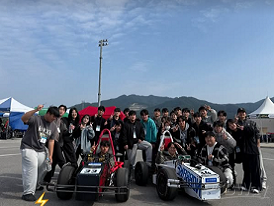
We are FTC Team 33574, the Baby Sharks, an 8-member FIRST Tech Challenge (FTC) team based in Massachusetts. We recently completed our rookie season after transitioning from FIRST LEGO League (FLL) to FTC. Unlike FLL, FTC requires teams to design, build, program, test, and iterate a new robot every season based on a completely new game challenge. This season was our introduction to larger-scale mechanical design, Java programming, CAD, and advanced autonomous systems.
To manage the increased complexity of FTC, our team organized into Build, CAD, Code, and Physics subteams. Each subteam develops specialized skills while working closely with the others throughout the engineering process. We follow an iterative design cycle of defining problems, prototyping solutions, testing performance, analyzing results, and making improvements. This process was used for every major subsystem on our robot and helped us learn how real engineering projects evolve through continuous refinement.
Robot Design
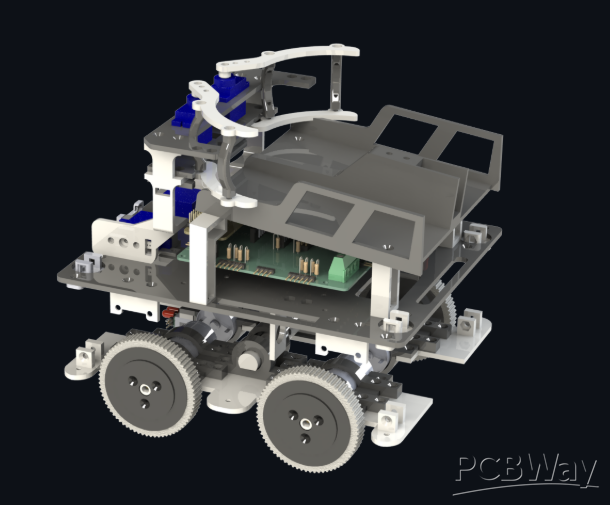
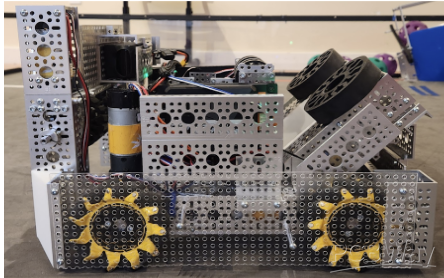
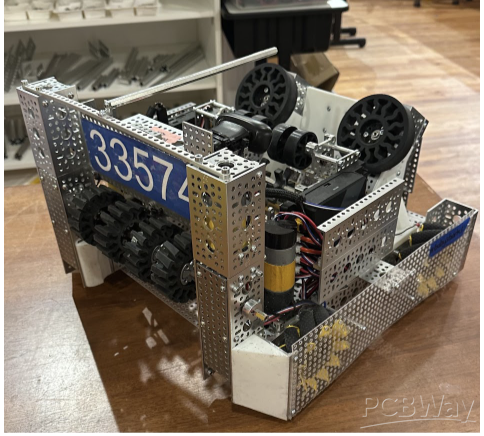
Our robot was designed to collect, transfer, and score game pieces efficiently while remaining reliable throughout competition. The robot is built around a mecanum drivetrain, allowing precise movement in all directions. This gives drivers the ability to align quickly, recover from defensive contact, and score from multiple positions on the field.
Throughout the season, we repeatedly redesigned key mechanisms rather than accepting early designs that did not perform well enough. Our intake system went through multiple revisions to improve collection speed, durability, and consistency. Ground-clearance issues discovered during testing led us to reposition motors and redesign protective structures around moving components. Transfer systems were also redesigned to eliminate jamming and improve the movement of game pieces from intake to shooter.
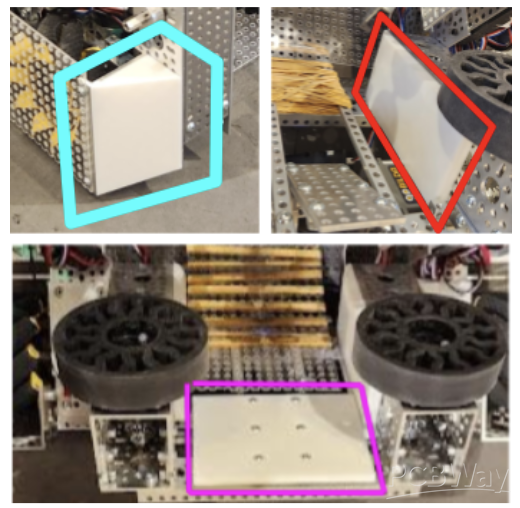
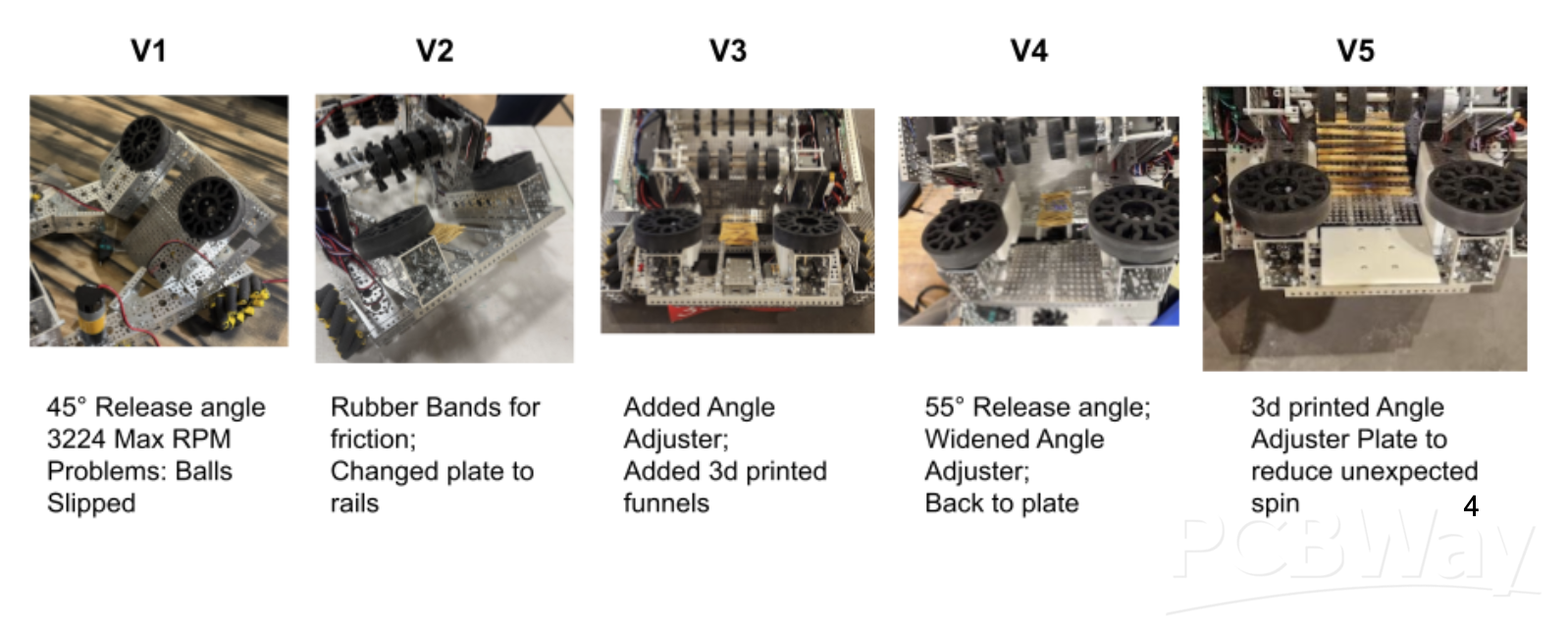
One of our largest engineering projects was our shooter system. Early versions were bulky and inconsistent, especially when shooting from different locations on the field. We built and tested multiple shooter designs before arriving at a final configuration that balanced reliability, accuracy, and mechanical simplicity. Through repeated testing, we adjusted launch angles, redesigned the angle adjustment mechanism, and produced several custom parts to improve shot consistency. Images of these iterations are included in our application.
CAD and Design Iteration
As rookie FTC students, many members of our team learned CAD for the first time this season. We began with basic design tools before transitioning to more advanced CAD workflows. CAD became a critical part of our development process because it allowed us to prototype ideas, identify potential issues before manufacturing, and create custom components that did not exist in standard robotics kits.
Several custom parts were designed and manufactured for our robot, including alignment components, protective structures, mounting solutions, and shooter-related mechanisms. We also created multiple design revisions for the same parts as we collected data through testing. Learning how to move from concept sketches to functional CAD models was one of the most important engineering skills our team developed this season.
Programming and Autonomous Systems
On the software side, our team learned Java and developed the code architecture used to operate the robot throughout competition.
One of our major goals was reducing inconsistency by replacing timing-based actions with sensor-driven systems. We implemented state-machine-based control systems to coordinate robot subsystems and improve reliability during both autonomous and driver-controlled periods.
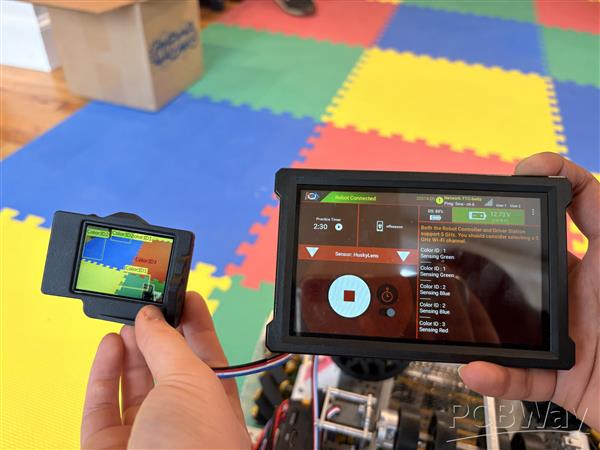
For autonomous navigation, we implemented PedroPathing to improve movement accuracy and path planning using odometry pods connected to a pinpoint computer. This allowed us to create more repeatable autonomous routines and better utilize field positioning throughout matches. We also integrated a HuskyLens AI camera for object detection and tracking, giving us hands-on experience with machine vision systems and sensor integration. Through extensive testing and debugging, we learned how software, sensors, and mechanical systems must work together to achieve reliable performance on the field.
Learning Through Iteration
One of the most valuable lessons from our rookie season was learning that engineering is an iterative process. Rather than expecting our first designs to succeed immediately, we learned to use testing data to guide improvements.
Following our first qualifier, we analyzed robot performance, reviewed match footage, and identified weaknesses in both mechanical and software systems. This led to improvements in drivetrain tuning, shooter consistency, autonomous performance, and overall robot reliability. By our second qualifier, many of these improvements had significantly increased robot performance and scoring consistency.
The experience taught us the importance of adaptability, documentation, teamwork, and continuous improvement—skills that extend far beyond robotics competitions.
Outreach and Community Impact
In addition to building our robot, our team is committed to expanding access to STEM education and robotics.
We developed and shared educational resources focused on coding, engineering, and robotics concepts. We also created learning materials for younger robotics students and provided these resources to teams across 32 U.S. states and Canada.
Our team actively supports FIRST LEGO League teams through mentoring, robot-building assistance, and educational programming. We ran a 10-week lesson series for FLL students, helped teams develop their robots, and continue to provide guidance throughout their seasons.
We have also participated in STEM outreach events including NextGen STEMFest and MakeItFest, where we introduced students and families to robotics through hands-on demonstrations and activities. Through these events, mentoring programs, and educational resources, we have reached hundreds of students and encouraged younger learners to explore engineering, programming, and robotics.
Additionally, we have established partnerships with educational organizations and community groups to expand STEM opportunities and create sustainable outreach programs for future students. Over the course of just 6 months, our team has reached over 600 people!
Future Goals and Manufacturing
As we prepare for future FTC seasons, one of our primary goals is advancing our manufacturing capabilities.
During our rookie season, most of our robot was built using kit-based components and simple custom parts. Moving forward, we want to learn advanced CAD techniques, sheet metal design, custom fabrication, and design-for-manufacturing principles.
What Support from PCBWay Would Do
Support from PCBWay would directly support the development of our future FTC robots. As we prepare for upcoming seasons, we plan to expand our use of custom-designed components and more advanced manufacturing methods. Sponsorship funding would help offset the costs of robot development, including custom parts, prototyping, manufacturing, testing, registration fees, outreach materials, and other expenses throughout the season.
As a rookie team, securing sponsorships is essential to making advanced engineering opportunities accessible to all members regardless of financial background. Support from PCBWay would help us continue learning CAD, manufacturing, programming, and engineering while giving us the resources needed to pursue more ambitious designs in future seasons.
In addition to supporting robot development, sponsorship would help us continue our STEM outreach efforts. Through mentoring FLL teams, creating educational resources, and participating in community STEM events, we work to introduce younger students to robotics and engineering. Support from PCBWay would help us sustain both our technical development and our outreach initiatives as we continue to grow as a team.
What PCBWay Would Receive
In return, PCBWay would be recognized as a sponsor on our team website, outreach materials, and social media platforms. We would also be happy to highlight PCBWay's support in presentations, outreach events, and engineering documentation when discussing the design and manufacturing process behind our robot. More information about the perks of sponsoring can be found on our website (linked below all the images).
As we continue mentoring younger robotics students and participating in STEM events, PCBWay's support would be visible to students, parents, educators, and other robotics teams. We would be proud to showcase PCBWay as a company helping students gain hands-on engineering experience and develop the skills needed for future careers in STEM.
Robot images:
HuskyLens Camera Data:
Make sure to check our our website and youtube channel!
https://team33574.wixsite.com/baby-sharks
https://www.youtube.com/@FTCBabySharks
Apply for sponsorship >>- Comments(0)
- Likes(0)