EOLIA UPV - Small-scale sustainable wind turbine
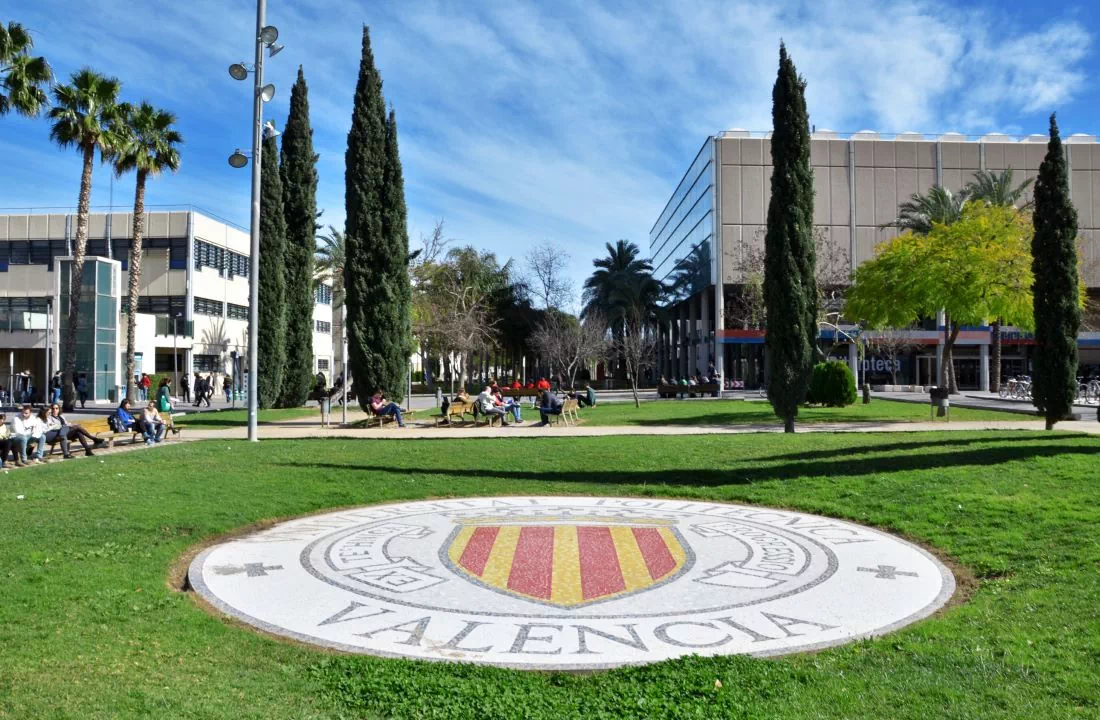
EOLIA UPV – Universidad Politécnica de Valencia
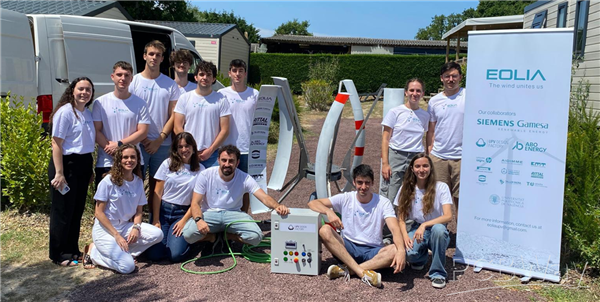
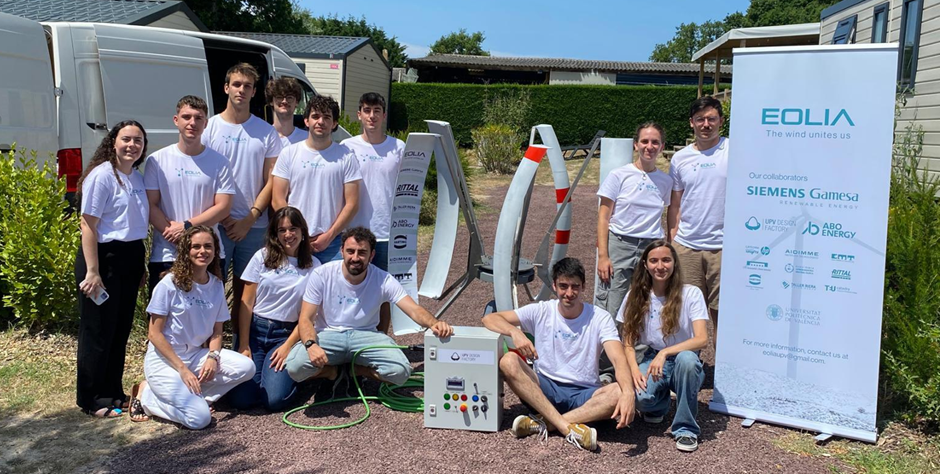
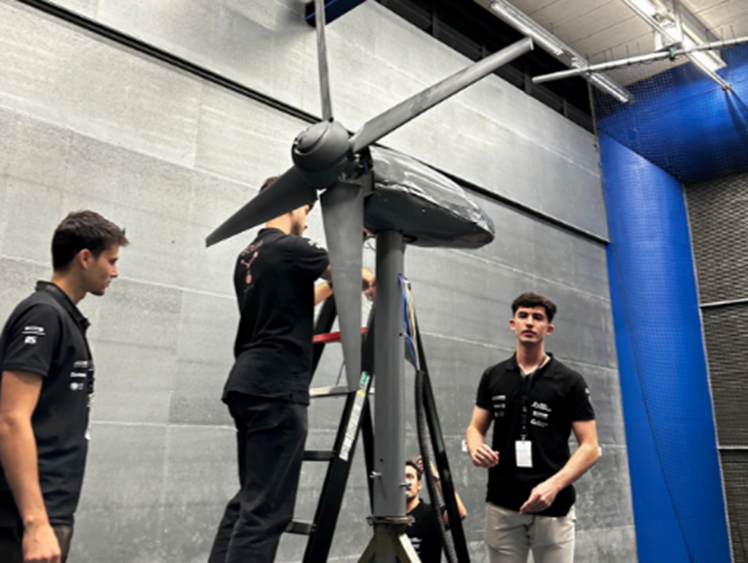
Eolia UPV is a competition team made up of 20 students from the Polytechnic University of Valencia (UPV) dedicated to the design and manufacture of small-scale wind turbines. The project is part of Generación Espontánea, a UPV platform that supports student-led extracurricular initiatives to promote hands-on learning and teamwork.
1. Description and Background
Founded in 2023, Eolia UPV designs, manufactures and validates small-scale wind turbines and their energy conversion systems to compete in the International Small Wind Turbine Contest (ISWTC), organized by Hanze University of Applied Sciences in the Netherlands.
So far, we’ve achieved second place twice in sustainability and lowest wind speed to start with our vertical axis prototype.
Our team is split into 5 divisions:
- Aerodynamics: the aerodynamics division optimises wind turbine blade design and performance using aerodynamic principles while exploring new solutions to support the project’s continuous development. By testing small-scale blade prototypes in a scaled wind tunnel, the team can evaluate multiple design iterations without significant material waste.
- Power electronics: Its mission focuses on the generator, the core of our prototypes. The team is responsible for selecting the generator and designing and carrying out the necessary tests to model its behaviour, allowing us to determine its optimal operating range.
- Control Electronics: responsible for the design of the energy conversion system and its control architecture, including data acquisition, Maximum Power Point Tracking (MPPT) algorithms, and safety systems. The division validates the circuits through RPM control tests in the scaled wind tunnel and by evaluating the performance of the different stages of the power conversion chain during power electronics testing.
- Mechanics: focused on designing and analyzing the structural integrity of all the turbine’s mechanical components, they ensure that the structure can withstand the load and stress the turbine will experience under various operating conditions through a thorough preliminary testing phase.
- Sustainability: the sustainability division ensures that every technical decision made by the team minimises environmental impact by analysing the feasibility of the materials used and prioritising renewable and environmentally friendly alternatives whenever possible. The team also explores alternative manufacturing processes aimed at optimising material usage and reducing environmental impact.In addition, the division develops Life Cycle Assessment (LCA) reports to support design decisions and accurately quantify the project’s carbon footprint. This allows the team to identify the areas with the greatest environmental impact and investigate more sustainable alternatives.
- Management: They coordinate the project’s public-facing activities and ensure smooth communication between the different departments and university entities. The team manages deadlines, resources, and budgets, while also being responsible for the project’s branding, promotion, and dissemination of its achievements through different communication channels.
2. Project Overview
For the 2026 season, Eolia UPV is focused on improving the energy conversion performance by upgrading the Buck converter to a synchronous topology, increasing the circuit’s reliability through the implementation of a power-up system, enhancing data acquisition by adding temperature and current measurements, and improving manufacturing sustainability by building the wind turbine blades from wood.
3. Competition Mission
In this competition, students must demonstrate their ability to build a wind turbine that maximizes energy production under specific wind conditions, testing critical aspects as energy conversion and aerodynamic efficencies, mechanical intregrity while maintaining a focus on sustainable manufacturing.
4. Why PCBWay
The synchronous Buck converter is a key component of our energy conversion system, responsible for efficiently regulating the power generated by the turbine. Due to its high-frequency switching operation, the converter can generate significant electromagnetic interference (EMI), which may affect sensitive electronics such as the Data Acquisition System (DAQ).
To minimise these effects and ensure reliable operation, the converter requires a carefully designed 4-layer PCB with good layer stack-up control, low-noise routing, and high manufacturing quality. PCBWay’s advanced PCB fabrication capabilities, support for multilayer designs, and reliable manufacturing tolerances make it an ideal partner for developing robust and efficient power electronics systems.
5. Benefits to PCBWay
Through this collaboration, PCBWay will gain valuable exposure and engagement across multiple platforms:
- Brand Visibility: Logo placement on the wind turbine, team apparel, and promotional materials during competitions and events
- Digital Exposure: Features across our social media platforms showcasing design, manufacturing, and implementation of PCBWay-supported components.
- Technical Showcase: Demonstration of PCBWay-manufactured PCBs in a real-world renewable energy application through the development of a high-performance domestic wind turbine system.
- Association with Innovation: Alignment with a student-led engineering team from a reputed institution, actively participating in national competitions.
Apply for sponsorship >>
- Comments(0)
- Likes(1)