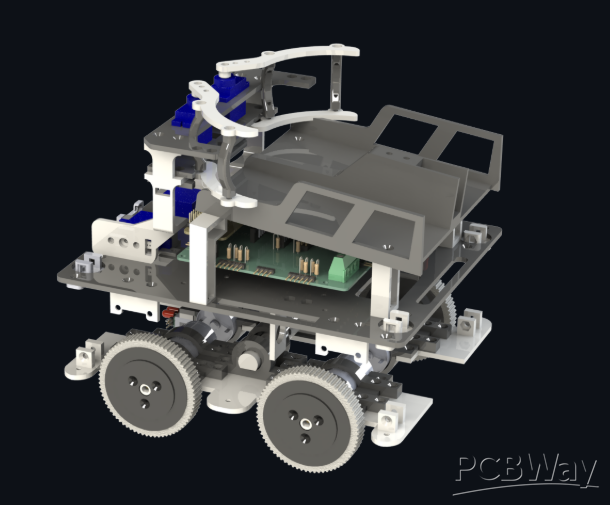
Boreas - Controller for Rockets
My name is Darsh, and I'm a high school student in Ontario, Canada. I have been making software since I was 11, and have been making hardware projects for a year now. I got into this hobby through support from HackClub, the world's biggest engineering nonprofit for teenagers, and have been gaining very meaningful experience since joining. I present one of my most technically complex projects to date, Boreas.
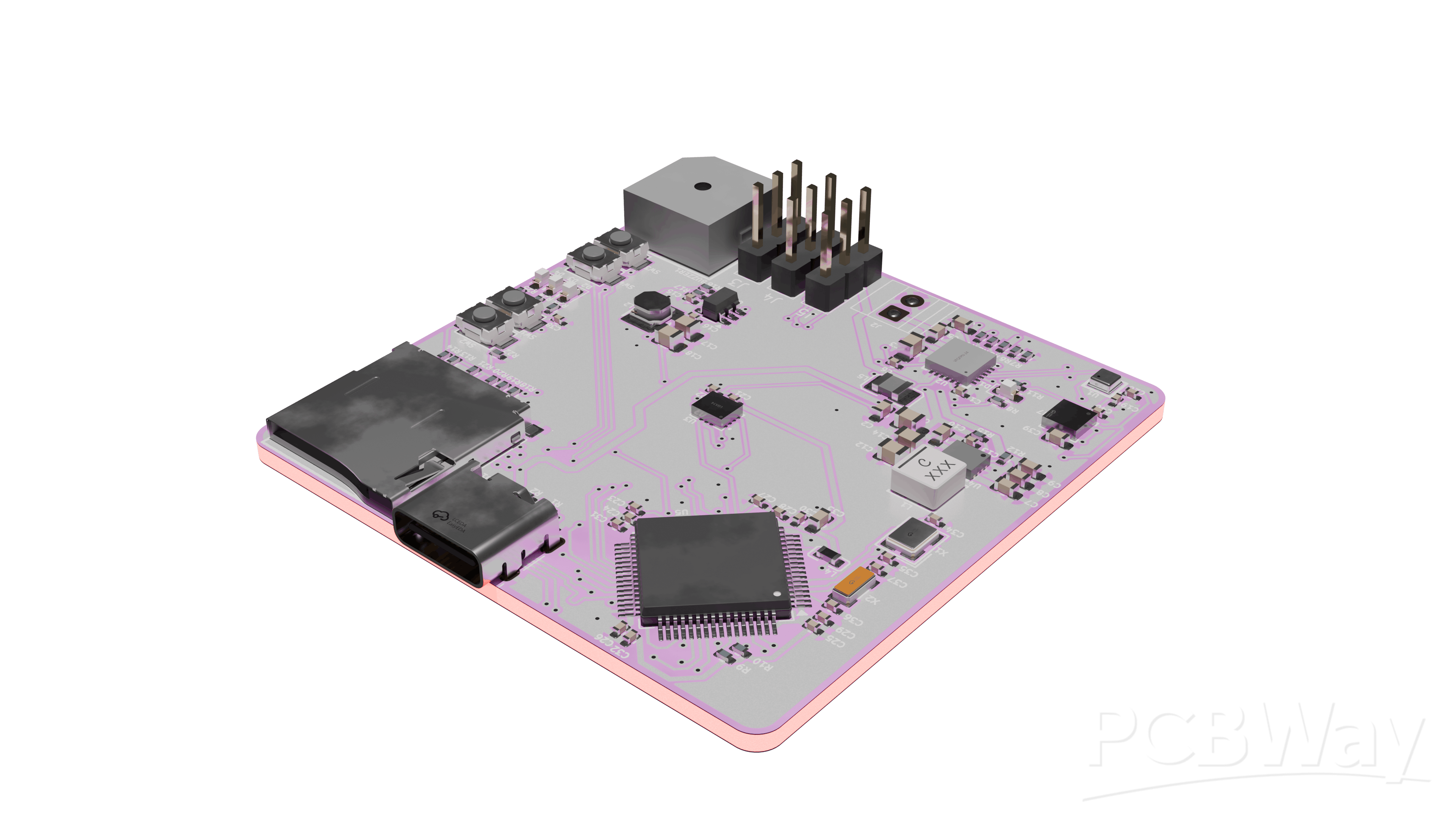
A flight controller for a rocket.
I made this project to both learn how to make flight controllers in general for my drone. Making it I got some more practice in routing PCBs and how to read datasheets! The plan for this board is to be used in a rocket I'm going to make, where hopefully with the gyro and motor pins i can get it to 1km altitude or higher. Little ambitious for my first rocket project but I think it should be fine! It's kind of a big PCB so it'll be hard to fit on the rocket but that means there is also more power due to the strong MCU. Also, the SD card will be useful to gain interesting, scientific telemetry, and I plan to use it to generate interesting graphs that can tell me how to improve the rocket further.
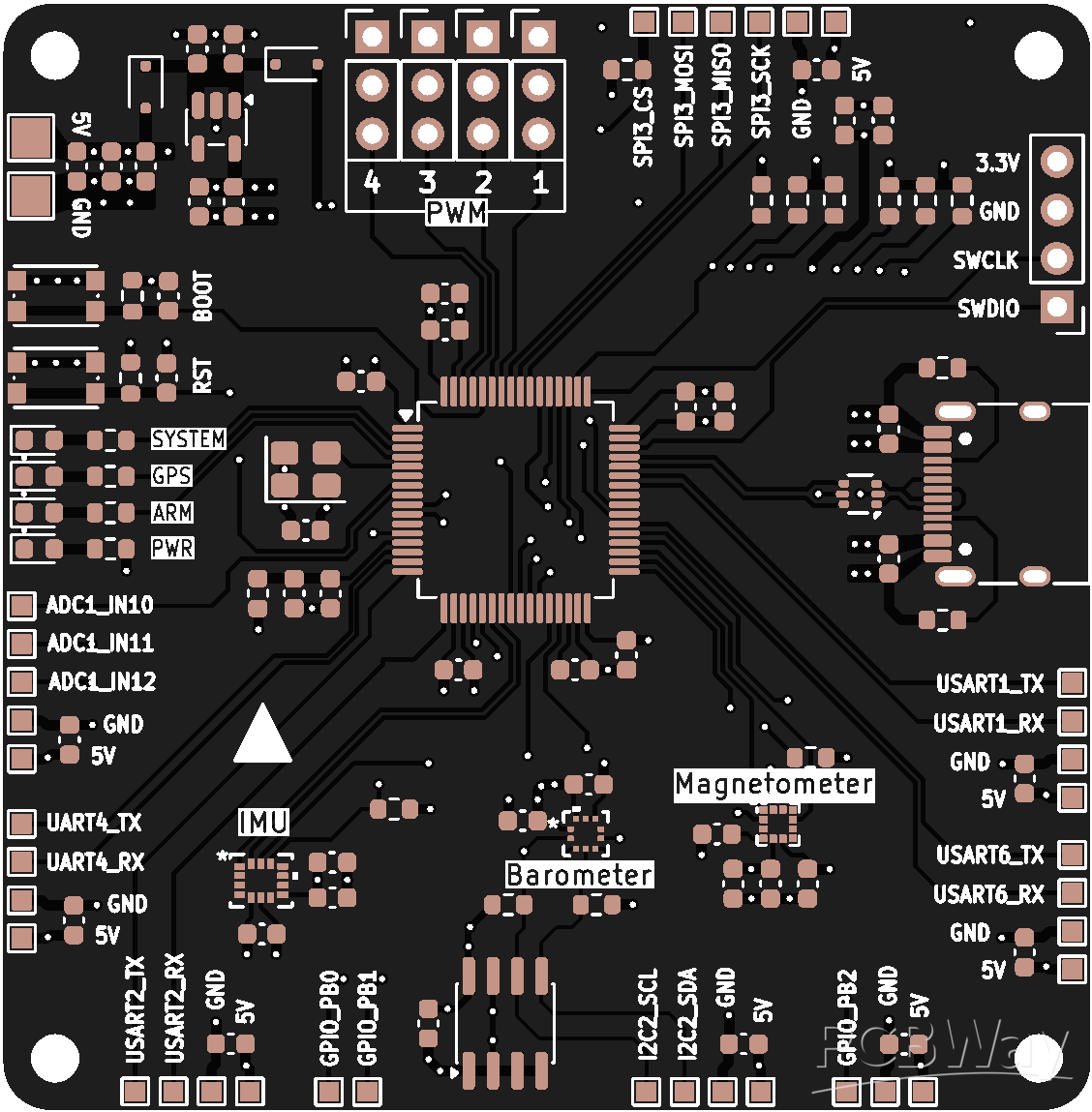
It uses an STM32F7 as an microcontroller, connected to an IMU, Barometer, and Magnometer. it also has 3 LEDs, two buttons, a buzzer, and 3 servo motor pins. it can also charge LiPo batteries through USB-C! Lastly it has an SD card reader for data collection!
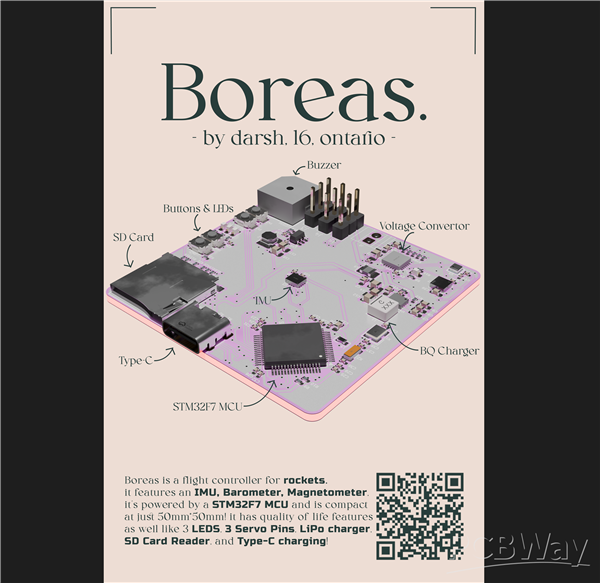
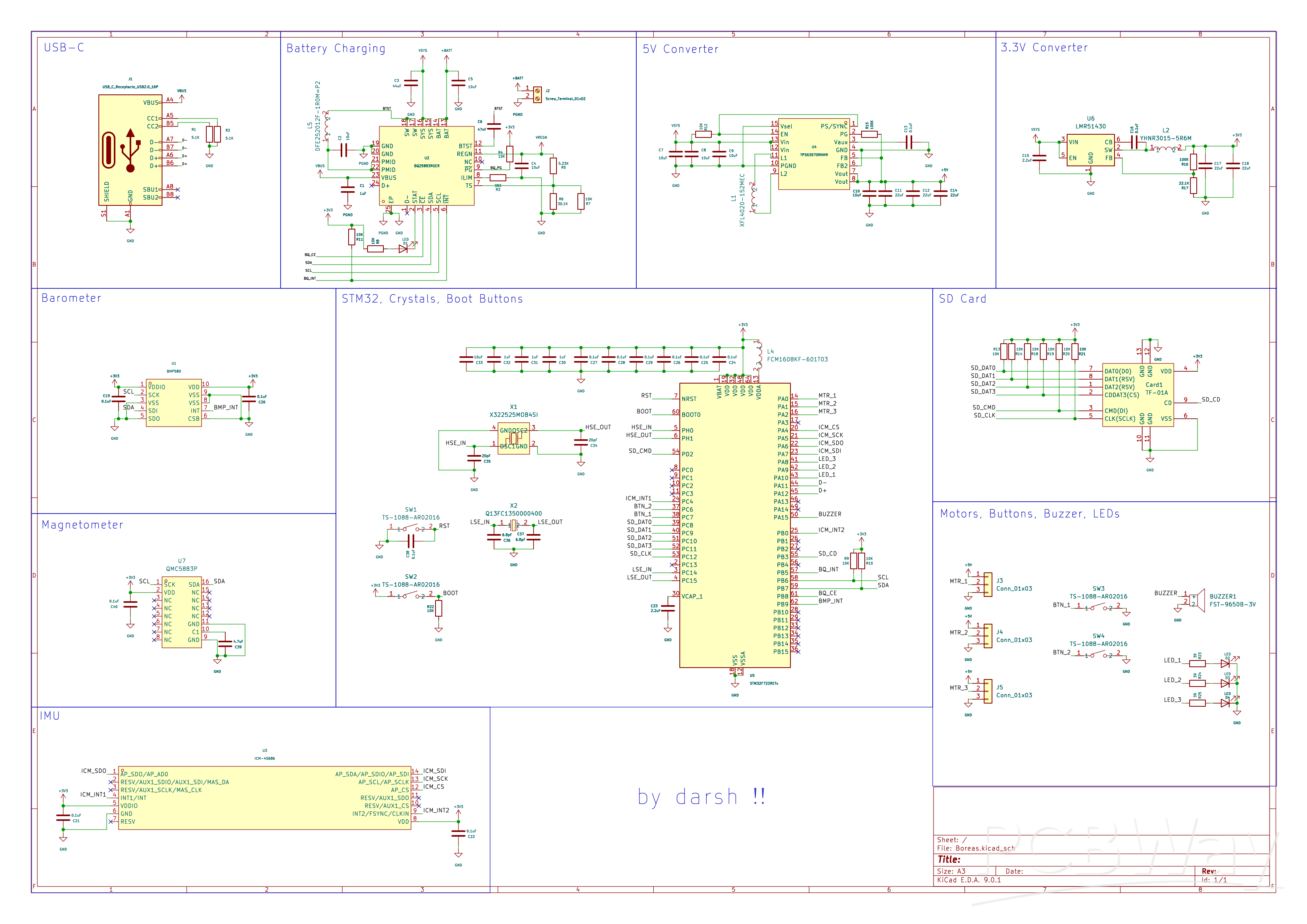
I started with a schematic to create this PCB. What took the most time to get right was the battery charging IC, and setting up the STM32 MCU to work properly, with all of its correct components. For example, even just missing one capacitor on one of the pins would mean the MCU, and therefore the entire board, doesn't work.
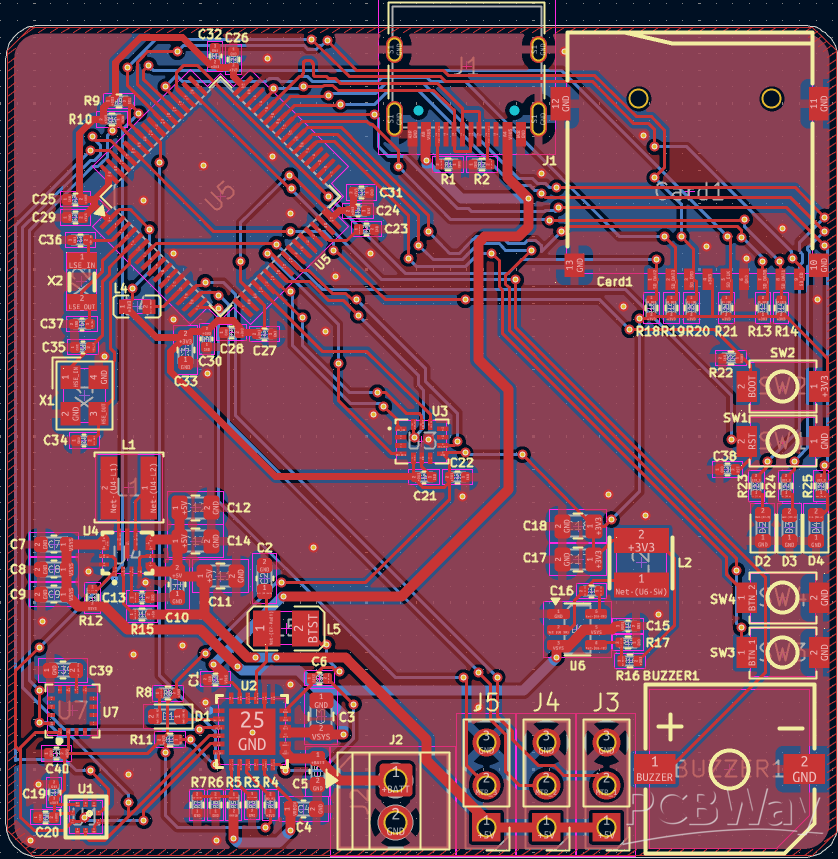
The routing was another story. I wasn't constrained by board space while creating this PCB, since I could pretty much make it as big as I want. However, I still wanted to give myself a challenge, so I decided on 50mm by 50mm for the dimensions, and it did cause some awkward routing. However, I think it still isn't terrible, and I learned how to route ultra small ICs, since the STM32 was definitely the smallest IC I've routed to date. I kept the IMU as isolated as possible, since it's the most noise sensitive component on the board.

- Comments(0)
- Likes(1)