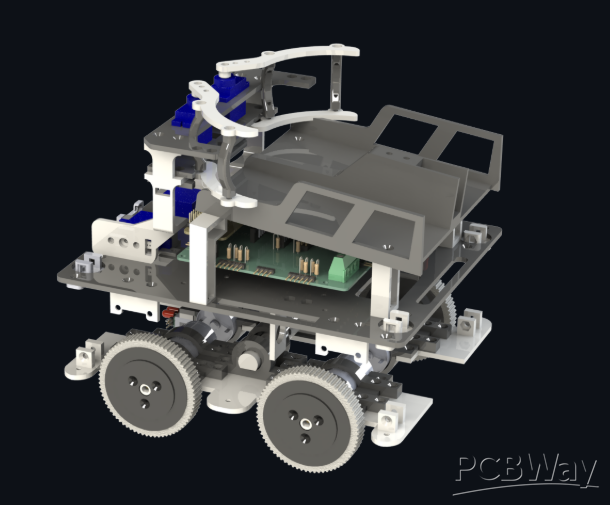
AgriMorph V2.0 — Next-gen field intelligence system
AgriMorph V2.0 is Team Automorph's dedicated agriculture IoT initiative—a solar-powered, internet-free agricultural monitoring system built for farmers and researchers in areas with no reliable connectivity. It's a complete redesign of AgriMorph V1 (which won Silver at the International IoT Olympiad), now ready for real-world deployment.
The system uses long-range radio (LoRa) to create a self-healing mesh network of sensor nodes spread across a farm field. Each node measures soil moisture, soil temperature, and air conditions, passing data wirelessly from node to node in a relay, until it reaches a base station at the farmer's home. From there, it's saved to a private web server and displayed on a simple dashboard — all without ever needing internet at the farm level.
Three device types work together:
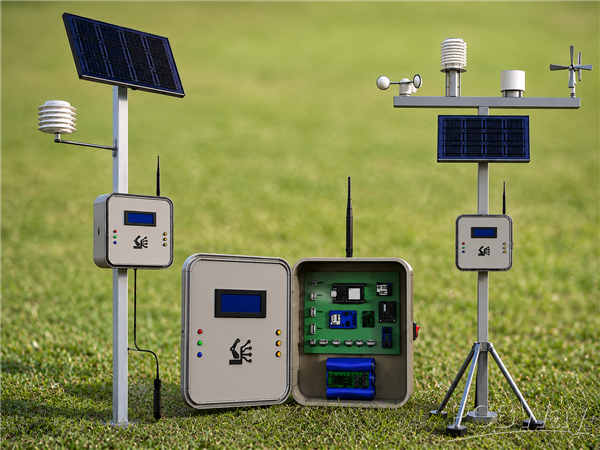
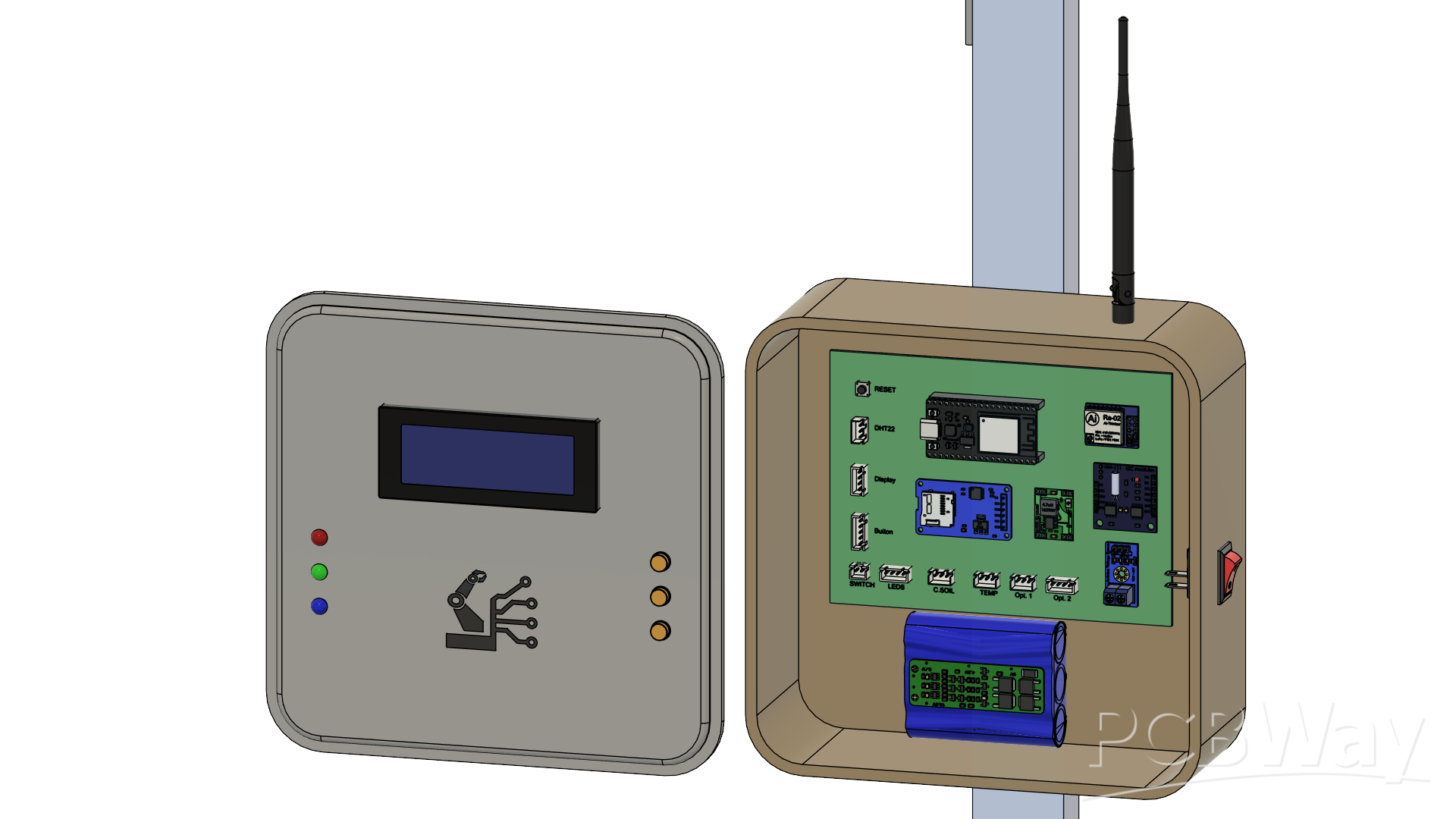
1. Field Sensor Nodes — deployed directly in crop fields, measuring root-zone moisture, soil temperature, and air conditions. Built with an ESP32 microcontroller, long-range LoRa radio, 20*4 LCD display, 3 control buttons, SD card backup, and solar-charged battery. Encased in a weatherproof 3D-printed PETG housing mounted at eye level on a pole.
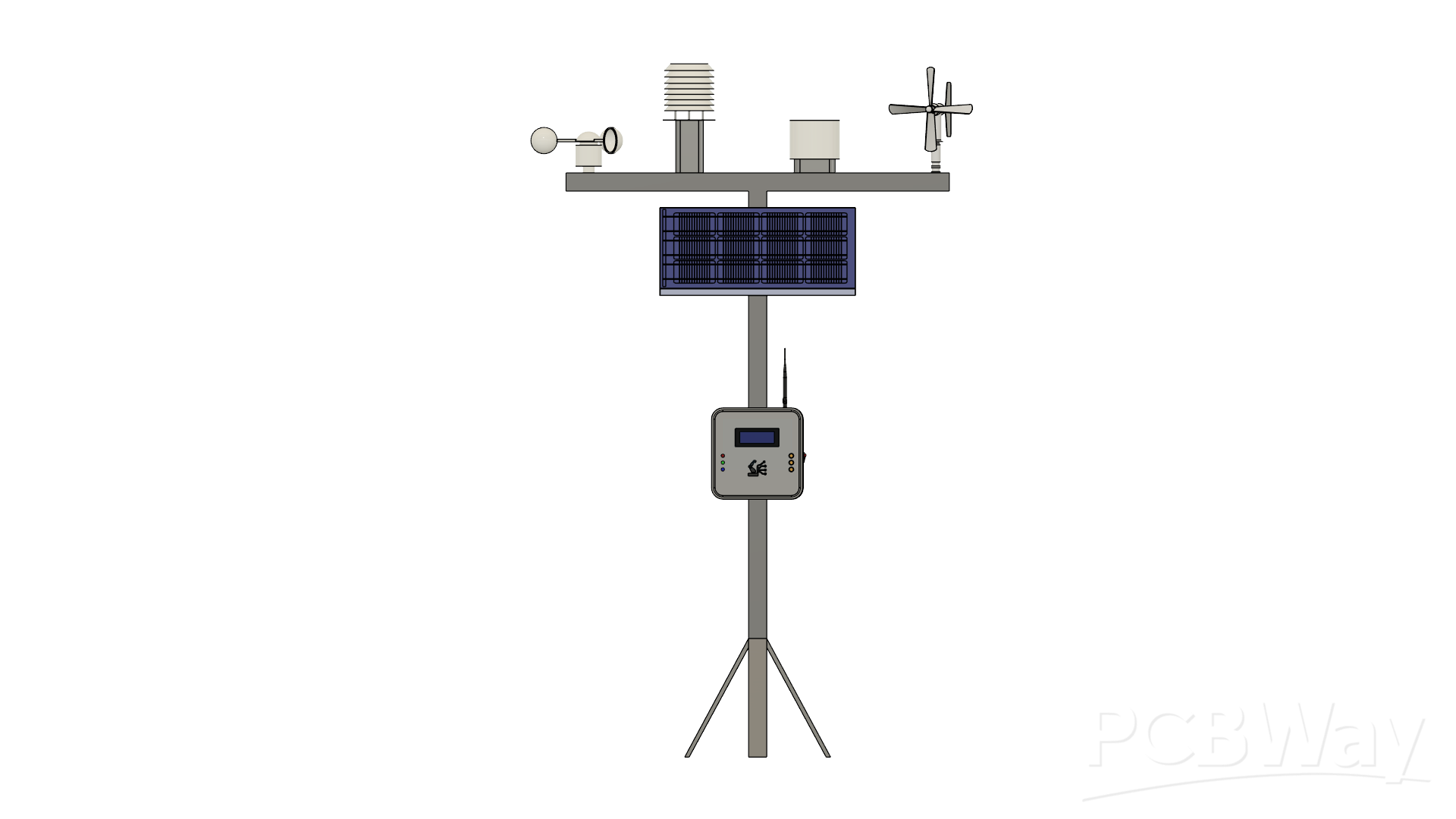
2. Weather Station Node — mounted at field edge, measuring wind speed & direction (custom anemometer + wind vane), rainfall (tipping-bucket gauge), sunlight intensity, air quality, temperature & humidity, and air pressure. Acts as the relay hub, collecting data from all field nodes and forwarding it to the base station. All weather instruments (anemometer, wind vane, rain gauge, radiation shield) are custom-designed and 3D-printed in-house to reduce cost.
3. Main Control Node — installed indoors at the farmer's home, plugged into normal wall power. Receives all data relayed from the weather station via long-range radio, displays it on a simple web dashboard accessible from any phone or laptop, and controls the irrigation pump automatically or manually. Acts as the local server and gateway to Team Automorph's cloud backup.
The problem is simple but massive: most "smart farming" solutions assume the field has internet access. They don't work in rural Bangladesh, where many farms sit far outside mobile coverage and even where a signal exists, the cost of 24/7 data plans makes no sense for a smallholder farmer's margins.
Farming decisions—when to water, when to expect frost, when disease risk is high—are best made with real data. Yet most smallholder farmers still rely on guesswork because the tools that could give them data assume infrastructure their farm doesn't have. The same gap stops researchers and government agencies from collecting reliable long-term field data.
We designed AgriMorph V2.0 to close that gap. By removing the internet entirely and using long-range radio instead, we created a system that works where conventional smart farming can't. Solar power keeps it running for over a year without battery changes. Plug-and-play setup means a farmer can add new nodes without any technical knowledge—just carry it to the field, press a button, and it joins the network automatically.
Our vision: every farmer and researcher deserves access to real field data, regardless of whether they have internet.
HOW DOES IT WORK?
Deployment in the field:
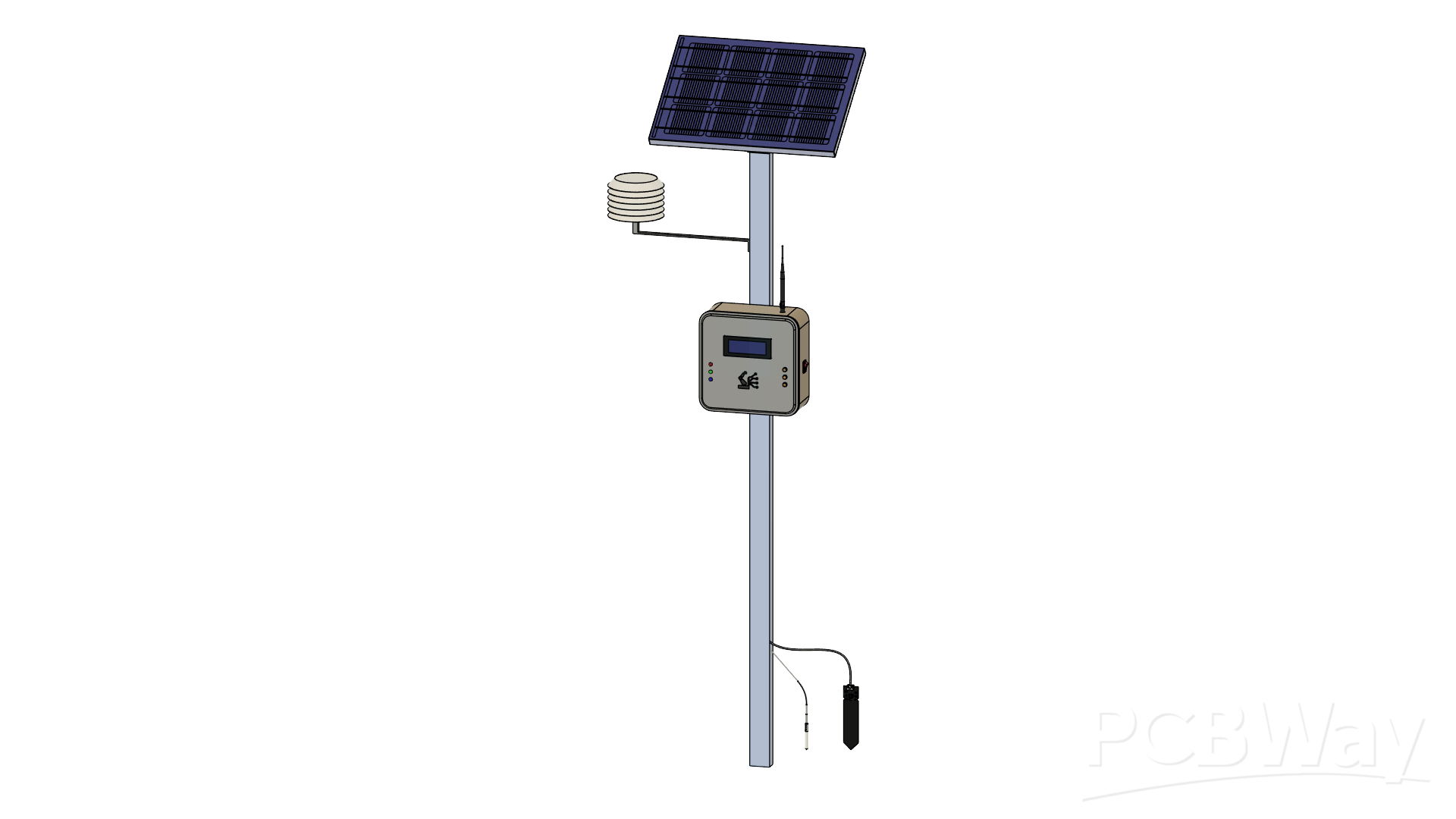
Each Field Sensor Node is mounted on a single pole with its solar panel at the top for charging, a long-range antenna pointing upward, a radiation-shielded air sensor partway down (outside direct sunlight), the control enclosure at eye level for easy visibility, and soil probes extending down to root depth (10–15 cm).
The Network Flow: Each sensor node wakes up every 15 minutes, takes readings (soil moisture, soil temperature, air temp/humidity), saves them to its own SD card for backup, and transmits them to its nearest neighbor using long-range radio. That neighbor passes the data onward, creating a relay chain. Each radio hop can cover hundreds of meters to a few kilometers, so the network can stretch across a large farm. All data eventually reaches the Weather Station Node, which forwards everything to the Main Control Node at home.
At Home: The Main Control Node receives all the field data via radio, displays it on a local web dashboard (no app needed—just open a browser), and automatically backs up to Team Automorph's own web server. The dashboard shows live readings, recent history as charts, and a button to control the irrigation pump. The system can run the pump manually with a tap, or automatically based on soil moisture thresholds—no daily monitoring needed.
Power & Reliability:
Field nodes run on solar panels + rechargeable battery packs. The intelligent deep-sleep cycle means they only wake to take readings, stretching battery life to 12+ months on solar alone.
Every node keeps its own complete backup on an SD card, so if the server ever goes down, nothing is lost—the full history is right there as a CSV file.
The base station at home plugs into normal wall power and has built-in safety: if no data arrives from the field for 30 minutes, it automatically shuts off the pump.
Setup is genuinely plug-and-play: Farmer carries Field Sensor Node #1 to the field, powers it on, presses its button. It automatically finds the Weather Station Node and joins the network. Days later, farmer adds Node #2—just power on and press the button. It finds Node #1 and joins the relay. No laptop. No reconfiguration. Everything works.
- Comments(0)
- Likes(0)