

Niva: a gait-sensing pod that flags its own bad data
Niva measures how a foot meets the ground. It's a pressure-sensing insole plus a small pod worn on the shin, and it talks to a phone over Bluetooth. I'm Shubham Sahu, a third-year Electronics & Computer Engineering student at TSEC, Mumbai. This pod board is the part of Niva I've spent the most time on.
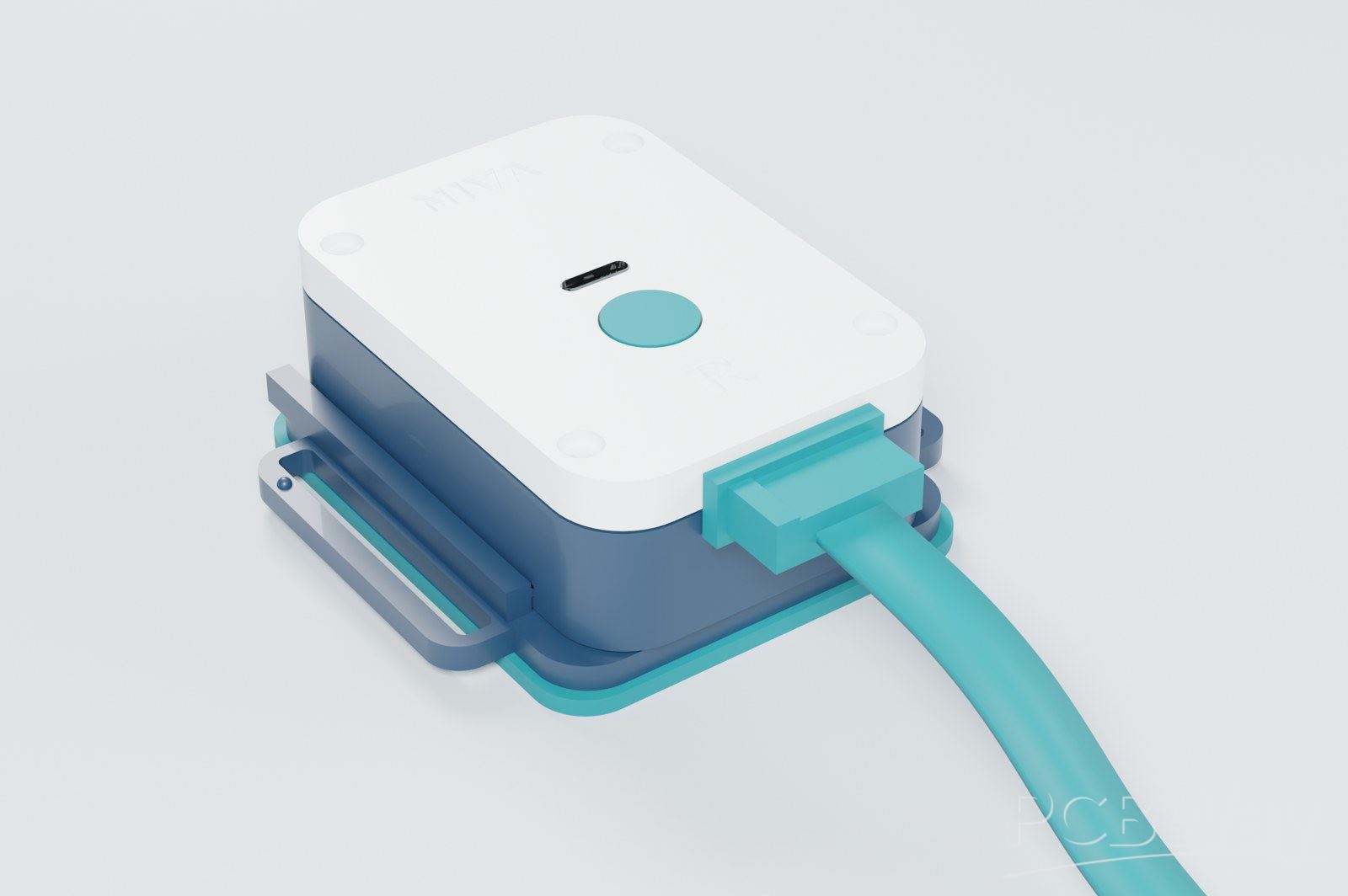
The Niva pod on its cradle (CAD render).
Where it started
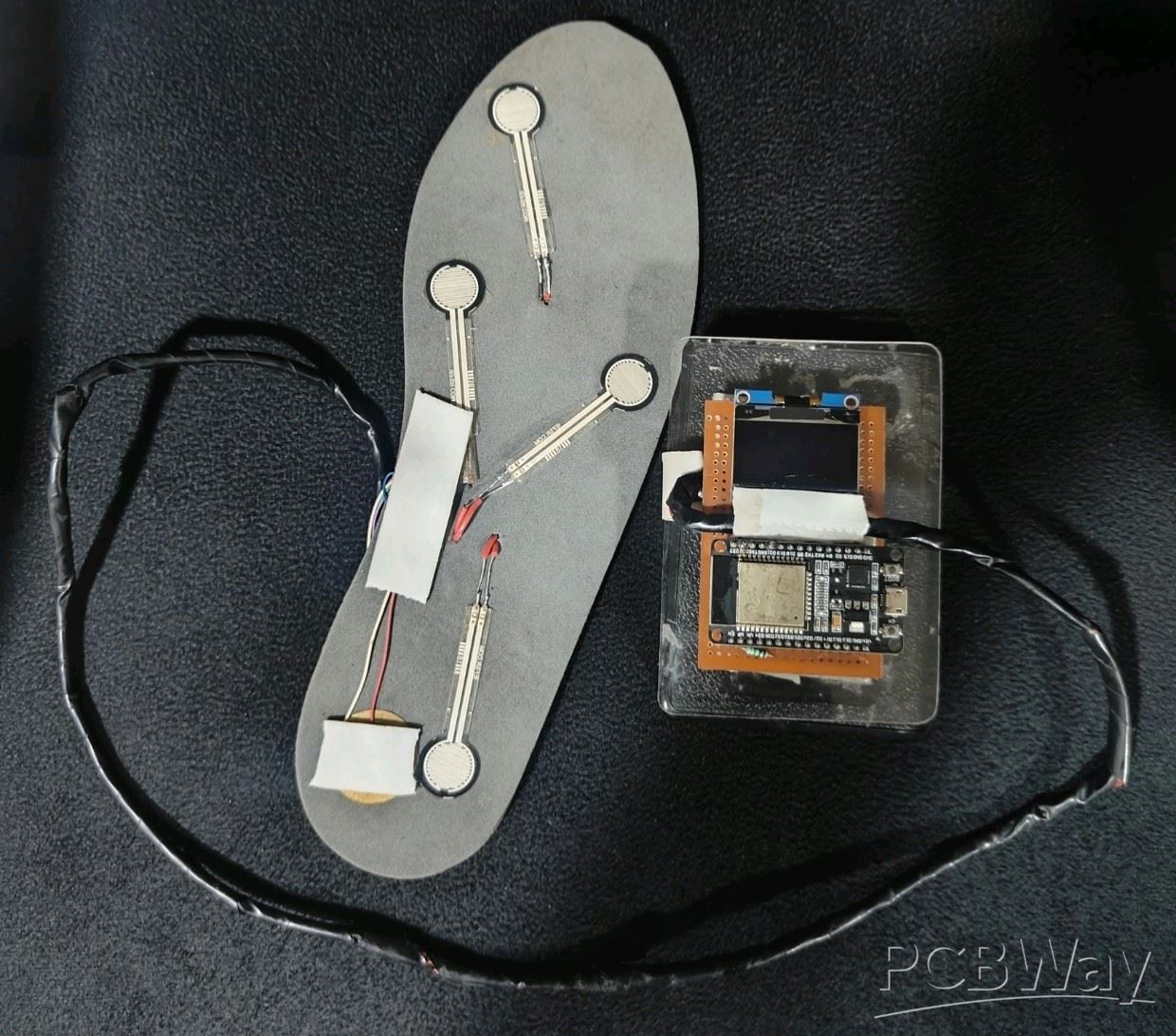
Version 1 (real photo): four FSR402 sensors and a heel piezo on an insole, wired to an ESP32 board with a small OLED.
The first Niva was an ESP32 dev board wired to four FSR402 pressure sensors, a heel piezo and an MPU6050. It streamed JSON over Wi-Fi to a web dashboard and a Flutter app. We took it to Automation Expo in July 2026 and let people try it.
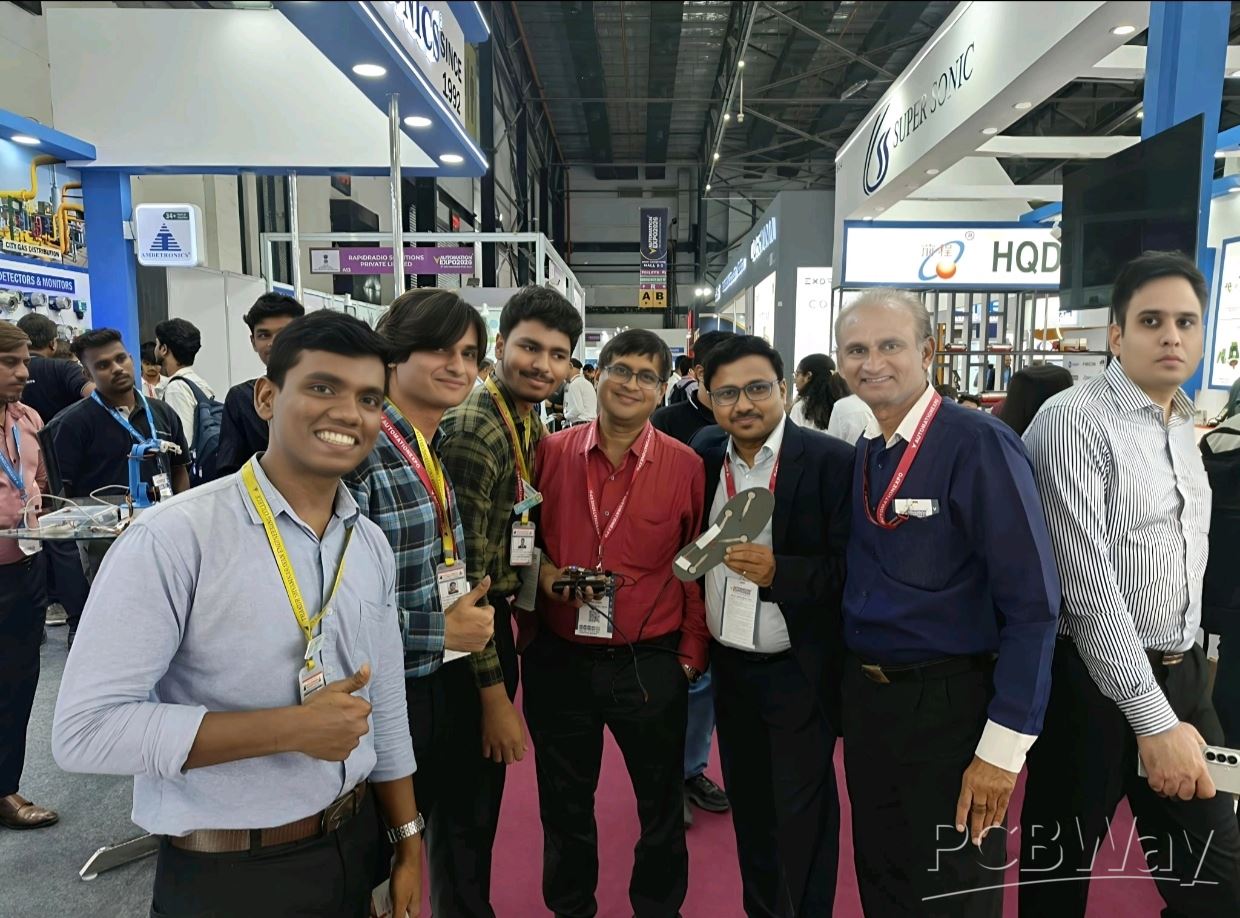
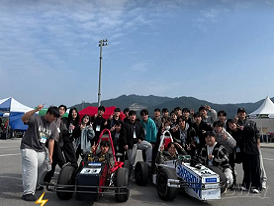
At Automation Expo 2026 (real photo).
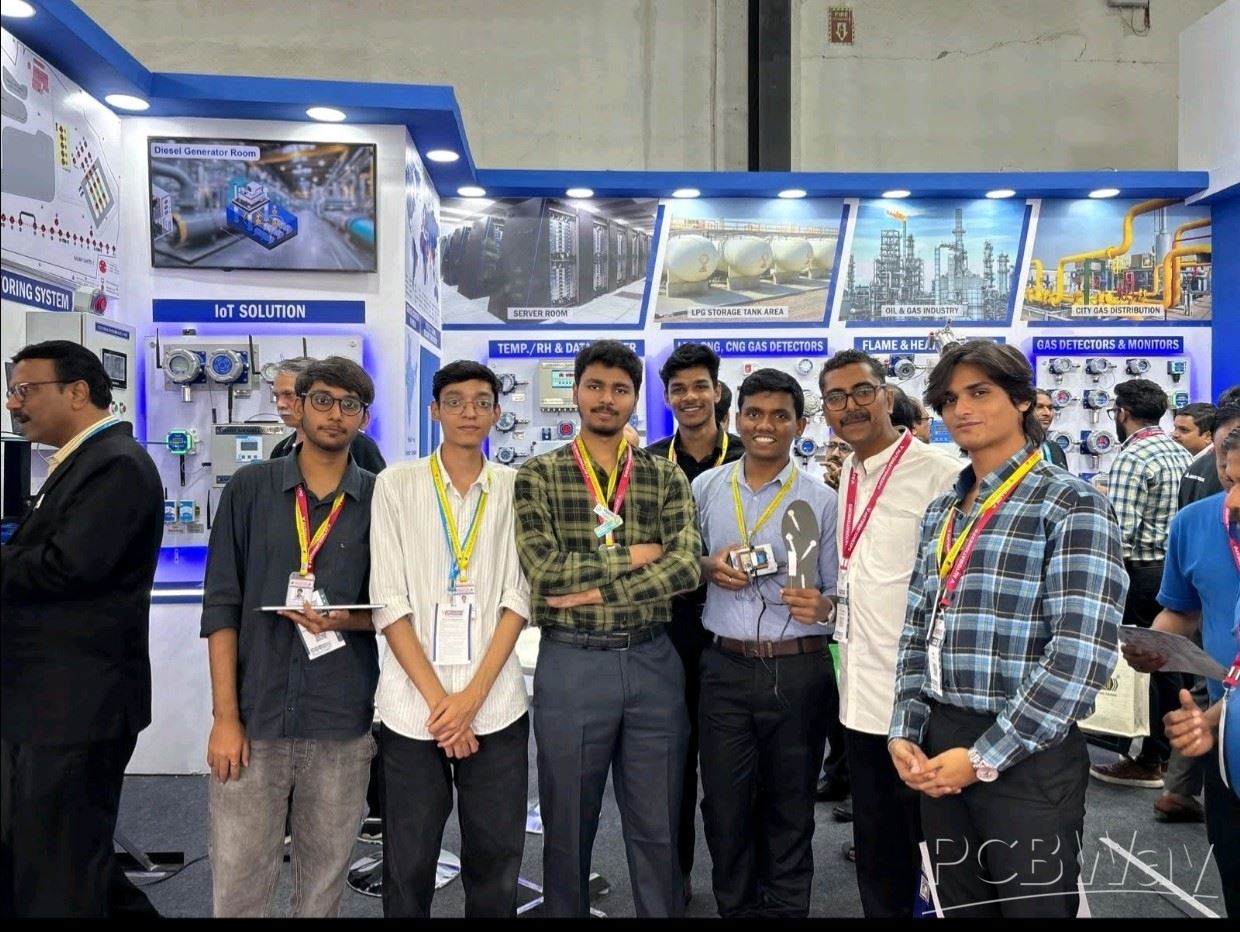
Our team at the stand (real photo).
It worked, but one thing bugged me. On that board, a broken sensor wire reads exactly like a foot that isn't pressing. Nothing in the data tells you it's wrong. For something meant to measure walking, that's the worst kind of failure: quiet.
Rev C: what this board is
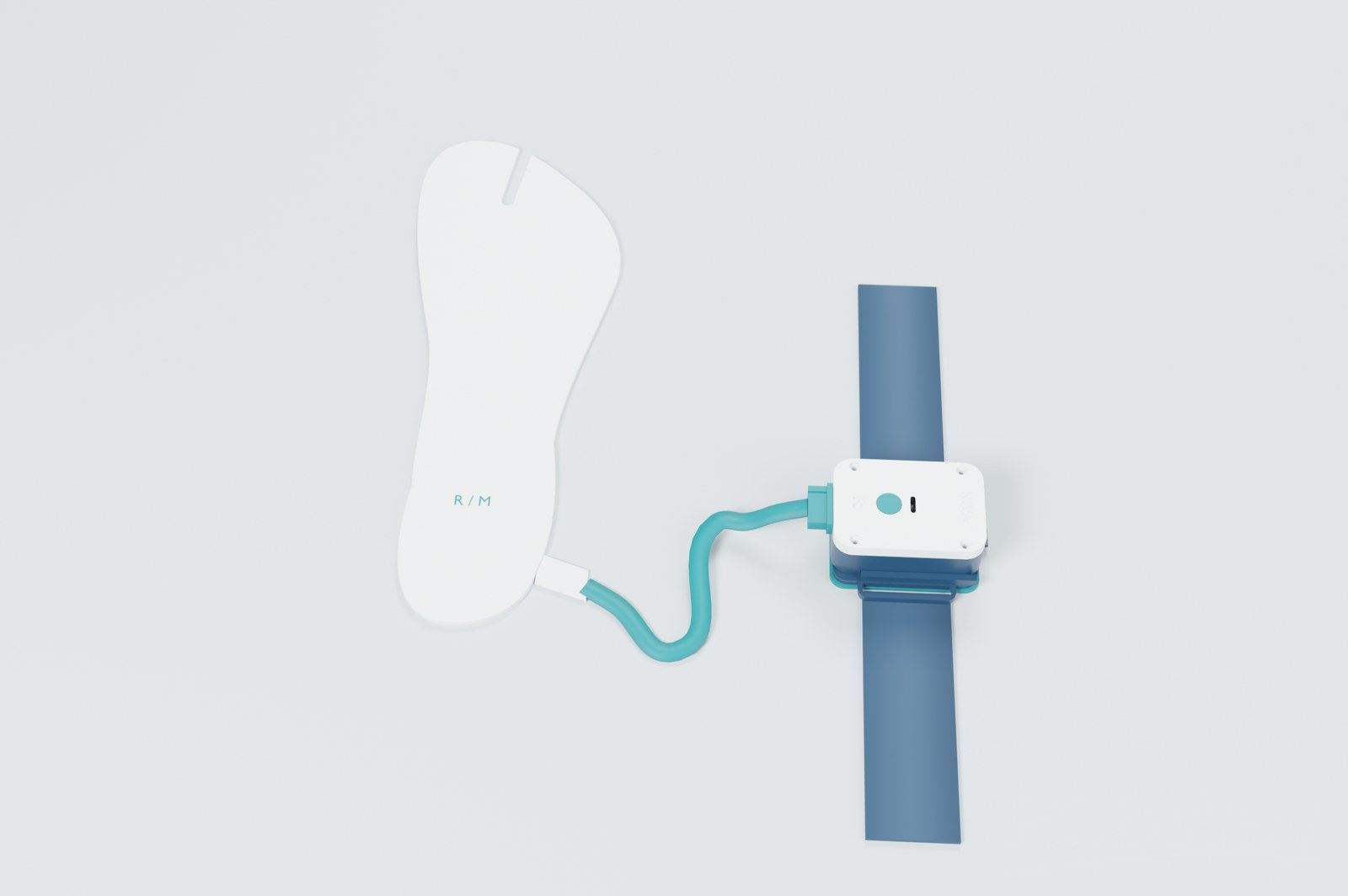
The full right-foot set: insole, protected tail, pod on its cradle, strap (CAD render).
The insole becomes a thin flex with five printed force regions and a heel PVDF film. A flat tail runs up to the pod on the shin. The battery lives in a removable cartridge, and a desk dock charges spare cartridges. So the wearable has no charger and no USB port to break.
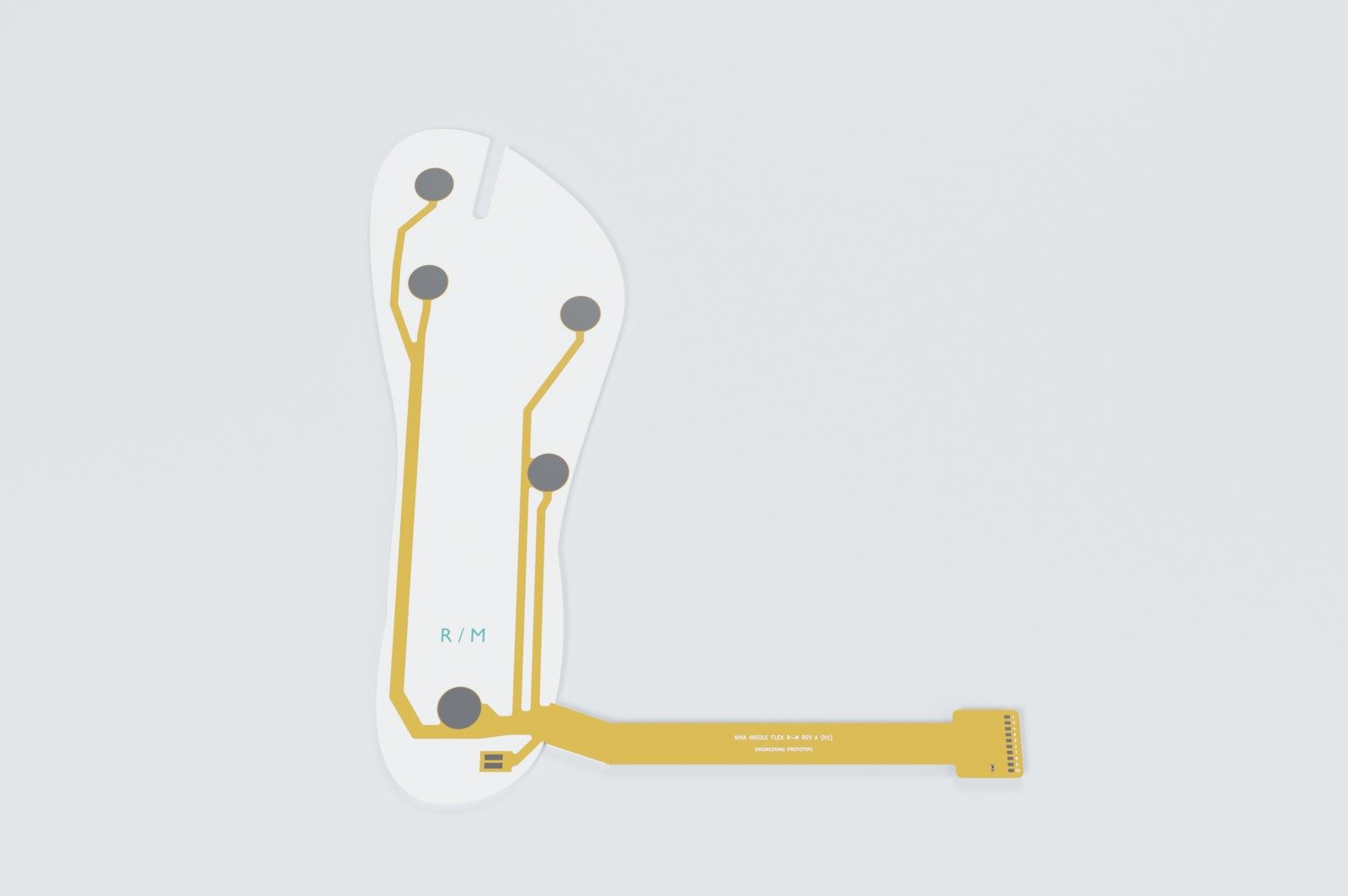
The sensing flex for the right insole (CAD render).
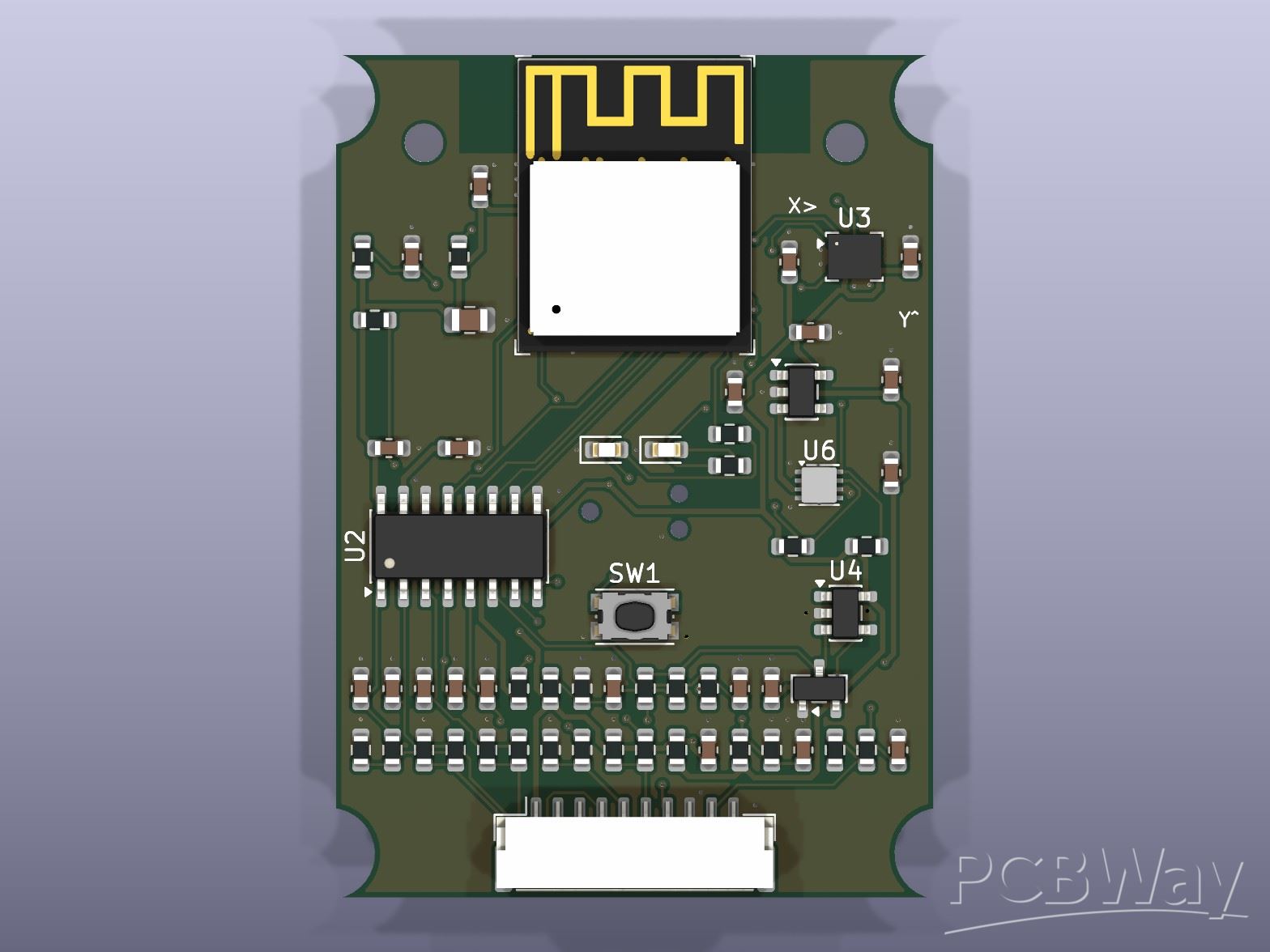
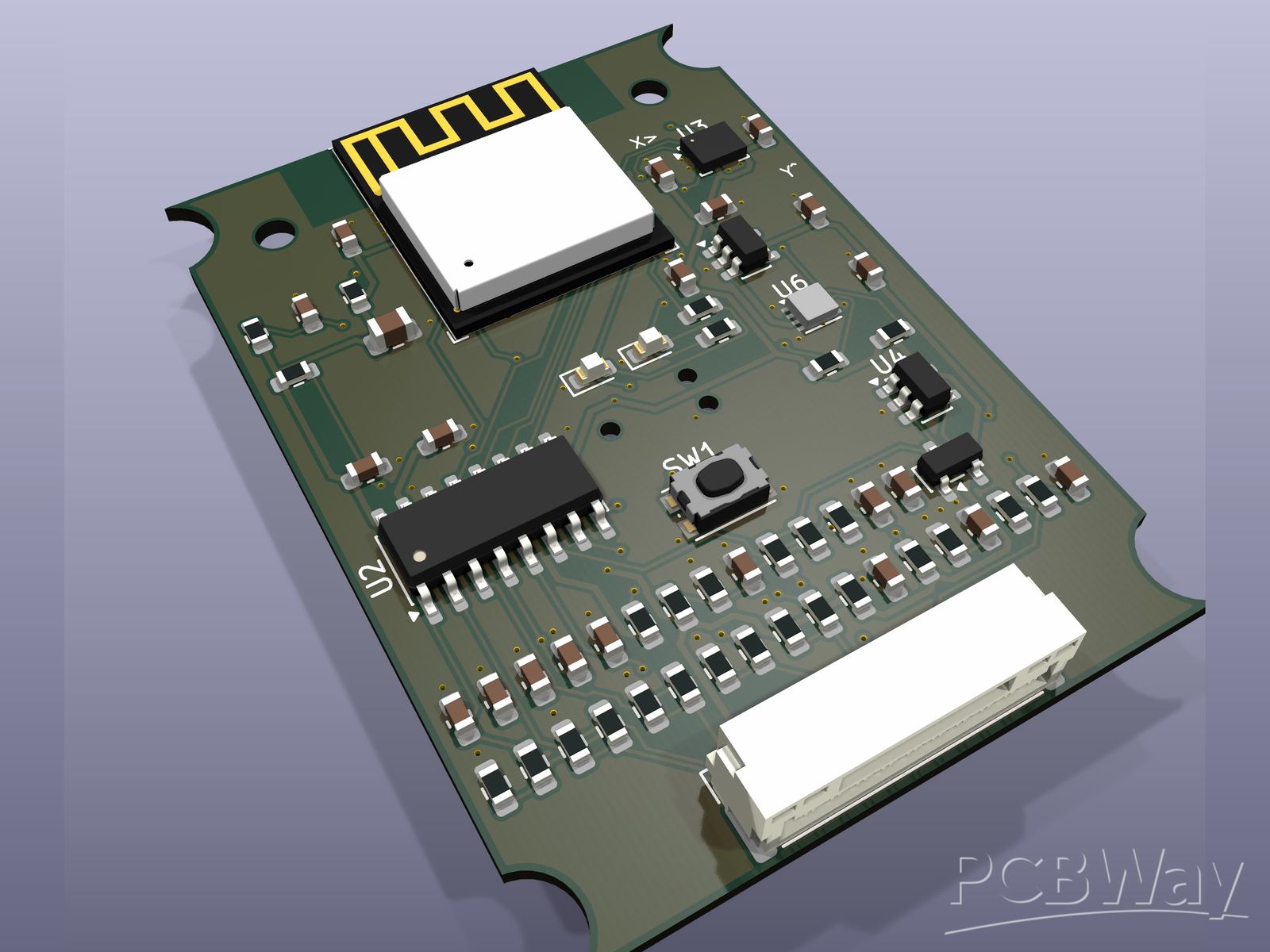
The pod PCB, top side (KiCad 3D render of the routed board).
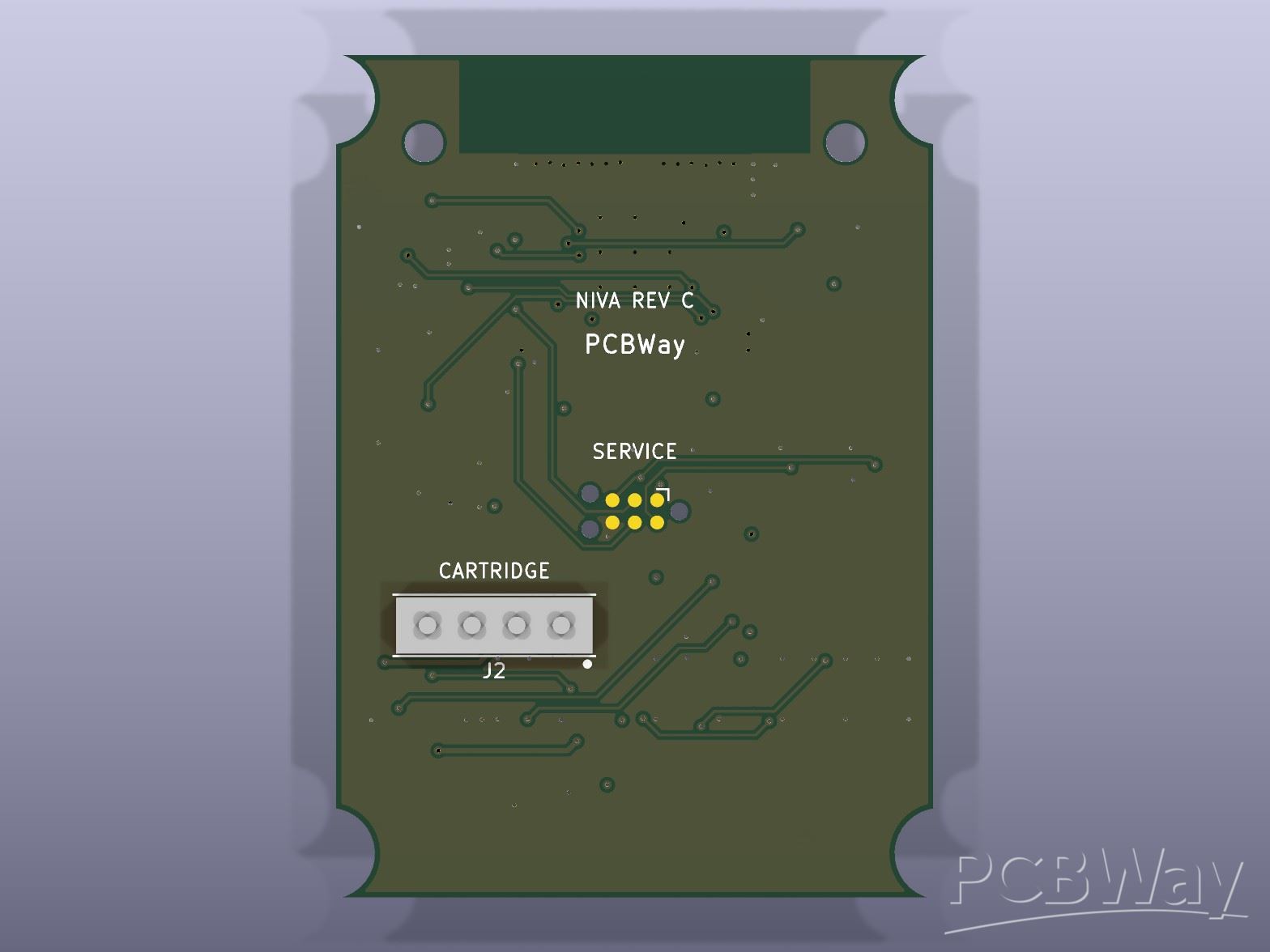
Bottom side: cartridge contacts, Tag-Connect service pads, and the PCBWay logo.
The circuit, block by block
Brain and radio. An ESP32-C3-MINI-1 sits with its antenna on the board edge, with a copper keep-out on all four layers. It runs offline and talks to the phone over Bluetooth. All 15 usable GPIOs are assigned.
Force sensing. Each of the five force regions is a divider into a 12-bit MCP3208, through 3.3 kΩ and 1 µF. The trick is the reference. The ADC's VREF is the same rail that powers the sensors (VEXC), so every reading is a ratio formed in hardware. If that rail sags, the numbers don't move.
Catching its own faults. VEXC is fed through 220 Ω. If the tail shorts, it draws about 15 mA and the main 3.3 V rail stays up. One ADC channel watches the rail, and when it leaves its normal window the firmware marks that block of data as bad and drops it. Another channel reads an ID resistor on the insole, so the pod knows which insert is plugged in.
Heel impact. The PVDF film goes through a 10 MΩ bias, BAV199 low-leakage clamps and an MCP6001 follower, for sampling at up to 2 kHz.
Motion. An LSM6DSO32 IMU shares the SPI bus with the ADC.
Power. The cartridge cell is EEMB LP502030 class (230 mAh), with its own protection plus a polyfuse in the cartridge. On the board, a TLV75533 LDO and a MAX17048 fuel gauge.
Layout
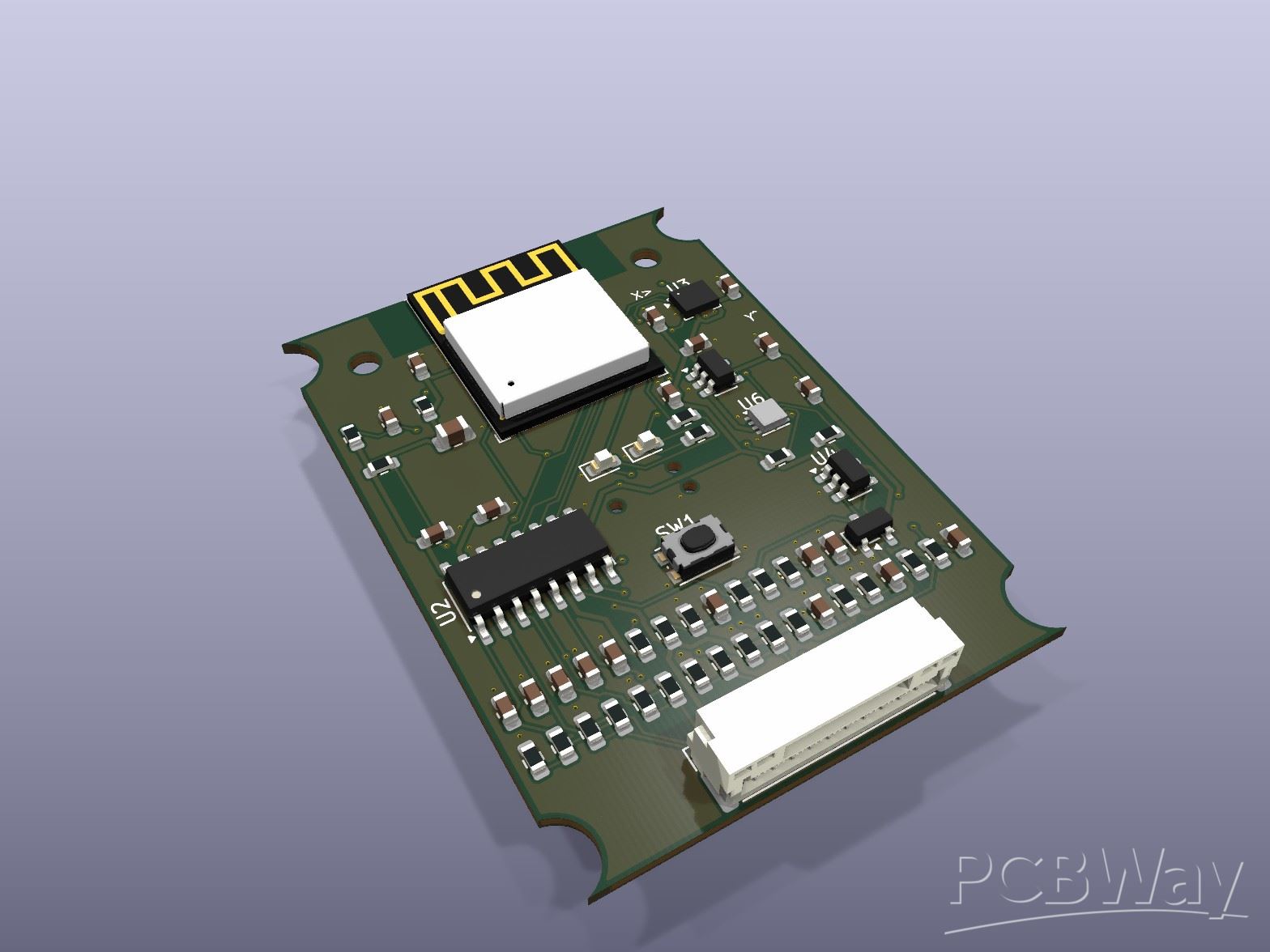
The routed pod board (KiCad 3D render).
It's 4 layers, 34 × 48 × 1.0 mm, with a solid ground plane on In1. Before routing any signal, I gave each of the 81 ground pads its own via to that plane. Then the signals were autorouted and ground was poured on the other layers. The result: 547 track segments, 126 vias, and 0 DRC errors with 0 unconnected items in KiCad 10, with schematic parity on. It also passed PCBWay's own review on 26 Oct (order W1032027AS1M1).
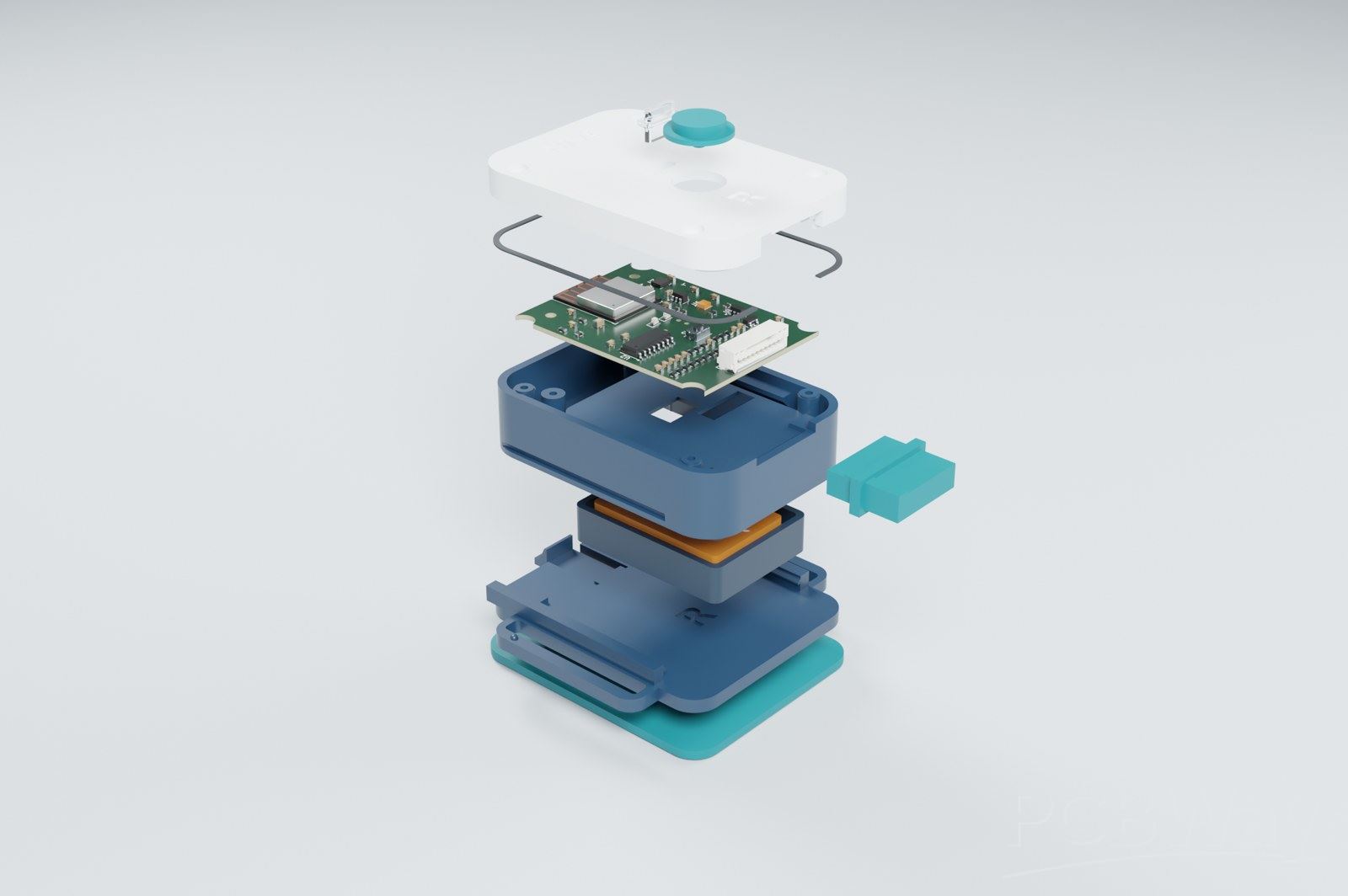
Where the board sits inside the pod: cover, board, housing, battery cartridge (CAD render).
Why PCBWay
Thanks for backing student hardware. These would be the first real Niva boards. Everything after version 1 is still CAD, which is why most images here are renders (the first three are real photos). With 5 boards, I'll bring up power first, check that the tail-fault flag really trips, measure ADC noise, and then walk with it around Mumbai.
Within 2 weeks of the boards arriving, I'll post the build log and photos of the PCBWay boards on this page, link it from the Niva README, and tag PCBWay on LinkedIn.
Every file is public, including the KiCad project, Gerbers, BOM and design review: github.com/https-shubhamsahu/niva
Who I am
I'm a third-year ECE student at Thakur Shyamnarayan Engineering College (TSEC), Mumbai. I build wearables, robots and a privacy app called NO SUS. In March 2026 I won the Lovable x Anthropic Buildathon, and a mine-rescue drone design I worked on was shortlisted for Stage 2 of the Vishwakarma Awards.
Apply for sponsorship >>- Comments(0)
- Likes(0)