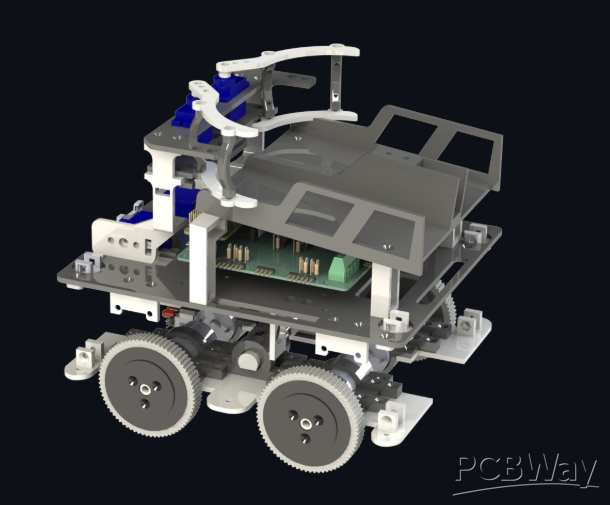


FIRE-NET Alpha — Modular Edge-Intelligence Platform for Next-Generation Fire-Safety Research
FIRE-NET: System Architecture & Research Overview
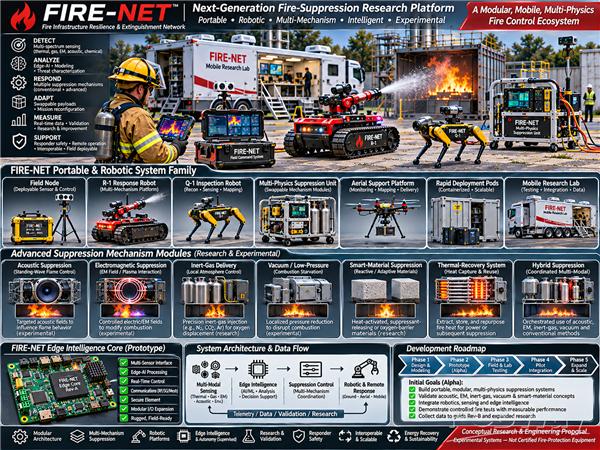
FIRE-NET (Fire Infrastructure Resilience & Extinguishment Network) is an early-stage engineering project exploring a new approach to fire-safety technology: building a portable, modular robotic and sensing platform capable of testing, carrying, and coordinating multiple fire-detection and suppression technologies.
Core Philosophy: Prove what works. Preserve what works. Improve what can be improved.
1. System Architecture & Operating Loop
FIRE-NET operates on a continuous data and action feedback loop designed to augment human decision-making with high-density data and remote deployment capabilities.
+-----------------------------------------------------------------------+
| FIRE-NET EDGE CORE |
| (Power, Compute, Multi-Spectrum Sensing, Comms, Modular I/O) |
+-----------------------------------++----------------------------------+
||
+------------------------++------------------------+
| |
+----------v------------------+ +------------------v---------+
| INTERCHANGEABLE PAYLOADS | | DEPLOYABLE PLATFORMS |
+-----------------------------+ +----------------------------+
| * Acoustic Flame | | * Tracked Robots (R-1) |
| * Electromagnetic | | * Portable Sensor Pods |
| * Localized Inert Gas | | * Reconnaissance Micro-Bots|
| * Vacuum / Heat Extraction | | * Aerial Monitoring Units |
| * Smart Reactive Materials | | * Mobile Validation Labs |
+-----------------------------+ +----------------------------+
The Continuous Feedback Loop
[ DETECT ] ----> [ ANALYZE ] ----> [ SELECT RESPONSE ]
^ |
| v
[ LEARN ] <---- [ MEASURE ] <---- [ DEPLOY ]
Detect: Multi-modal telemetry collection (thermal imaging, temperature, smoke/particulates, multi-gas sensors, acoustics, visual cameras, system health, 3D mapping).
Analyze: Edge computing processing via the custom FIRE-NET Edge Core (local processing ensures operation even without cloud connectivity).
Select Response: Intelligent selection of modular payloads targeted to specific fire conditions (e.g., lithium-ion runaway, structure, wildland-urban interface).
Deploy: Remote ingress using deployable robotic hardware to maintain safety standoff distance.
Measure: Quantifiable empirical data collection (temperature reduction, heat flux, control time, agent usage, reignition, power consumption).
Learn: Data-driven evaluation—advancing proven mechanisms, modifying or abandoning unviable concepts.
2. Deployable Infrastructure & System Family
Rather than relying strictly on fixed infrastructure, FIRE-NET envisions a family of portable units:
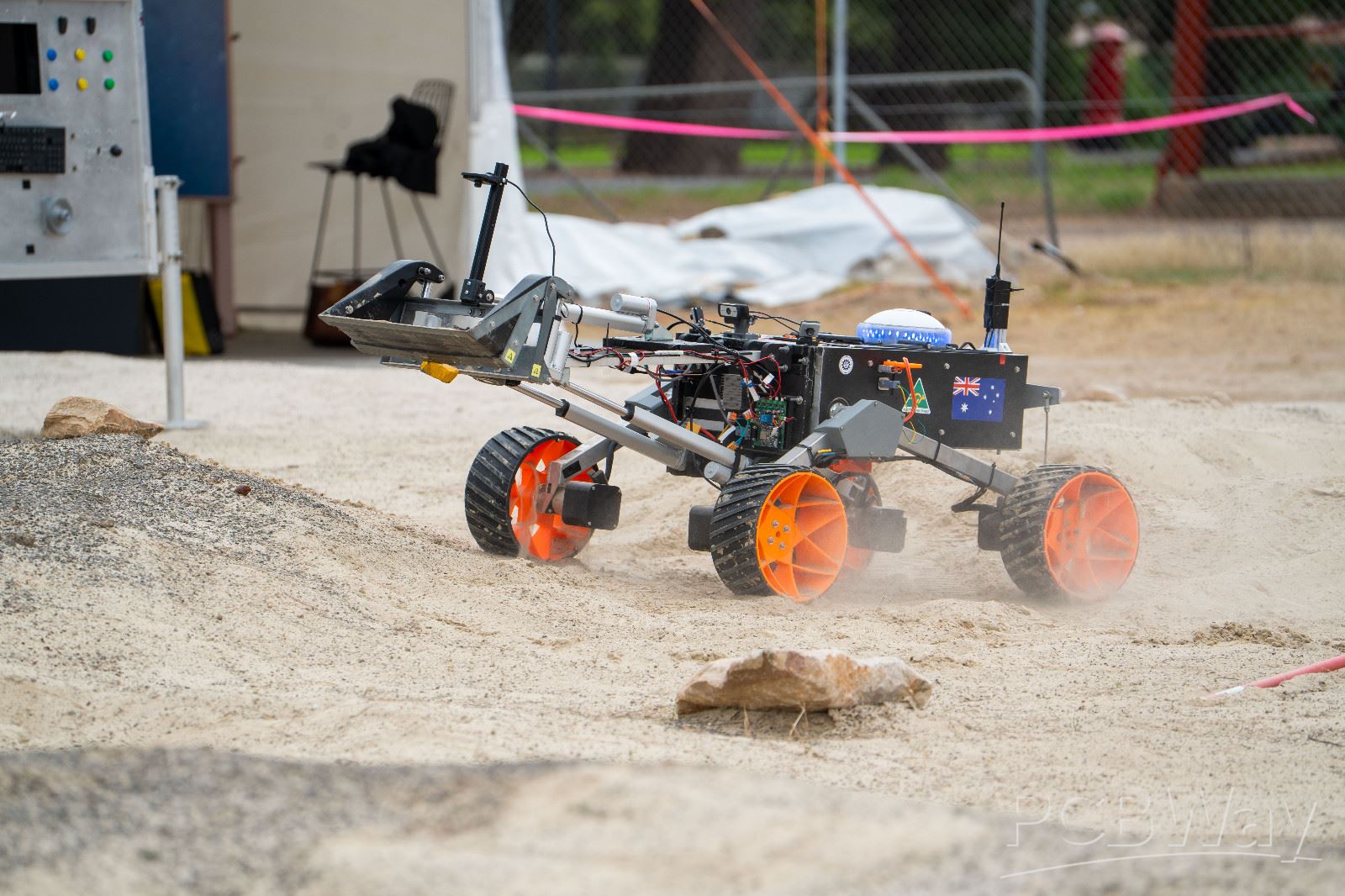
Tracked Robotic Response Platforms (FIRE-NET R-1): Heavy-duty ground units for carrying payloads into high-risk hazard zones.
Reconnaissance Micro-Robots: Agile scout units for initial thermal, atmospheric, and visual spatial mapping.
Portable Field Sensor Pods: Transportable command and sensing nodes to establish on-site communications grids.
Aerial Monitoring Platforms: Drones providing high-angle thermal surveillance and comms relay.
Modular Suppression & Energy Pods: Interchangeable agent modules and mobile incident battery storage units.
Mobile Research & Validation Laboratory: Field lab for real-time telemetry extraction and performance characterization.
3. Advanced Suppression Research Tracks
FIRE-NET investigates several experimental suppression mechanisms across varied technology readiness levels (TRLs):
Acoustic Flame Interaction: Characterizing how controlled acoustic pressure fields affect specific flame regimes and their energy requirements.
Electromagnetic Control: Laboratory investigation into how electric fields influence combustion plasma dynamics.
Localized Inert-Gas Injection: Precision delivery of suitable inert gases within micro-environments to minimize required agent volume.
Localized Heat & Extraction Management: Targeted extraction of smoke, hot gases, and pressure management to stabilize combustion zones.
Smart-Material Barriers: Triggered materials that expand or release active suppressants when exposed to heat.
Thermal Energy Recovery: Exploring heat exchanger systems to capture ambient thermal energy during incidents to lower heat transfer and support system power.
Hybrid Suppression: Algorithmic coordination of combined mechanisms (water mist, airflow control, materials) customized to real-time sensor inputs.
4. Phase One: FIRE-NET Alpha Roadmap
The first engineering milestone focuses on building a functional, reusable research platform rather than a complete firefighting vehicle.
FIRE-NET Alpha Deliverables
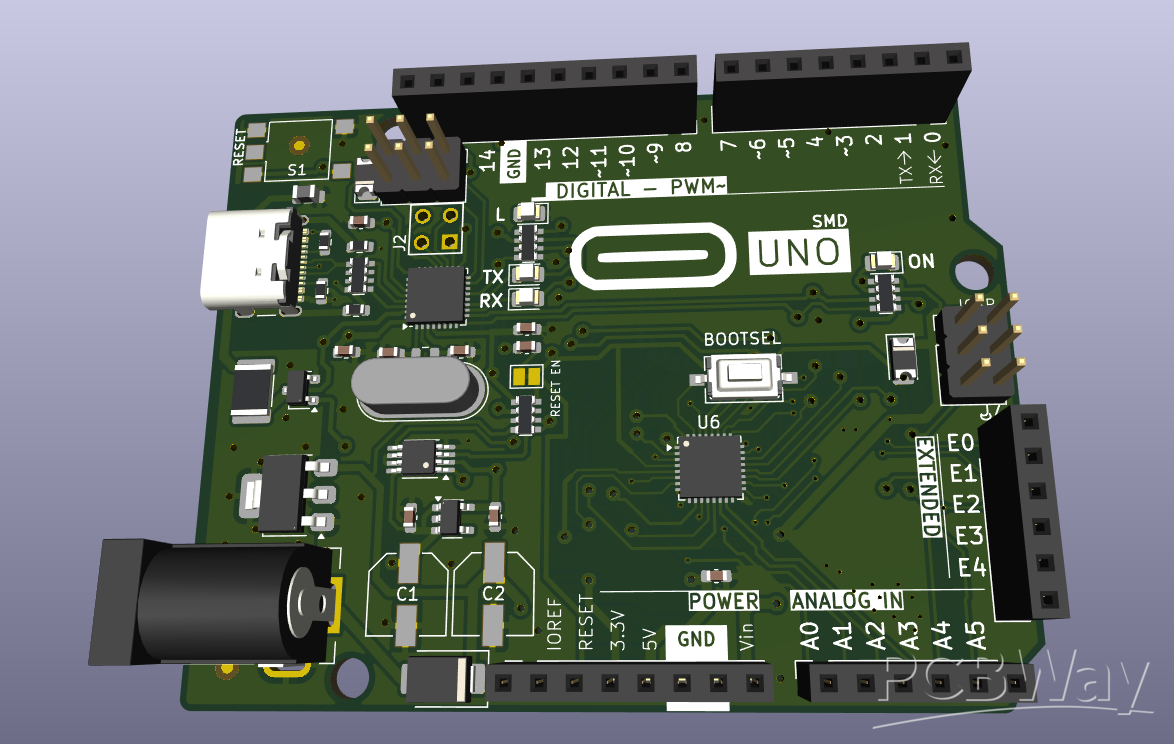
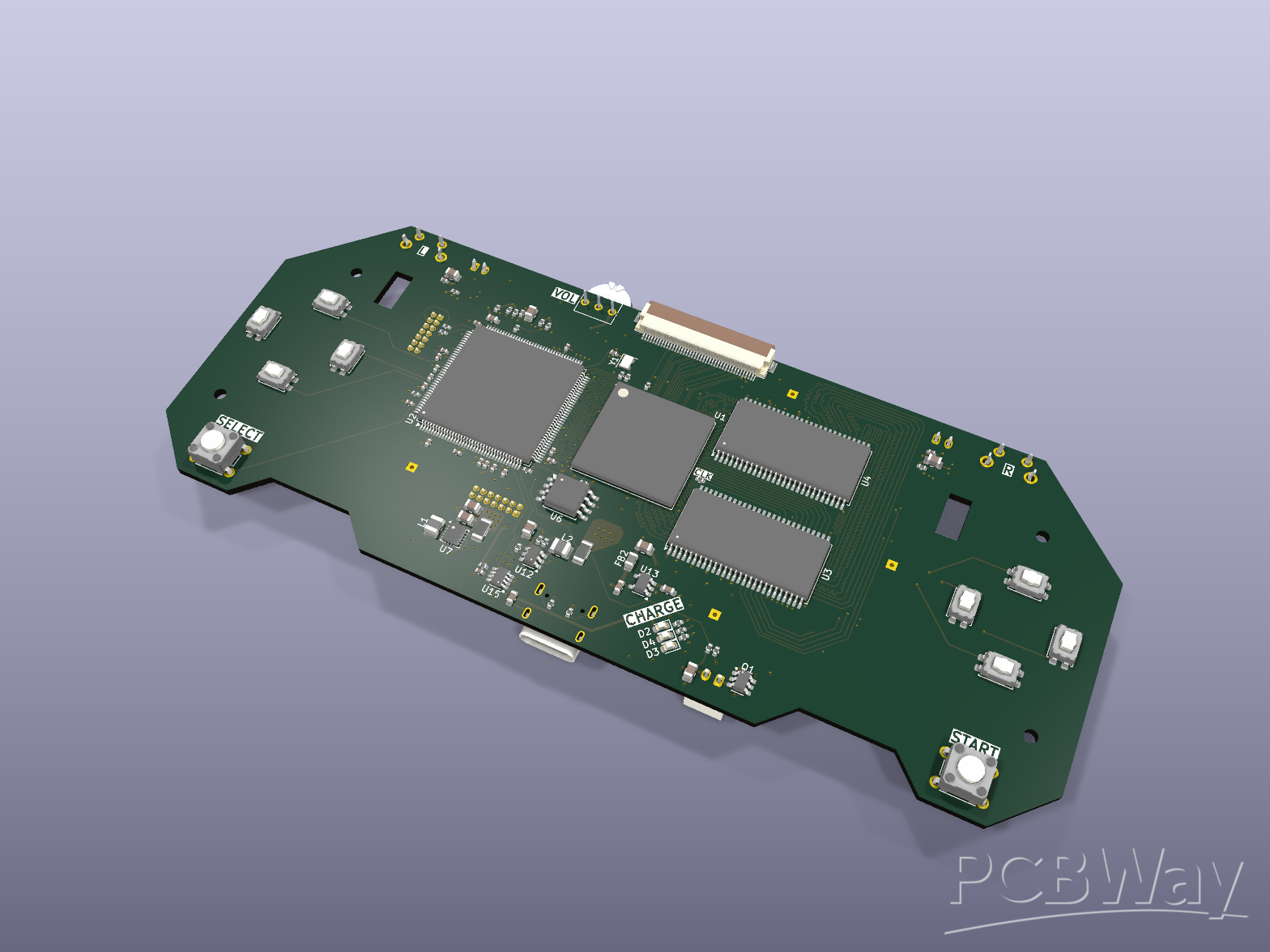
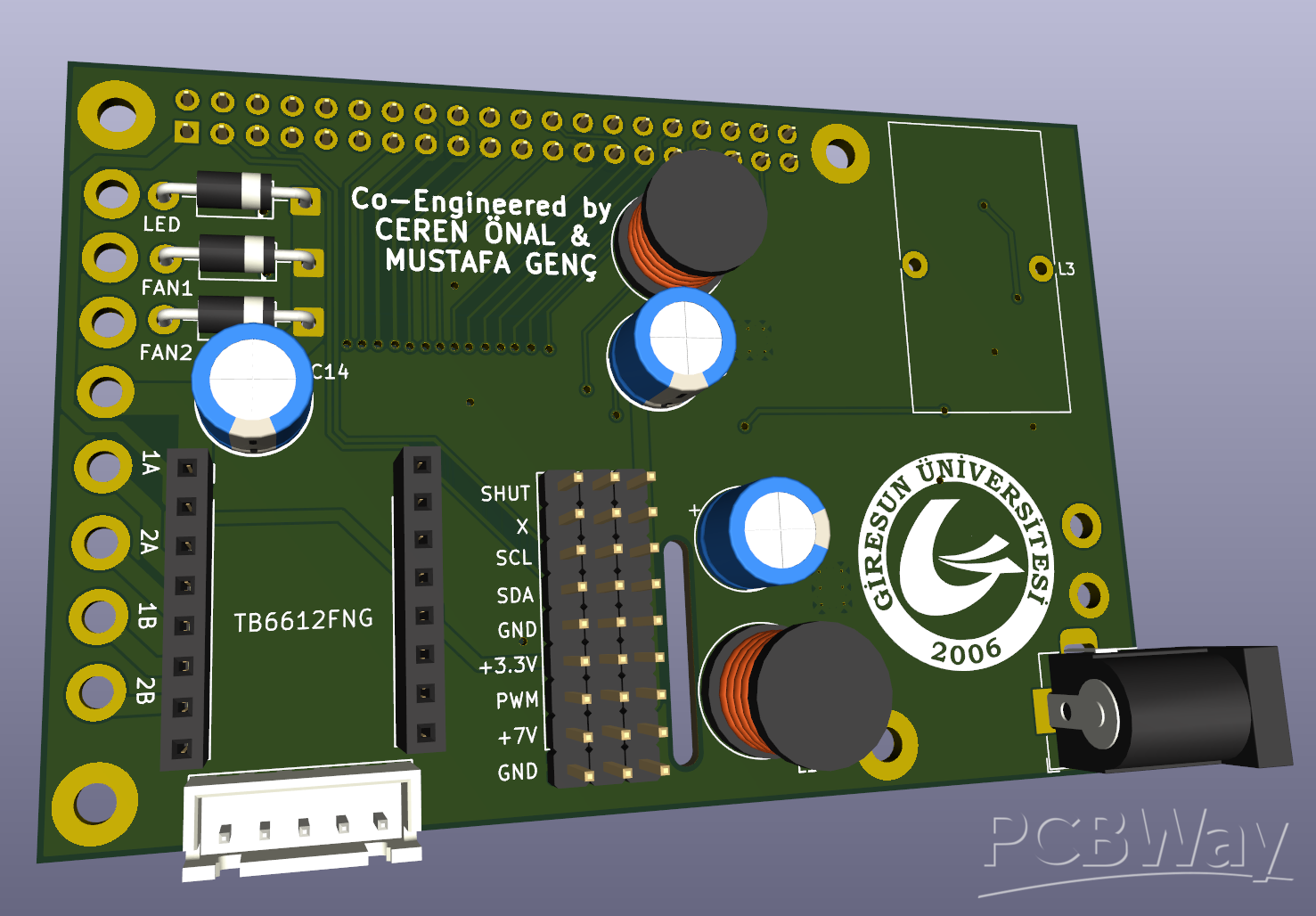
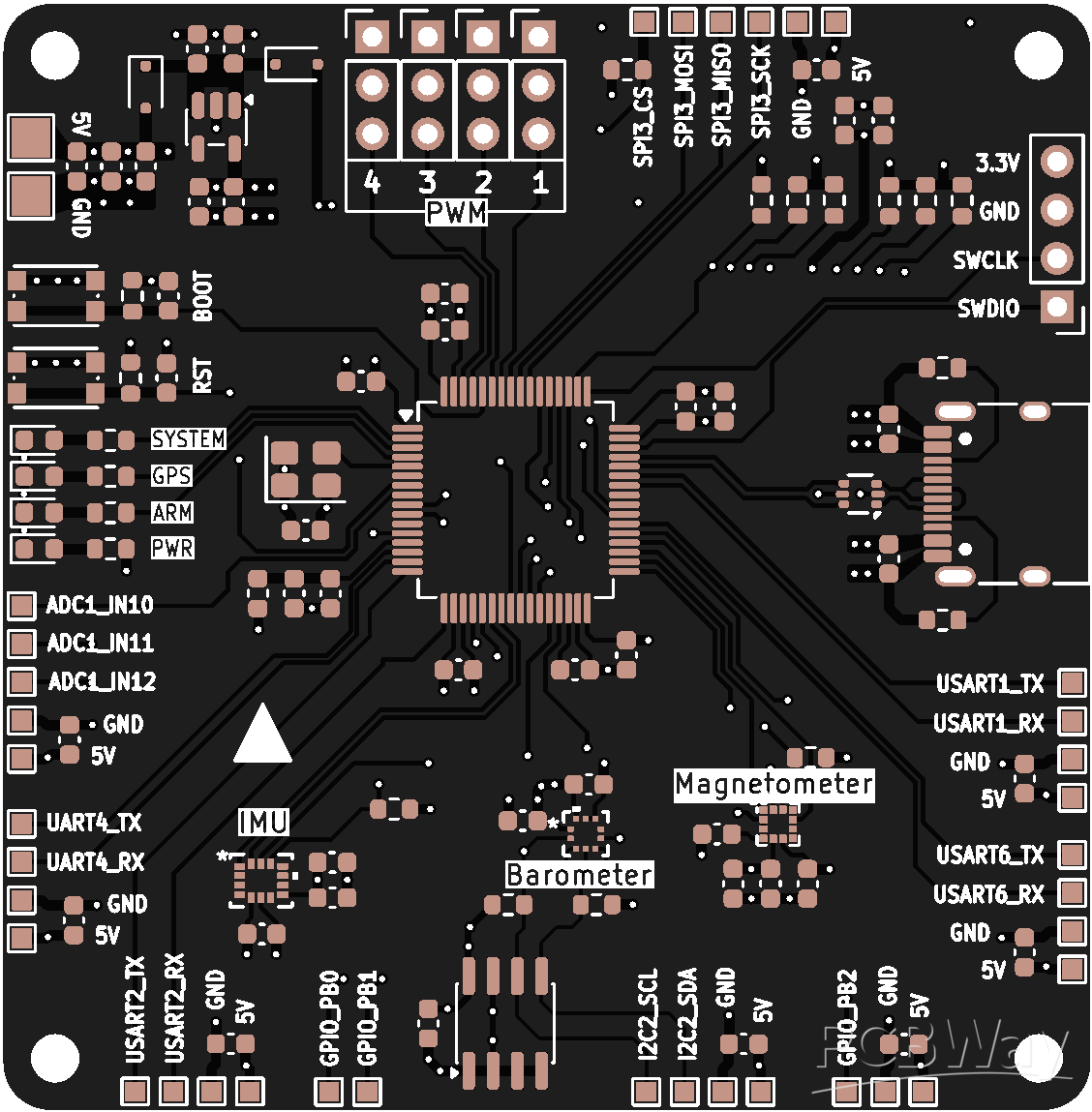
FIRE-NET Edge Core Rev-A: Custom PCB for processing, sensor routing, telemetry, power management, and modular I/O.
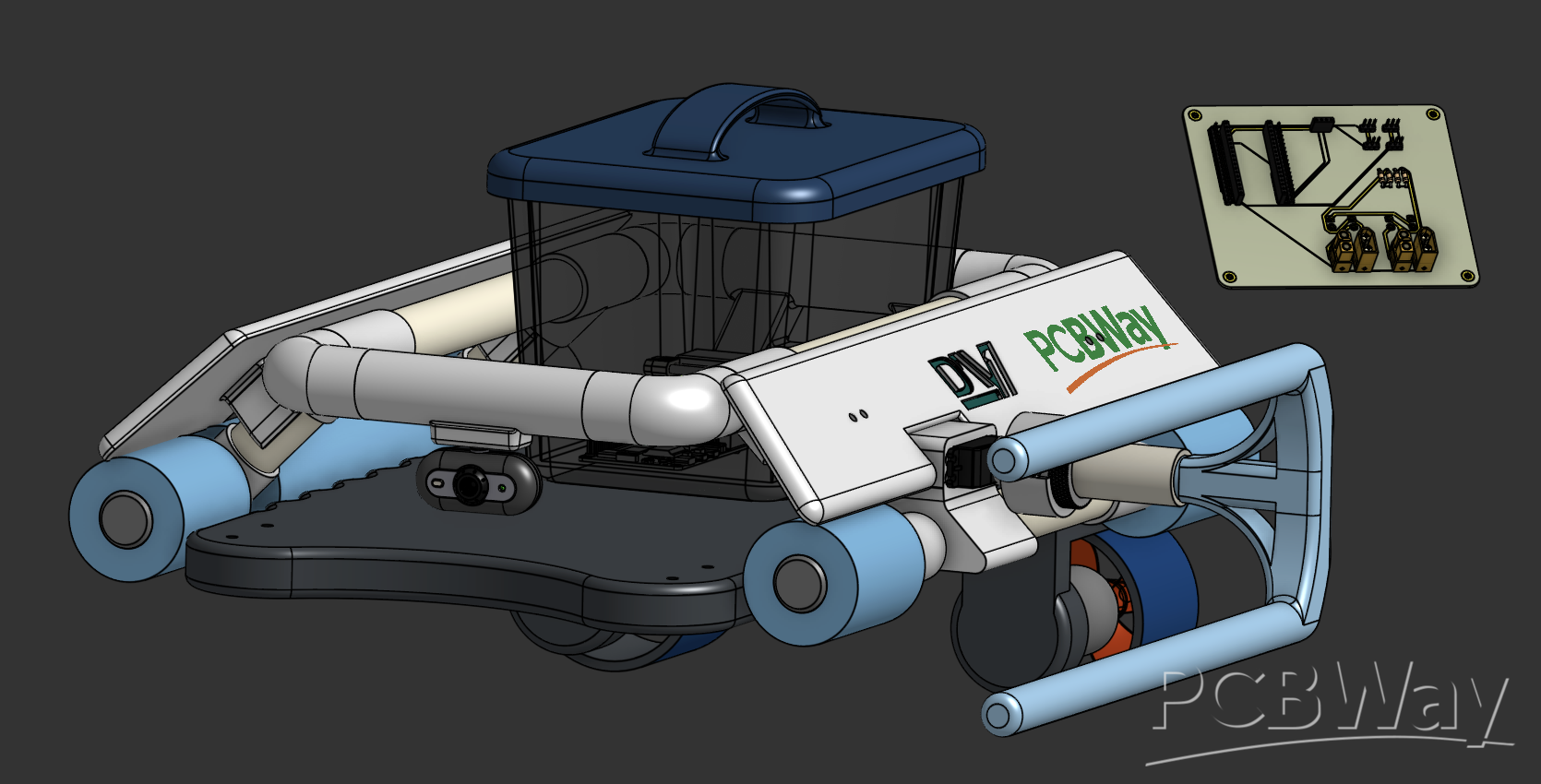
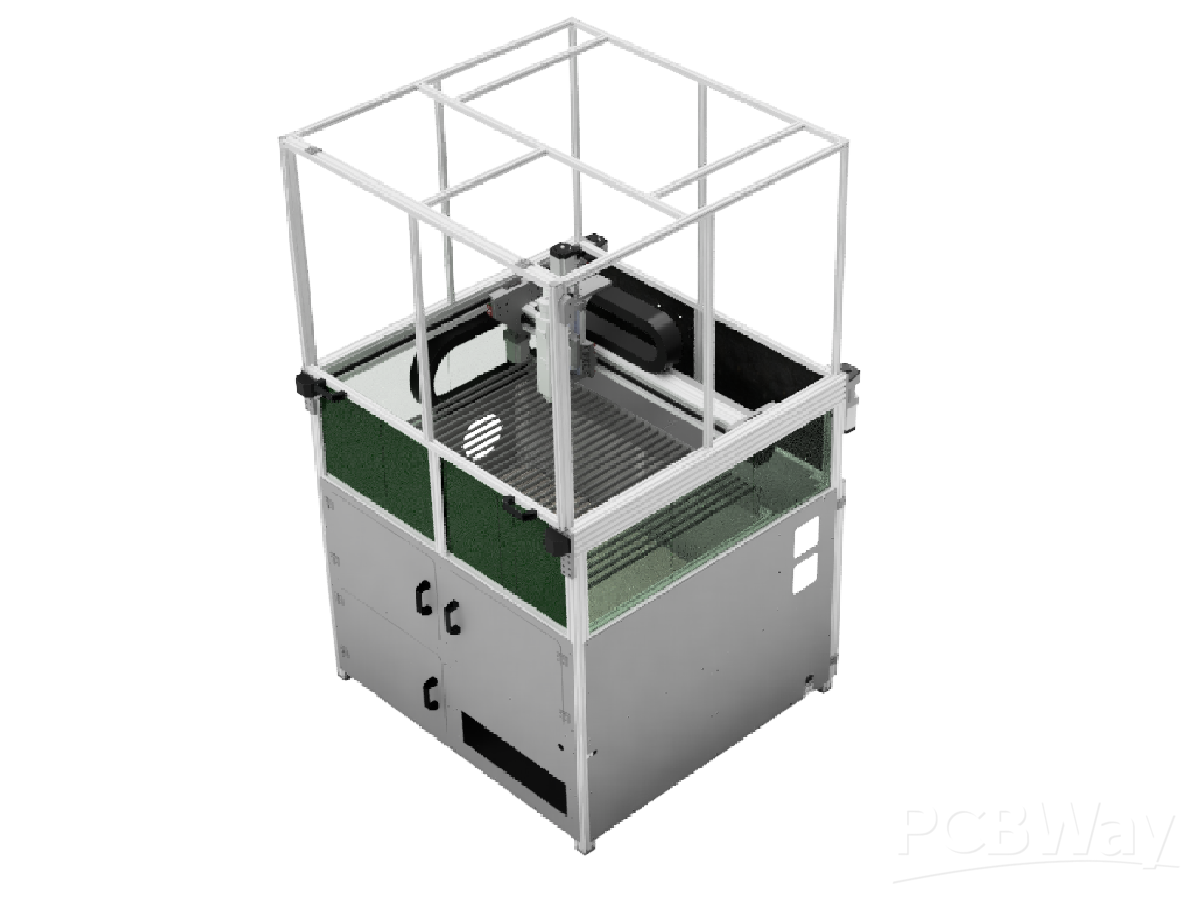
Portable Field Node: Rugged enclosure holding core electronics, sensing, and communications.
Robotic Integration Interface: Standardized mechanical, electrical, and data interface deck.
Initial Sensor Payload: Integrated thermal and environmental sensor suite for baseline testing.
Controlled Research Interface: Modular hookup for future suppression testing.
Hardware Manufacturing Plan (PCBWay Collaboration)
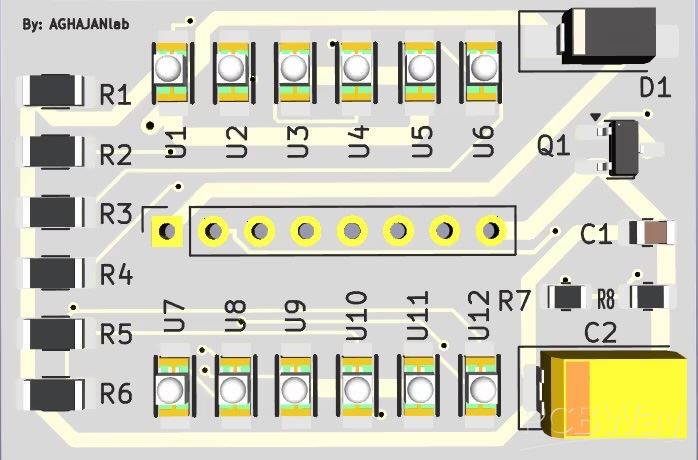
Electronics: Fabrication and assembly (SMT) of Edge Core Rev-A, followed by bench testing and DFM refinement for Rev-B.
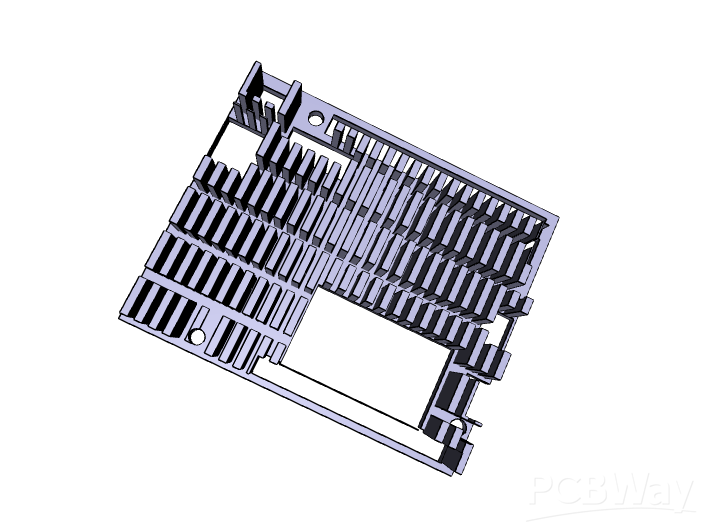
Mechanical Infrastructure: CNC machining and 3D printing of rugged prototype enclosures, mounting decks, and quick-release payload mechanisms.
5. Success Criteria & Phase 1 Validation
Phase 1: Build Core Hardware ---> Phase 2: Integrate Sensors
| |
v v
Phase 4: Run Payload Iterations <--- Phase 3: Transmit Telemetry
Success for FIRE-NET Alpha is defined by operational discipline:
Build a reliable, portable modular enclosure.
Integrate thermal and environmental sensor arrays without signal loss.
Process and transmit clean local telemetry to human operators.
Mount and drive the system via the standardized robotic integration deck.
Collect reproducible measurements during controlled research trials.
Identify component failure modes and refine the architecture for Rev-B.
Disclaimer: FIRE-NET is an early-stage conceptual engineering platform and research framework. Rendering systems depict proposed prototypes and experimental research directions. They are not certified fire-protection equipment and should not be used as operational suppression systems.
- Comments(0)
- Likes(0)